Donald Trump may or may not bomb Iran in the next few days. His cheerleaders will cite the Tehran regime’s brutal executions of Iranian protesters as justification. But if the President is in the mood for humanitarian interventions and stopping barbarism, he might also want to make good on his pledge to annex Canada.
Once praised as a paragon of decency and civility, Canada is now turning into a dystopian society in which so-called “healthcare” professionals wield increasingly terrifying power of life and death.
When a government grants permission to end a life, where does it stop?
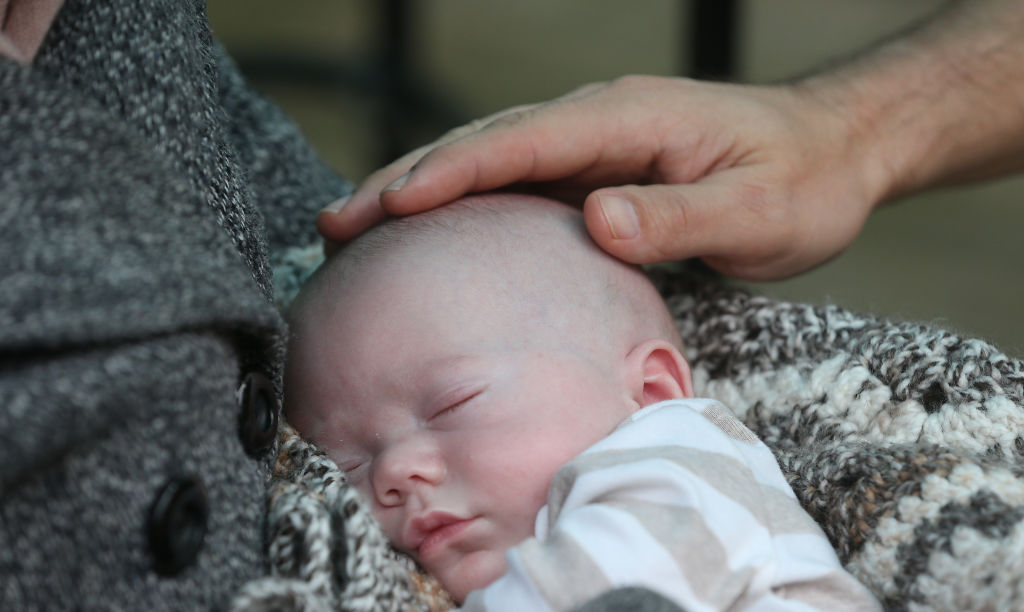
Canadian doctors are considering euthanizing newborns under certain circumstances as a form of “healthcare.” When Dr. Louis Roy advocated for this in 2022, it sparked widespread outrage and the proposal appeared to be dead. It wasn’t. When the Daily Mail pressed the CMQ last year, it confirmed it still endorses the recommendation. It recently stated that euthanasia for babies with “severe deformations” or “extreme pain” may be medically justified. Public outrage, as usual, has faded in the shadow of Canada’s euthanasia bureaucracy.
Infant euthanasia isn’t yet law, but given the expansion of Canada’s euthanasia laws, it soon could be. In 2016, Canada legalized “Medical Assistance in Dying,” or MAiD, for terminally ill adults. Five years later, its Parliament lifted the requirement that a patient’s death be “reasonably foreseeable.” By 2022, lawmakers were discussing euthanasia for minors and in psychiatric cases, and next year MAiD for mental illness will become legal.
When a government grants permission to end a life, where does it stop? “Once you start legalizing, there is a risk that a significant number of physicians normalize this practice. It’s like putting fuel on the fire,” says Trudo Lemmens, a law professor at the University of Toronto, who now regrets supporting Canada’s original MAiD laws. Wesley J. Smith of the Discovery Institute think tank asks the question: “If killing is an acceptable answer to suffering, why limit the killing to adults?”

The CMQ insists that MAiD is a medical matter. Ending life, it argues, can itself be a form of care. That phrasing is chilling. It suggests a shift towards a sinister utilitarian paternalism, where bureaucrats judge whether a life is worth living – and if it isn’t, then the “caring” thing to do is to terminate it. Babies, of course, have no say in this matter. Others must infer their suffering and interpret their interests. And so a law once presented as care for consenting adults at the end of life could now lead to involuntary euthanasia for babies at the start of life.
Infant euthanasia is also an extension of the logic of abortion, which is entirely decriminalized in Canada up to birth. If a 40-week-old baby can be killed in utero, why should unfortunate newborns be protected? The philosopher Peter Singer famously approved of giving parents the right to euthanize their disabled babies, since newborns lack rationality, autonomy and self-consciousness. His position, while still shocking to most, is at least more coherent than the idea that humans magically acquire a right-to-life merely by passing through their mother’s cervix.
And surely the definitions of “severe deformation” or “extreme pain” will soon be relaxed before being abandoned altogether. We have already seen every safeguard fall in the case of MAiD. From terminal illness to chronic pain, from consent to presumption, from adults to minors, each boundary has given away on the grounds of supposed “compassion.” What began as an end-of-life “option” has become an ideology of death. Medical practitioners have now euthanized nearly 80,000 Canadians under MAiD, making up five percent of all deaths in 2024, or roughly one in 20.
Behind the push towards child euthanasia lies an abandonment of the idea that life is sacred. Dr. Jonathan Reggler, a Canadian euthanist, speaks of ending lives with a clear conscience: “Once you accept that people ought to have autonomy,” he says, “once you accept that life is not sacred and something that can only be taken by God, a being I don’t believe in – then, if you’re in that work, some of us have to go forward and say, ‘We’ll do it.’ ”
Canadian culture increasingly prioritizes convenience, often measuring life’s worth based on comfort and cost. The push for affordability has led to veterans who were seeking help for PTSD and Paralympians being offered assisted death against their will.
This viewpoint demonstrates a troubling form of eugenic discrimination, and some politicians seem finally to be feeling the weight of the issue, now that its logical endpoint has become apparent. The Liberal Minister of Disabilities opposed MAiD for infants under one with severe disabilities, stating, “There is no world where I would accept that.” There are, however, places which already have accepted it. The Netherlands, via its Groningen Protocol, already permits infant euthanasia under parental and medical agreement. As The Atlantic noted, the only similar historical example of such a policy was the Nazi infant euthanasia program from 1939.
The architects of MAiD once assured the public that it had well-defined boundaries. A decade later, those boundaries have all but evaporated. The state that initially offered to alleviate suffering has instead chosen to eliminate the sufferer. The question Canada poses to the West is whether moral absolutes still exist, or whether “care” can mean whatever doctors and lawmakers say it means. Once society accepts that life’s worth depends on circumstance, the door to barbarism stands permanently ajar.



Comments