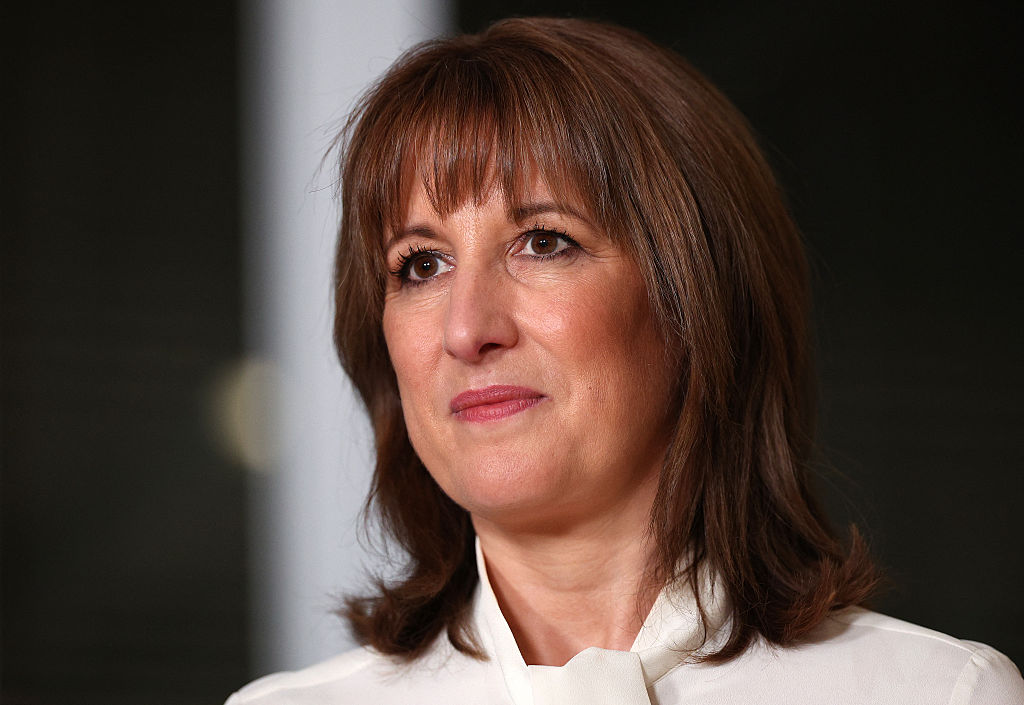
Rachel Reeves enters 2026 more unpopular than she has ever been before. YouGov polling from December has 71 per cent of Britons saying they have an unfavourable opinion of Britain’s first female chancellor. Reeves was meant to be a competent economist who could restore credibility to the Treasury and, in her words, ‘revive economic growth’. How’s that going? Reeve’s tenure in No. 11 has so far been more slapstick than good governance. Her CV unravelled under scrutiny; she broke manifesto commitments; she unveiled an appalling Budget, vowed never to repeat it, and then promptly did. Am I judging her too harshly? Am I being a misogynist? Reeves would probably say so.

We should judge female politicians just as we do men: brutally. The truth is that Margaret Thatcher was the last British female politician whose time in high office did not end in shame and acrimony. She spent more than 11 years in No. 10 (the longest premiership since 1827) and ran the country with a ruthless, disciplined competence that even her critics respected. She demonstrated that a woman could not just hold an important political post, but master it.
Her female successors have poorer records. Theresa May arrived in No. 10 promising stability and prudence. She left a cautionary tale. Her 2017 snap election shredded her majority, leaving her trapped in a government paralysed by Brexit. Her plans to leave the European Union were unveiled, revised, retracted and then contradicted, leaving her Cabinet and the public confused. Her premiership ended literally in tears – not over what she had achieved, but because she had achieved nothing. Where Thatcher’s tears as she left Downing Street marked the end of a decade of political mastery, May’s were a symbol of failure.
Liz Truss did not last long enough to accumulate much symbolism, but her mini-Budget will always haunt Westminster. In 49 days she detonated markets, threatened pensions, compelled emergency intervention from the Bank of England and dismantled Tory credibility. She didn’t cry, probably because she never fully grasped what was happening to her, or the economy, before, during or after the train crash of her premiership.
Now we have Reeves. Faced with questions over a Budget she stuttered to justify, our Chancellor reached for the panic button marked ‘MISOGYNY’. She claimed that sexism remains deeply embedded in British politics – men were apparently trying to ‘mansplain the Budget’ to her. The worried interventions by Reeves’s male colleagues presumably had nothing to do with the fact that she is not up to the job. I imagine Thatcher would have been scornful of Reeves’s words, and would have agreed with what Kemi Badenoch said in response: ‘Woman to woman, people out there aren’t complaining because she is female, it is because she is utterly incompetent.’ When the Chancellor – the second most powerful person in our government – complains of being ‘mansplained’ to, she risks making women throughout Westminster look weak. If Reeves, by her own admission, can be pushed around by men, then how can any other woman in SW1 stand up for herself?
And who could forget that when the weight of her bad calls became too heavy, Reeves cried in the Commons like a sixth former floundering in a debating society? Her defenders blamed it on stress and personal circumstance, rather than the possibility that she was going to lose her job. Women in politics are already under enough pressure. They rely on people such as Reeves to be strong.
Reeves was shielded on her rise to the front bench
This, of course, is not remotely fair. But fairness has never been the currency of working in politics. Authority is a business of optics and competence. A pilot who bursts into tears during landing or a surgeon who cries into an open chest cavity are not figures who inspire confidence. Voters don’t want emotional volatility from those in charge. And when women break down, they pay twice: once for the moment itself, and again for reinforcing a stereotype.
Reeves was shielded on her rise to the front bench. In the spotlight, she has crumbled. What the public has seen is not competence but evasion. Her legacy will not be the glass she shattered on entrance, but the shards she leaves behind. The next woman, if another is trusted in high office any time soon, will have to sweep them up and work twice as hard to prove what Reeves could not: that fiscal mastery is not, and never has been, a male trait.



Comments