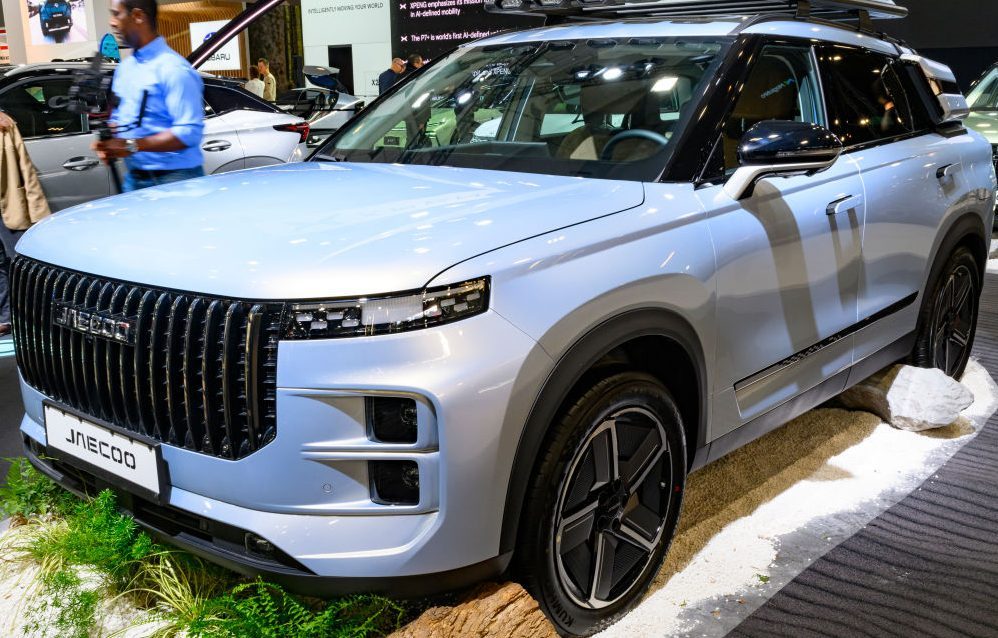
I have only ever owned two cars in my life, and I have loved them both dearly. Both were grey and both were Volkswagen Polos. Founded by the Nazis to produce ‘the people’s car’, Volkswagen has been a manufacturing behemoth for nearly 100 years. But in times of intensive change in the automotive market, they’re now driving down a bumpy road. Just last month they announced a further 50,000 planned job cuts, on top of the initial 50,000 that was billed in March. None of this is surprising, being the result of a bloated giant sinking in an increasingly competitive forecourt: the Chinese.
When money matters most, it is no wonder why so many are buying Chinese
It was less than fifteen years ago, in their Top Gear days, when Jeremy Clarkson and James May took a trip to China to marvel at the number of poor imitations and dreary originals that they were beginning to produce. Progress seemed sluggish. The world was then distracted by the rise of Tesla and those gull-wing doors that could dance to music in an obnoxiously American way. Even just three years ago, beyond producing a few crazy electric hypercars, the Chinese were nowhere. But behind the scenes, an invasion was brewing.
As a regular attendee of the Goodwood motorsports calendar, I am well accustomed to slipping into the back of a Land Rover or large BMW at the end of a busy day to be subsequently whisked away to a waiting gin and tonic at the club bar. Last year, though, as I was contemplating the steak tartare that I would inevitably order for dinner, this Range Rover-looking thing drew up, and I was ushered inside. With plush leather and interior tech that would rival the best that Europe has to offer, I sank back into my seat as the driver took us out of the circuit.
This was a Jaecoo 7, a car that I had never seen before, but cannot now leave my flat in south London without encountering. And it’s not just an urban obsession either, as on a recent trip to rural Suffolk, on one drive to pick up a takeaway, we passed half a dozen of them. This is meant to be Land Rover country, but not anymore. It is no wonder that the Jaecoo took the top spot for new vehicle registrations in September, with nearly 11,000 of them going onto British roads.
For those shopping for a new car, such an indulgence is constrained by two factors: price and practicality. In the cost-of-living crisis that we are habitually reminded that we are enduring these days, the former will almost always outweigh the latter. But with the Jaecoo, you can have both, and for the same price as a completely standard and far worse-equipped Volkswagen Golf, for decades the car of choice for the sensible middle classes. If you want to make a direct comparison to the Jaecoo from VW’s range, however, you’d have to put it up against the Tiguan, which retails, at the very lowest end, for £38,400. The Jaecoo starts at £29,200. When money matters most, it is no wonder why so many are buying Chinese.
They have consistently played the last half a decade much better than European manufacturers. Instead of pursuing an obsession with going electric, Chinese giants like Chery, the owners of Jaecoo, have covered all the bases, designing their cars to be fitted with both electric and internal combustion powertrains. Cleverer still, after taking some creative licence with their styling from Jaguar Land Rover (JLR), they have now formed a joint venture to bring back the Freelander brand, built by Chery in China and sold by JLR under its family umbrella around the world. At the same time, JLR have announced plans to cut 4,000 jobs, mostly in Britain, while offshoring new production lines amid the Trump tariff crunch.
While JLR are reducing their headcount in Britain, Chery, in another joint venture (this time with Nissan) will begin final assembly of some of its models in Sunderland from next year, securing 6,000 jobs at the plant. China’s other giants, SAIC, the owners of MG and IM Motors, and Geely, who own Volvo, Lotus and LEVC, the producers of London’s black cab, are also expanding their reach into western markets, rebadging existing models produced and sold in China for the European consumer, with more final assembly deals in Britain being mooted.
It might sound very unpatriotic, but you should buy a Chinese car. It is not going to be the best vehicle you ever drive, or the most luxurious or reliable. But they are unbelievably good value for money. If you want one, buy it now, before Andy Burnham decides to follow the European Union and impose tariffs that will take all the fun out of what is, for now, a buyer’s market.






Comments