
It wasn’t supposed to be like this. When the Cold War ended and the main rationale for enormous stockpiles of nuclear weapons largely disappeared, it seemed natural that their spread would become a thing of the past.
Russia’s invasion of Ukraine on 24 February 2022 upended that Whiggish march of history. Throughout the conflict, President Vladimir Putin and his proxies, including the more-idiot-than-useful Dmitri Medvedev, have threatened the use of nuclear weapons, both tactical and strategic. He has hinted at strikes against Ukraine, Poland, Germany and the United Kingdom. In 2024, Putin amended Russia’s nuclear doctrine to lower the threshold for the use of nuclear weapons from facing an ‘existential threat’ to a ‘critical threat to Russia’s sovereignty and territory’.
This rhetoric has, understandably, caused some non-nuclear countries to consider how they might deter Russian aggression. Nato has only three nuclear-armed member states – the US, the UK and France – and the scale of America’s commitment to the alliance is under question. Meanwhile, since Brexit, only one such member, France, has belonged to the EU. Now, however, it appears that Germany thinks it might have found an answer to this problem for itself.
Germany is already under our nuclear ‘umbrella’
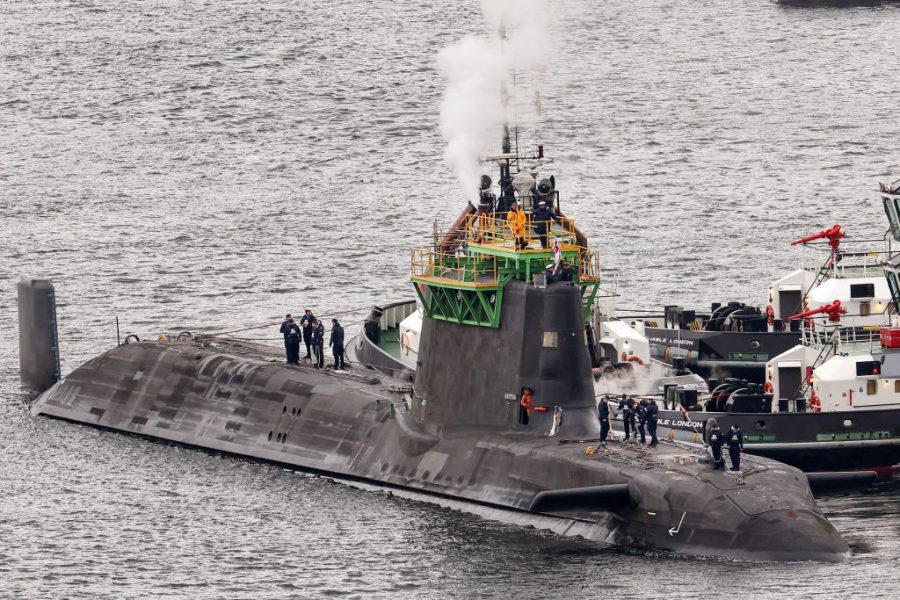
Acquiring, building and maintaining strategic nuclear weapons is arduous and expensive. The UK’s long-awaited Defence Investment Plan includes £63.6 billion over the next four years for four new Dreadnought-class submarines, development of new warheads for the Trident nuclear missiles and expansion of HM Naval Base Devonport. Britain has more than 75 years of experience with nuclear weapons; from a standing start the costs would be hard even to calculate.
The proposal, therefore, is that the German government will contribute to the overall costs of the deterrent programme and, in return, will… well, what? A report by the Telegraph refers to Germany seeking to ‘better integrate itself into the existing British and French nuclear deterrents’. One security source is quoted saying that ‘the existing nuclear capabilities [such as Trident] may play a bigger role for the defence of Europe, and of deeper cooperation among European countries’.
There is a suggestion that the Bundeswehr could deploy Patriot anti-missile defence systems to critical UK sites like HMNB Clyde, the home base of the Royal Navy’s submarine fleet and the storage site for the Trident warheads. But all of this skirts round the central issue: what would Germany get in return?
We need to understand clearly the role of the UK’s nuclear weapons. Since 1998, Britain has had only one nuclear delivery system, the Trident II D5 ballistic missile currently carried by four ageing Vanguard-class nuclear submarines; these boats will begin to be replaced by the Dreadnought-class in the early 2030s. The Royal Navy has operated continuous at-sea deterrence (CASD) since 1969, which means that there has been a submarine on patrol somewhere in the world, capable of launching nuclear missiles, at any point in time over the previous 56 years. Deterrence comes from the fact that Britain could retaliate against any nuclear adversary from an unknown location and a platform which is almost impossible to track.
For many years, the UK has maintained a nuclear capability which is an independent, minimum, credible deterrent. A minimum of four submarines is required to maintain CASD; the UK’s stockpile of warheads is, however, relatively small, with a maximum of 260. France is believed to have 290 warheads, China over 600, the United States around 3,700 and Russia 4,400. UK nuclear doctrine states that, except in the most exceptional circumstances, Trident would not be employed as a first-use weapon:
We would only consider using our nuclear weapons in extreme circumstances of self-defence, including the defence of our Nato allies.
Given that the UK has already committed Trident to ‘the defence of our Nato allies’, what greater benefit can Germany hope to gain? The country is already under our nuclear ‘umbrella’. Nato members already proceed on the basis of Article 5 of the North Atlantic Treaty, on the assumption that ‘an armed attack against one or more of them in Europe or North America shall be considered an attack against them all’.
What additional reassurance or protection could Germany derive from closer nuclear cooperation? Article 5 does not contain an absolute commitment on any member to take action – only ‘such action as it deems necessary’ – but it would be catastrophically divisive for the UK to give a stronger commitment in return for payment. It would surely herald the end of Nato as a useful military alliance.
It also seems inconceivable that the UK would effectively sell any leeway over authorisation to use Trident. Launch authority rests solely in the hands of the Prime Minister; each submarine also carries a handwritten letter from them with instructions for the captain if all contact with the UK is lost. The contents of these ‘letters of last resort’ are never disclosed, and they are destroyed unopened and replaced when a new premier takes office. It was to preserve this independence, after the Kennedy administration cancelled the Skybolt air-launched missile in 1962, that Harold Macmillan negotiated the Nassau Agreement under which the United States would sell Polaris submarine-launched nuclear missiles to the UK.
In a conflict involving Nato in which the use of nuclear weapons was deemed necessary, a request to launch Trident would come from the Supreme Allied Commander Europe (SACEUR), a four-star American officer. The Prime Minister’s authorisation would, nevertheless, be required.
There is no obvious additional benefit for Germany in taking on some of the cost burden of the UK’s independent nuclear deterrent. It could not realistically enhance Germany’s degree of protection under the Trident umbrella. The British government must be very careful: ears will have pricked up at the possibility of defraying some of the vast costs of Trident, but we have nothing additional which we can credibly sell.






Comments