
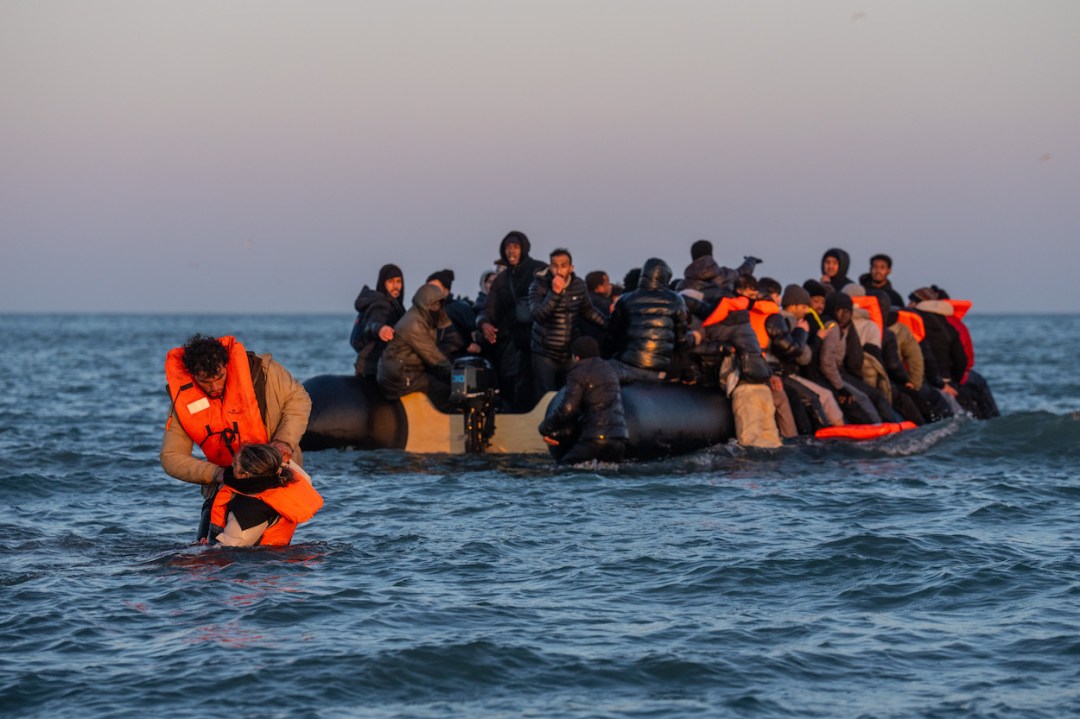
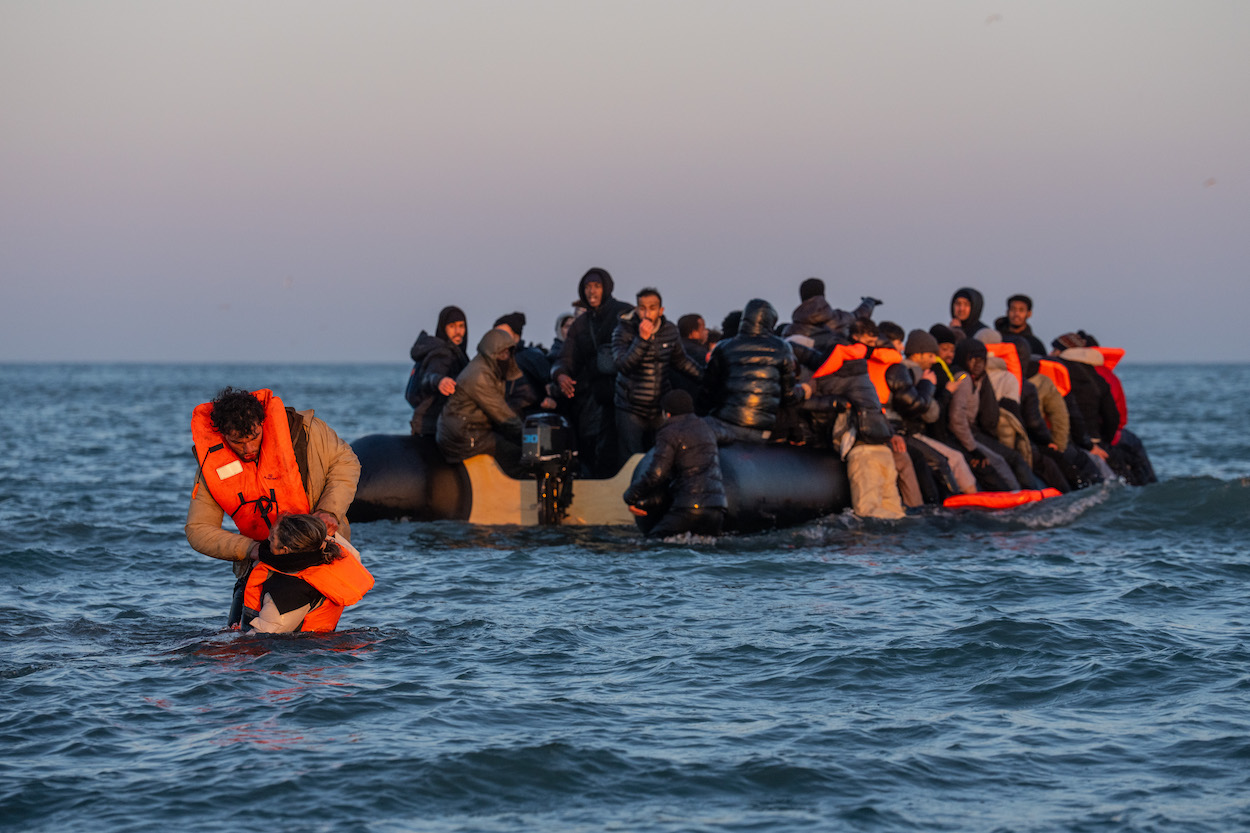
It is nearly a year since Keir Starmer and Emmanuel Macron agreed their ‘ground-breaking’ deal to stop the small boats crisis in the Channel.
Dubbed the ‘one in, one out’ agreement, the scheme was hailed as a triumph by the Prime Minister, and by some of his cheerleaders in the media. ‘A small boats deal with France would be a game-changer for Starmer – and the country,’ proclaimed an editorial in the Independent.
There were one or two more cynical takes on the deal, most of them found in these pages. As I wrote last year: ‘This latest plan to solve the small boats crisis will play out like every other since 2002: a firm handshake, a media fanfare and a complete failure.’

And so it has proved. During the recent bank holiday weekend, 989 migrants crossed the Channel in 14 boats, taking the total number in 2026 to more than 9,000.
That is the number of detected crossings but the true figure could be higher as smuggling gangs are increasingly using yachts to bring migrants to more remote stretches of Britain’s coastline. A report in today’s Daily Mail quotes Lucy Moreton, professional officer at the Immigration Services Union, who accuses the government of turning a blind eye to the new phenomenon.
As last week’s new arrivals were finding their bearings in Britain, a French parliamentary commission was hearing just how ineffectual the one for one treaty has become since it came into force last August.
Laurent Touvet, the director general of the Directorate General for Foreigners in France, was questioned on Thursday about the results of the agreement and the situation in general on the Channel coast.
In total, explained Touvet, 736 migrants have been admitted to the United Kingdom and 783 have been returned to France in the last ten months. The commission did their sums and found this equated to 17 returnees a week, some way short of the initial target of 50.
Touvet admitted that ‘the numbers are quite small’.
Asked by the commission for an explanation for this derisory figure, Touvet blamed the British. They are struggling ‘to provide a sufficient number of candidates for return’.
He continued: ‘While the UK’s political intention was to ask us to accept more people, in reality, we’ve found that the planes carried fewer people. This is largely because of legal proceedings in the UK.’
Within a month of the one for one scheme taking effect, an Eritrean man successfully challenged his deportation under the scheme. In February this year, 16 migrants launched a High Court challenge against the deal, claiming it fails victims of trafficking.
This tactic was utterly predictable but Starmer, despite being a former human rights lawyer, still celebrated the one for one deal as a new dawn in the migrant crisis.
‘With a united effort, new tactics – and a new level of intent – we can finally turn the tables,’ said Starmer at the press conference last July, with Macron at his side. ‘Just look at the steps the French government is planning; subject to their ongoing maritime review, to allow their officers to intervene in shallow waters and prevent more boats from launching.’
Those steps were never taken. The French don’t allow their officers to intervene and so the small boats keep coming.
Starmer made the mistake of trusting the word of Emmanuel Macron
In short, there is no united effort to stem the migrant crisis in the Channel. Laurent Touvet said as much last week before the parliamentary commission.
‘If we had listened to the United Kingdom, who wanted to send about a hundred [migrants] each week, it would have been difficult to accommodate them,’ he explained. ‘That’s also why we tried to scale back that goal.’
Like his predecessors in No. 10, Starmer made the mistake of trusting the word of Emmanuel Macron. It is not in the President’s interest to either stop the small boats or host returned migrants; it is not in the interest of any political party in France. The more that end up in England the better, particularly with the presidential and parliamentary elections less than a year away.
When it comes to stopping the small boats, Britain is on its own.




Comments