
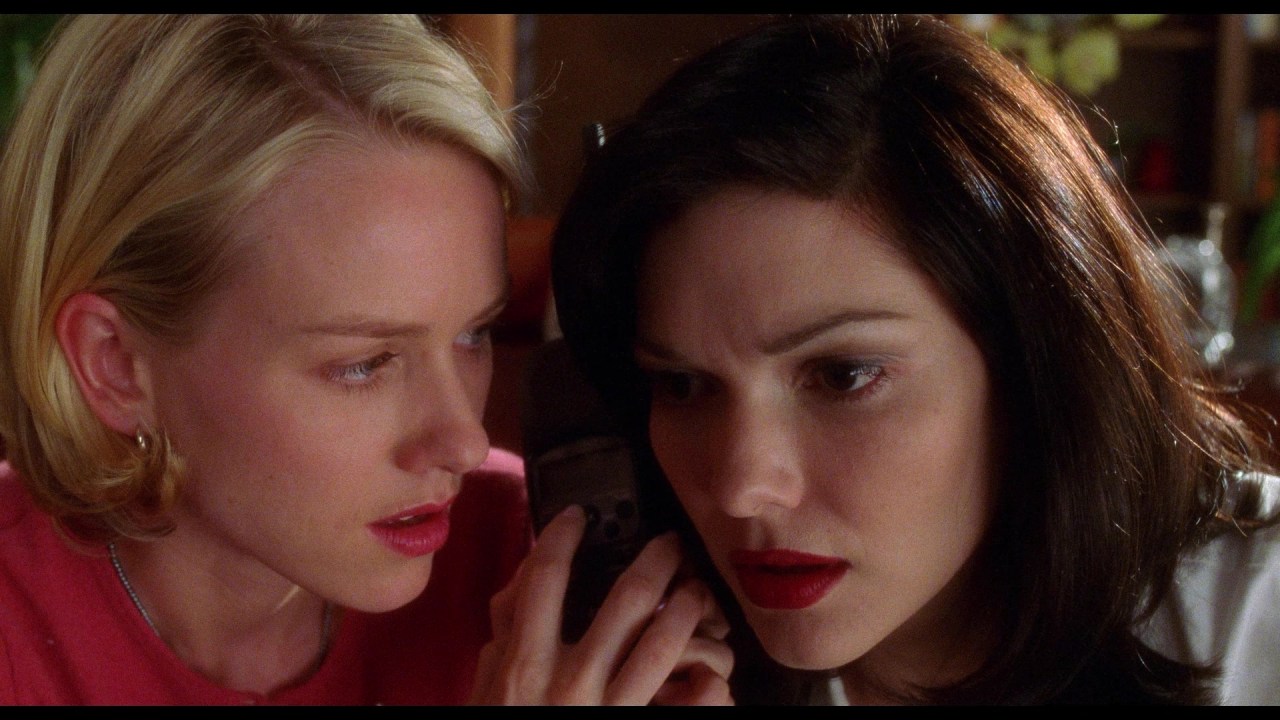
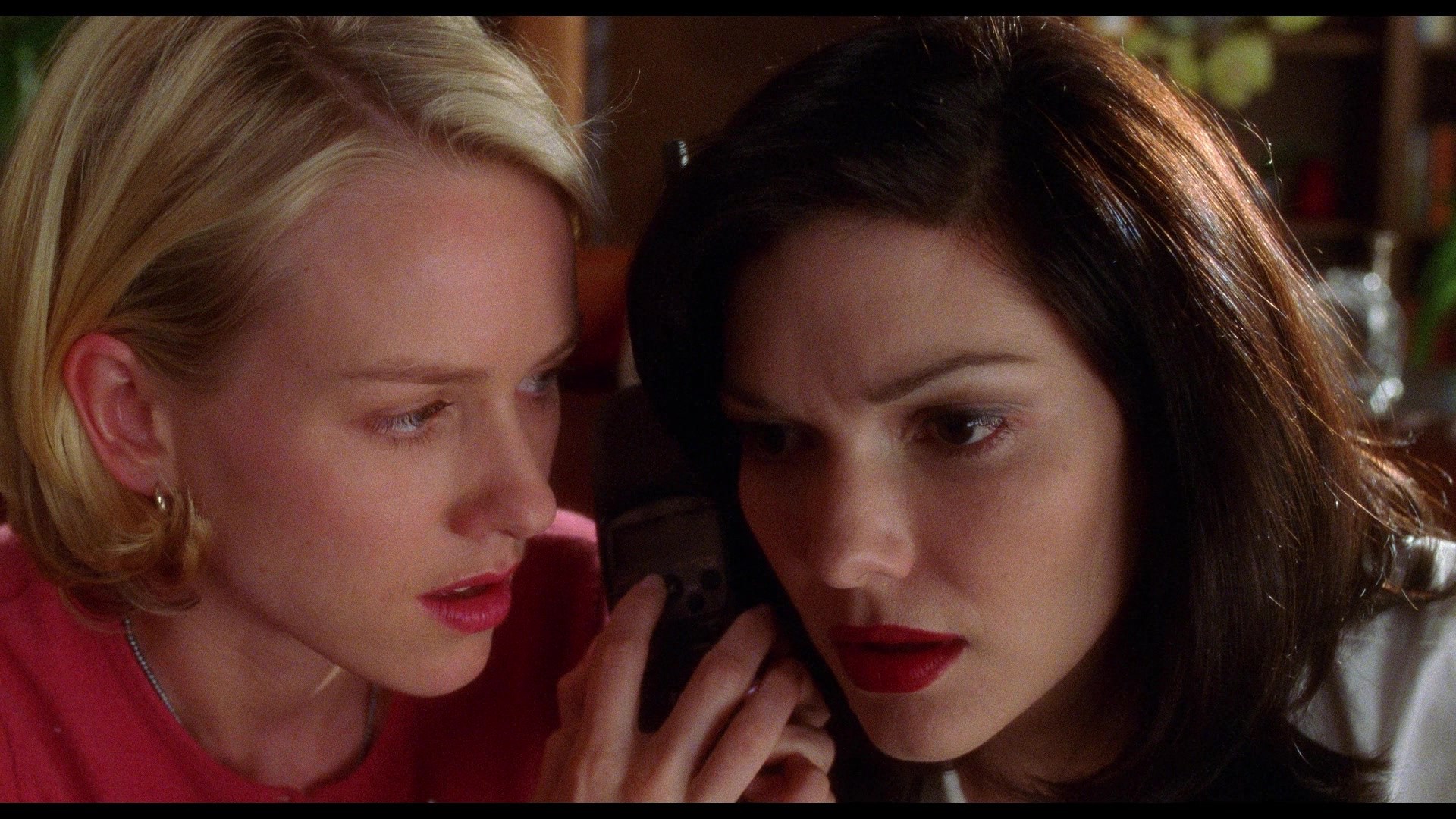
When David Lynch’s film Mulholland Drive was released in American cinemas 25 years ago this Monday, the critic Roger Ebert rejoiced that one of Lynch’s experiments at last ‘doesn’t shatter the test tubes’. Ebert seemed delighted that Lynch had focused on some of the more prosaic aspects of filmmaking – plot, character, dialogue – instead of privileging sound and vision: he argued that his 1997 film Lost Highway was ‘about design, not cinema’.
Most popular
Steven Edginton
Invented claims of lynchings and racist violence are irresponsible — and dangerous
Lynch had been having a bad run. Lost Highway was largely panned by critics for being too obscure, and he responded with the 1999 road drama The Straight Story. It’s tempting to see The Straight Story as a wounded joke: the film was rated a family-friendly ‘U’. Ebert loved the film this time, and compared the dialogue to Hemingway’s. The New York Times’s critic Janet Maslin said that Lynch seemed ‘burned out on the surreal and the grotesque’. Here we were at the turn of the millennium: Gladiator was heading for Best Picture at the Oscars and David Lynch was making Disney films. Big Hollywood had defeated the auteur.
By this point, Lynch was less famous for film and more for television because of Twin Peaks. So he turned to TV studios when he was looking to do a series called Mulholland Drive. The name came first: since at least 1990, he knew he wanted to just make something called ‘Mulholland Drive’. It was a road that he lived near in the Hollywood Hills, and he would have been driven down it when he was evacuated due to wildfires shortly before his death in January 2025. In 1999, Lynch shot a 90-minute pilot for ABC, the difficulties of which are documented in a New Yorker profile, but the studio didn’t like it. It never aired, but with the help of the French production company StudioCanal, Lynch shot additional material in October 2000 after writing an ending.
Lynch closely guarded which parts were shot for the pilot, and which parts weren’t. In the opening sequence, the Hollywood great Robert Forster appears as a detective investigating a car crash. He is not seen again for the rest of the film. Would the detective have popped up later in a series? We don’t know, but when the film premiered at the 2001 Cannes Film Festival, Forster was surprised to learn from a friend that he was in it.
The advantage of Mulholland Drive being a film is intimately wound up with it being freed from the demands of television: the pressure to resolve, to explain, to provide reasons to keep watching. Lynch ended up abhorring even the idea that people could pause this film: there were no chapters on the DVD release. The best arguments for cinema are that it requires concentration, that it involves a kind of ego death, as opposed to a lot of passive, consequence-free television, which you can chill out and laugh to, yes, but doesn’t have the same depth.
Despite the difficult process, Mulholland Drive is now considered Lynch’s greatest work, where he achieves his golden mean, where his virtues conquer his vices. It has achieved more popular recognition than any of his other works: Sight and Sound named it as their ninth best film of all time in 2022, and the New York Times declared it the second best film of the 21st century in 2024, behind Parasite. Even the Academy, who largely ignored his career, nominated him for Best Director. That this was produced in a hit-and-miss period for Lynch makes it more interesting. In the same year of Mulholland Drive’s release, he released a sitcom about humanoid rabbits. In 2006, he released his final, least accessible and longest film, Inland Empire, which was recorded on a handheld digital camera. I have not watched this, based on the advice of one friend who did so and at one point ‘just threw up’. Not all reactions to art should be comfortable, but this is pushing it for me.
A potentially hyperbolic analogy would be that Mulholland Drive being followed by Inland Empire is similar to Ulysses being followed by Finnegans Wake, Joyce’s final work, where the reader realises, as Martin Amis wrote, that the author ‘doesn’t care about you’. While criticising Joyce’s final work, Amis approvingly quotes a dictum ascribed to Henry James: ‘Tell a dream, lose a reader’.
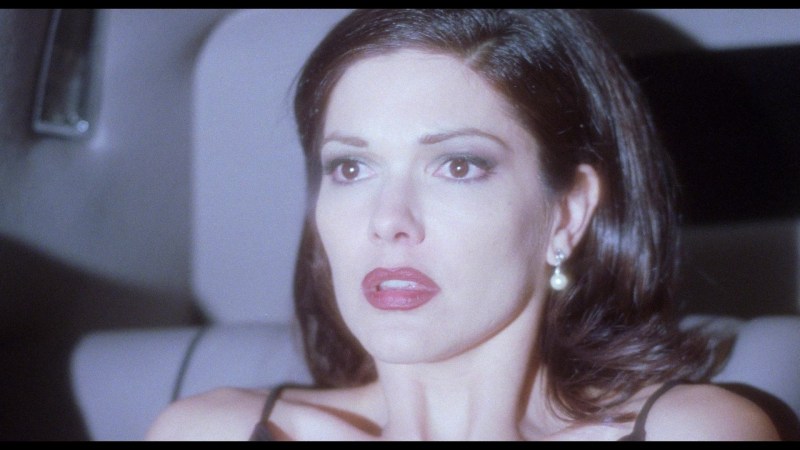
Yet Mulholland Drive tells many dreams: at least one, at most perhaps five. Lynch abhorred discussion of what films were ‘about’, but here’s what Mulholland Drive ‘shows us’. It’s set in Los Angeles. It’s a ‘love story’, according to Lynch, between two women, one of whom (Laura Harring) is an amnesiac following a car crash on Mulholland Drive, and the other of whom is an aspiring actress (Naomi Watts). The actress helps the amnesiac piece together who she is and where she’s from, and they fall in love. Meanwhile, a film director played by Justin Theroux can’t cast his latest film without mobsters trying to pick actors for him, in a plot strand that is only really there to lighten the tone.
When asked in 2017 what the third season of Twin Peaks was about, Lynch replied: ‘It’s about 18 hours’
The film is most memorable, though, for things that have little to do with the plot. Those who have seen the film will find it hard to forget an audition scene, where Naomi Watts fakes (we think) sexual chemistry with another actor. Or when Harring and Watts go to the Club Silencio at 2 a.m, and watch a performer faint after a lip-synced Spanish rendition of Roy Orbison’s ‘Crying’. Or, most of all, the scene in Winkie’s Diner early in the film, where a man starts feeling weird as he talks about a recurring bad dream, a moment which the Telegraph’s film critic Robbie Collin and the film podcaster Sean Fennessey have both said is the most scared they’ve been in a cinema (Fennessey was ‘near tears’). I would concur, and I remember feeling for a while after that scene that I wasn’t going to be okay again.
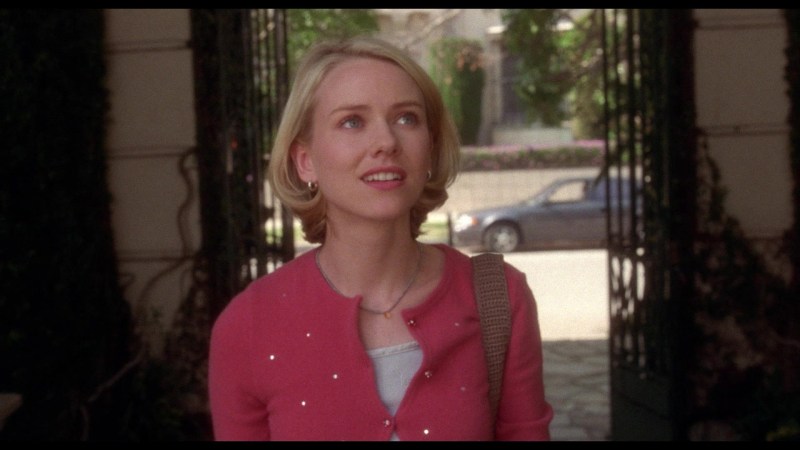
You might notice that I have referred to the two main characters by the actresses’ names: two-thirds of the way through the film, something shifts. I’ll spoil what happens slightly, given Lynch’s disdain for plot. Watts and Harring are suddenly playing two different women: Watts’s glamorous Betty who says things like, ‘won’t that be the day’, is now a short-haired mess called Diane, while Harring is no longer Rita: she is Camilla. The most common ‘theory’ is that the first two-thirds is a wonderful dream, and then Diane wakes up to the horror of her real life. But then again, there’s no reason to assume the reverse isn’t true, and that the end is just a nightmare. What confuses things even more is that the plot and dialogue of the first two-thirds are strange but the cinematography is normal. In the final third, the opposite happens.
When asked in 2017 what the third season of Twin Peaks was about, Lynch replied: ‘It’s about 18 hours’. In dark corners of the internet, hardcore Lynch fans pore over Mulholland Drive like a jigsaw, but Lynch didn’t respect that. One can imagine Lynch finding Susan Sontag exquisite: in Against Interpretation, she argued that such behaviour is ‘the philistine refusal to leave the work of art alone. Real art has the capacity to make us nervous.’
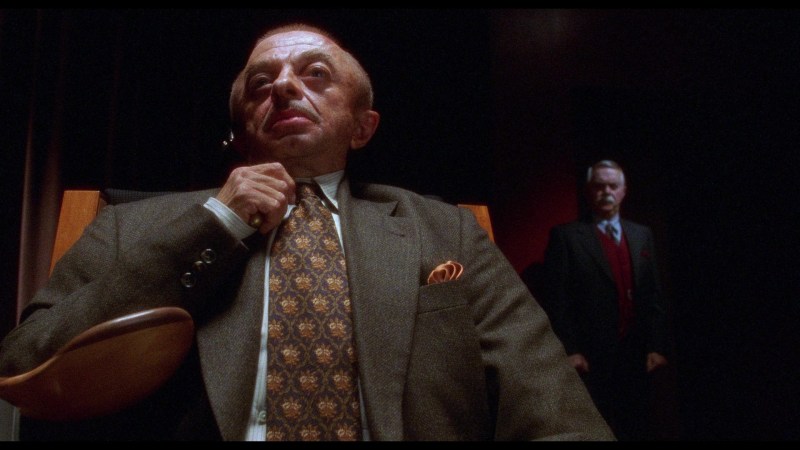
Trying to ‘figure out’ Mulholland Drive destroys rather than embellishes it. Those who don’t like this might enjoy sudoku. Ultimately, the most plausible interpretation of the film involves some derivation of ‘it was all just a dream’: great, thanks. It also proves insufficient for people who want their films to have moral cores: if the film is trying to make a point, it is that ‘Hollywood has a dark side’. Wow.
Lynch was uneasy about the idea that people would talk about his films afterwards: ‘It’s not a word thing. It would reduce it, make it smaller’. Elsewhere, he said that ‘words are a poor way to say certain things. You realise you know more than you can speak’. Wittgenstein argued that there can be no thought without language, but nevertheless Lynch is trying to get there. Of course, his films do have dialogue, but the lines in his work that most stick with me are always these strange declaratives without references: ‘This is the girl’; ‘He’s the one who’s doing it’; ‘It is happening again’. What could ‘it’ possibly be? We don’t want to find out. Lynch, in passing, has a great talent for the words that he so mistrusted.
Lynch’s creative process was to sit down and daydream and see what happened
Some critics appreciated the vagueness at the time of release. Ebert said that ‘there is no explanation. There may not even be a mystery’. Yet others were starved of structure: in the New York Observer, Rex Reed said that it was a ‘load of moronic and incoherent garbage’. ‘Moronic’ might seem harsh, but ‘incoherent’ is not a blow that would have landed on Lynch. The real world doesn’t add up: why should you expect films to?
In the same review, Reed refers to ‘Mr Lynch’s arrogant intention’. Now, this is worth asking: what is Lynch trying to do to his audience? Is he trying to instruct? Is he just showing off? David Foster Wallace found that, with Lynch, ‘you don’t feel like you’re entering into any of the standard unspoken and/or unconscious contracts you normally enter into’ with a director. He didn’t feel comfortable, saying that ‘people like this also make me nervous, and I tend to do my admiring from a safe distance’.
The implicated question is: was something wrong with David Lynch? Critics and writers have pored over his backstory and been surprised to learn of no prior trauma, no rough childhood. Lynch said that he grew up in a ‘perfect world… my childhood was elegant homes, tree-lined streets, the milkman, building backyard forts, droning airplanes, blue skies, picket fences, green grass, cherry trees’. He was fairly popular with the other kids at school, and loved the films of Billy Wilder: later influences were Francis Bacon and Alfred Hitchcock. He had no commitment to vices that significantly altered perception, instead choosing to drink a mad amount of coffee (he had his own line of organic blends and used to wee in front of the crew on set so as to not lose time) and chain-smoking the cigarettes that eventually gave him emphysema.
The most important purchase, he once told aspiring writers, is a comfortable chair. His creative process was to sit down and daydream and see what happened. How many of us ever do that? There is something beautiful and human in relying solely on the mind in an empty room. In an age of artificial intelligence (sorry), a purist commitment to the human imagination is vital. A chatbot trained only on rubrics will write perfectly satisfying films. But great art explodes out of the void like nothing that came before it. Its origin can seem mystical, but it’s just imagination, and we never indulge it. Daydreams are elusive: they can be informed by what’s happened to us, or they can be almost psychotically random. What Lynch’s films do is sever the link between circumstance and art in favour of this one thing, imagination, which is wilder than trauma and confession and relatability will ever be.
In his novel Bag of Bones, Stephen King ventriloquises through one of his characters that ‘eighty-five percent of what goes on in a novelist’s head is none of his business… So-called higher thought is, by and large, overrated. I find it’s generally better to just stand aside and let the boys in the basement do their work’. One journalist referred to this as King’s ’funny-little-green-men theory of artistic creativity’.
But the imagination is just one part of Lynch’s distinctive output; the other part, which he shared with King, was a work ethic. King said that becoming a writer is a ‘direct result of conscious will… What separates the talented individual from the successful one is a lot of hard work and study’. Lynch said ‘the more you do, the more the ideas will flow’.
Lynch structured his life accordingly, paring other things back to let the mind roam. He had the same lunch every day until he got sick of it: an example is feta cheese, olive oil, tomatoes and balsamic vinegar in a bowl. He took after Flaubert, who said that a writer should have a predictable life so that they can be savage in their work. Or as Lynch put it, you need a ‘springboard’ that allows you to ‘mentally go any place’. It can’t be a coincidence that some of the most unsettling artists – King, Lynch and J. G. Ballard in his semi-detached in Shepperton – lived the most unremarkable external lives.
He took after Flaubert, who said that a writer should have a predictable life so that they can be savage in their work
Lynch’s mind was liberated not just from lunch, but other things too, like topicality. Blissfully, there’s little about politics in Mulholland Drive. His limited political expressions were scattergun: he believed in ‘next to zero government’, thought himself to be a Democrat but didn’t ‘like the Democrats a lot, either, because I’m a smoker’. There was some support for Bernie Sanders in 2016, but he ended up saying that Donald Trump could go down as ‘one of the greatest presidents in history because he has disrupted the [country] so much’. The comment isn’t political: it’s aesthetic, so naturally when Trump quoted Lynch at one of his rallies, Lynch disowned the quote.
If a work is going to be timeless, then having politics and relatable morality at the heart of it is a poor omen. These values are as transient as fashion. Scrolling through the other supposed ‘best films of the 21st century’, it is remarkable how many of them already look dated. Who has re-watched Gravity? Even the foreign films that rival Mulholland Drive for the ‘best’ accolade – Parasite and In the Mood for Love – are easily digested. I’ve not seen enough films to claim that Mulholland Drive is this century’s best, but it will certainly be watched in the 22nd century if we’re still here. The reason for the film’s success is something that a kid knows: the power of daydreaming and the importance of a work ethic. Greatness doesn’t come easy, and neither does watching it.





Comments