

The Church of England can always be relied upon to walk into a room just as everybody else is leaving. The question of whether we have reached ‘peak woke’ – the high watermark of Americanised racial politics dictating every aspect of public life – remains open. However, those post-Black Lives Matter efforts, which saw mass demonstrations and acts of self-abasement by companies and institutions, are undeniably more muted and more disputed than they were in 2020. It seems unlikely that, for example, Andy Burnham would ‘take the knee’, as Keir Starmer did so unthinkingly.
This is partly because institutions have learnt from the mistakes of the past six years, while plenty of those pushing this agenda proved to be grifters, advocates of racial violence, or good old-fashioned charlatans. Not so, however, in the Church of England.
Most popular
Steven Edginton
Invented claims of lynchings and racist violence are irresponsible — and dangerous

There is something almost endearing about this; the C of E has long been an institution where the eccentricities of the comfortable middle-classes survive long past their sell-by date. Bishops wore wigs deep into the 19th century, and gaiters well into the 20th century, after they had become obsolete elsewhere. Inevitably, they will sport rainbow lanyards well into the dog days of the 21st century, after everybody else has thrown them in a bin.
The centrepiece of the C of E’s stubborn persistence to a 2020 mindset is Project Spire, its controversial plan to give £100 million in ‘reparations’ for its role in the transatlantic slave trade. It does this despite the fact this role is historically contested, that previous church bureaucrats have always insisted it is impossible to make single lump-sum grants of this size out of church funds, and perhaps most egregiously of all, despite the fact that many local churches face financial oblivion, which the central C of E regards with indifference.
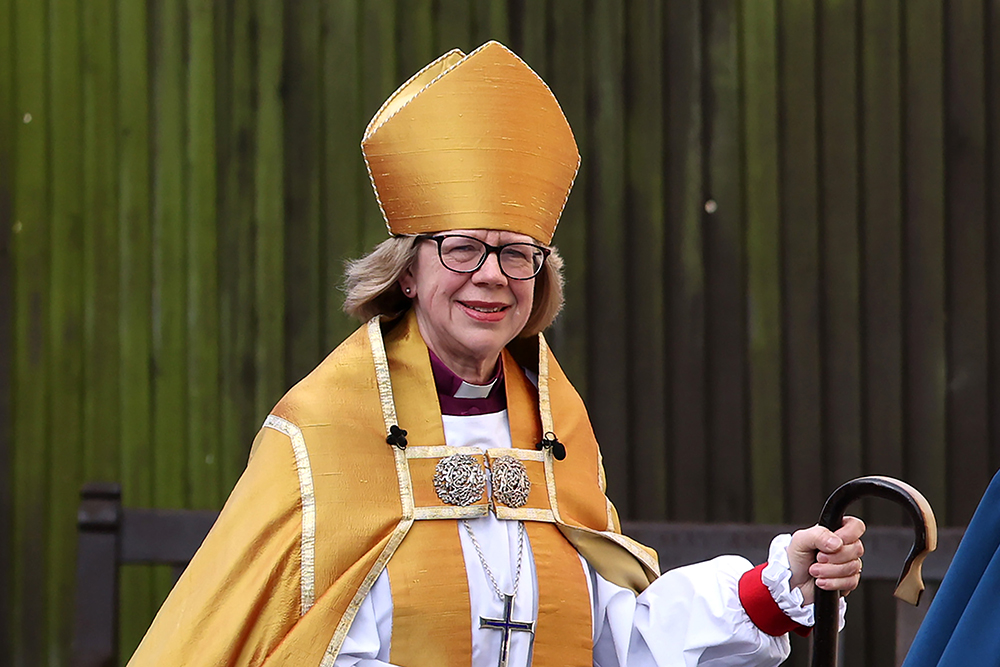
In fairness, the £100 million figure was negotiated down from the swivel-eyed lunacy of the billion quoted in the Justin Welby era. Spire was something of a personal crusade for Welby, who brought a combination of Etonian hauteur and evangelical zeal in his efforts to basically smear as racist anyone who opposed it. The only other thing he did with equal enthusiasm was closing churches during Covid. There was, then, a glimmer of hope when Sarah Mullally entered Lambeth Palace that this scheme might be put out to pasture.
Fast-forward to last month and images are beamed back from West Africa of the Archbishop perched on an enormous gold throne, next to the King of the Ashanti. Given the C of E’s assiduousness in digging deep into how Georgian churchwardens could afford marble monuments in parish churches across the country, you might have thought a quizzical clerical eyebrow or two would have been raised at this, that the thought, ‘I wonder how the King of the Ashanti got to sit on a big gold throne’ might have entered some minds? Not so.
The Ashanti were among the most enthusiastic participants in chattel slavery; around 10 per cent of the entire Gold Coast slave trade went through, and earned money for, their empire. Rather than condemn this with the same vehemence or use it as a moment of reflection on the universality of the sin of slavery, Mullally instead put out a bizarre video of herself staring across the Atlantic, Caspar David Friedrich-style, accompanied by an apparent re-commitment to Spire.
In doing so, the Archbishop is setting herself up for a fall. Not only is Spire loathed in the pews, church lawyers and bureaucrats privately admit it is immoral and possibly illegal under the laws of the Charity Commission.
There is some remaining goodwill towards Mullally, if only for the fact that she is not Welby. However, this will quickly evaporate should she make the pursuit of Spire the defining feature of her archiepiscopacy.
The financial ruin facing many churches is a combination of the post-Covid lag on congregational growth in some places, and high inflation and utility bills, exacerbated by Labour’s spiteful decision to end the Listed Places of Worship scheme, which has seen a 20 per cent price increase on almost all repairs. For context, the quote my husband, a vicar, initially received for repairs on our town’s church roof went from £50,000 to £60,000 overnight. These burdens are a struggle in Oxfordshire; they are a complete impossibility in Blackpool or Bootle or Redcar.
The C of E has long been an institution where the eccentricities of the comfortable middle-classes survive long past their sell-by date
While no donations to local churches go directly towards slavery reparations, the Project will erode morale, increase suspicion of the centre and upturn the fundamental principle on which church finances have been governed for the last 50 years. Most frustratingly, none of the optics of this has resonated with Spire’s most vehement defenders. The only reason its process appears to have slowed lately is due to a series of complex legal challenges relating to charity law. Were it not for the efforts of a small group of eminent legal experts and historians, it might have happened already.
Indeed, alongside Mullally’s video are signs that the central church is readying itself for another assault against its people to ram Spire through. Inevitably, however, its means of doing so are outdated and cack-handed. The official website recently uploaded an ‘FAQ’ page which pretty unsatisfactorily dismisses almost every concern out of hand.
Bishops are fond of pointing opponents to the work of colonial historian Professor Alan Lester, perhaps without realising that his belligerence towards junior scholars and his increasingly quixotic defence of the fraudster Jason Arday, mean that his academic reputation is fast diminishing.
Project Spire is becoming the C of E’s very own Chagos deal – a baffling, damaging decision which is falling apart before its eyes, and yet which it seems either too weak or ideologically captured to do the sensible thing and abandon.
Retirement conventions mean that Mullally’s time in Lambeth Palace will inevitably be short. She must decide whether she wants her tenure to be defined by fights over such a controversial policy. The bumps that Spire has hit of late might prove to be moments of grace, by which she can extricate the Church from its error.
The best time for the Church to have left this particular room was yesterday, the second-best time is today. Now it’s the Archbishop’s job to ensure that it isn’t dragged kicking and screaming from it tomorrow.





Comments