
When I first moved to Britain to study at university as a gangly, nervous Swede who had lived in Asia most of my life, my mother gave me a primer to prepare. It was a book called Watching the English: The Hidden Rules of English Behaviour by Kate Fox. Its pages unveiled a strange world of ironic garden gnome ownership, Byzantine pub-based etiquette and a clinical-level national mania for weather commentary. With each page, the text made me fall even deeper in love with Blighty.
Two decades on, I adore you chaps more than ever — and yes, I know such overt declarations of love make Brits deeply uncomfortable. You are, after all, a nation who shuns Mother’s Day cards that say ‘I treasure you’ in favour of ‘Cheers for being my mum and all that’.
It’s that innate awkwardness that makes you special; an understanding that the currency of existence is unease, disappointment, mild approbation. Take your average Spaniard, and he’ll insist that each day should be lived in fiery passion — how tiresome. Your average Brit knows that life is lived in lukewarm temperatures. (While we’re on temperatures: can I just say, genuinely, you have the best drizzle in the world. It’s a mild spritz that causes no inconvenience whatsoever, and makes uninitiated foreigners finally understand why you treat the simplest of experiences — say, a nice cup of tea in the sitting room — like a religious experience.)
As I travelled the land, I was charmed by the usual suspects — sights of all those rolling hills, the intense greenery of the Lake District, the perfect tweeness of Saffron Walden. Best of all was the discovery of how this compact nation could offer a treat for the ears too; a completely new accent surfacing every 30 miles. And as the years passed, I learned that even if you strip away the singsong of Scouse or Edinburghian purr, you can tell instantly when someone is from Blighty, by their turn of phrase alone. I was in an airport recently when I heard two passengers enjoying this laddish exchange:
‘…so we had to leg it right out of there, didn’t we.’
‘You wot.’
‘Did a runner.’
‘Come off it.’
‘Scout’s honour.’
‘Gutting.’
‘Yeah, rough.’
[A curvaceous woman strolls past us down the terminal]
[Both men speaking simultaneously] Phwoar.
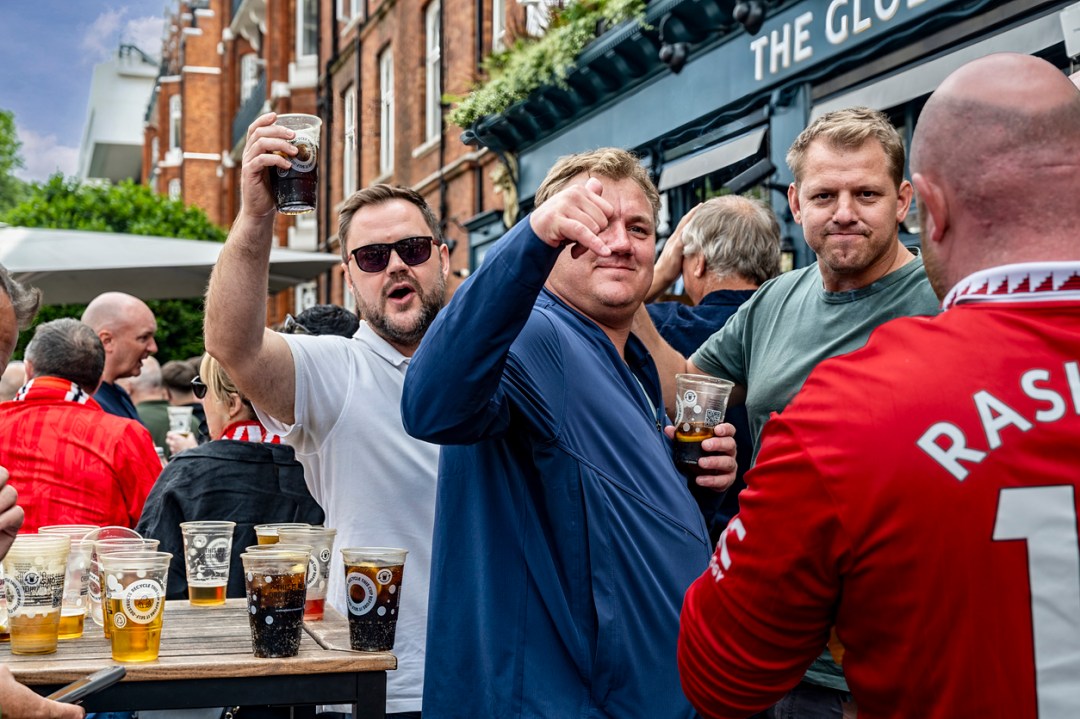
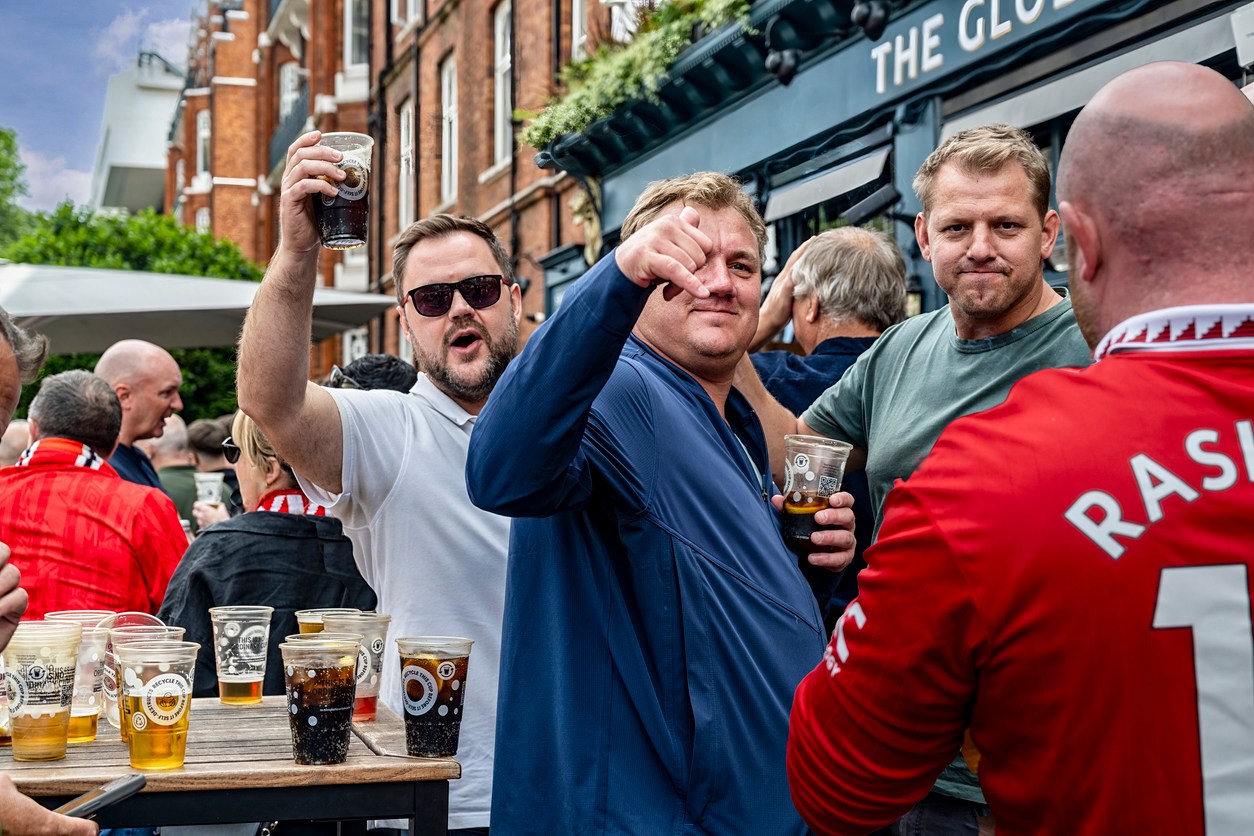
Lovely stuff. Someone come up with a podcast called British Men (Barely) Chatting, and I’ll sign up quicker than you can say ‘chuffed to bits.’ Hopefully they do a series on the charming ability of your language to sound absolutely filthy to outsider ears, no matter the subject. (Episode one: ‘He Thinks He Looks Well Hard With a Fag in His Mouth, But He’s Just a Tit’).
See, even your insults are charming. Go on, call me a numpty, or a colossal plonker. These are words designed by the wisest of people, who understand life requires a level of insult that is strangely endearing. Why? Because lukewarm English anger is so fleeting that insults should be forgotten by all parties instantly.
In degustatory matters, I quickly learned that the UK’s reputation of having bland, tasteless food is, to borrow a phrase no doubt muttered by the two airport lads I overheard, utter cobblers. I have eaten richer, more sublime feasts in random mid-range pubs than I ever have in French Michelin-starred restaurants. On a weekly basis, a Brit will post a shot of their dinner (a heaping bowl of beans on toast, perhaps), below which an American invariably comments ‘Yo my man: it’s 2026 you don’t have to eat like the Germans are still flying overhead.’ But such slings and arrows tragically misunderstand how ruddy good the staples of English life are.
No campaign of ‘Make America Great Again’ could flourish in Albion. It would be seen as far too up oneself
I remember the first time I ate Sunday Lunch cooked by a girlfriend’s mum. The dripping roast chicken, the steam of the Yorkshire puddings, the peas dusted with salt, the homemade gravy — all were lovely. Then I spooned an unidentified, pale mush onto the plate, and took a tentative bite. Cue angelic choirs, my eyes closed in bliss. ‘This is the best thing I’ve eaten all year. What the hell is it?’ I asked. ‘Bread sauce,’ was the answer. A sauce made from naught but bread? Surely a transformation in the same miraculous league as loaves and fishes.
Moments like this cemented a love affair that had been growing, long distance, for decades. Growing up, I hoovered up so much of your classical cultural canon that the creators felt like friends I thought of on a first-name basis. Agatha (Christie), Ian (Fleming), Philip (Larkin). Also John, John and John (Messrs Cleese, Lennon and le Carré). Remove the UK cultural canon, and the world would be a pale, Poirot-less place indeed.
And just to reassure you that this isn’t some unabashed hagiography, I realise Britain isn’t perfect. Some of the names of your smaller towns are frankly ludicrous (looking at you, Scunthorpe). You’ve engineered some tragic catastrophes and historic mistakes (The Charge of the Light Brigade, Gatwick Airport, James Corden). But hey: you’re a nation that celebrates how charmingly imperfect you are; a rare thing. No campaign of ‘Make America Great Again’ could flourish in Albion. It would be seen as far too up oneself. The closest you’d come is ‘Keep Blighty Fairly Good-ish.’
There’s too much more to be said, so we’ll have to end with a speed round. I love how British tanks have in-built teamaking facilities; an understanding that you’ll fight to the death for your country, but only if there’s a strong cup of builder’s brew within arm’s reach. I love how you set your bloodiest of murders in the most bucolic of spots; where is this ‘Midsomer’, and why do I still want to go on holiday there? I love how everyone, from aristocrats to Asbo-collectors, holds strong opinions about ‘the best’ type of biccie; actual headline in Hello magazine: ‘Exclusive – The Queen’s favourite biscuits revealed!’
In short: you guys are a bit of alright. Phwoar.



Comments