
My friends never let me forget the first time I came to London. They couldn’t understand why I was so desperate to cross the city to meet them at London Bridge when I was coming into Paddington. The reason was simple: I thought London Bridge was actually Tower Bridge. I wanted to see this icon of the city for the first time. London left me sorely disappointed – and not for the last time.
London isn’t what it was: from the endless hate marches to the random violence; the sectarian clashes that flare up
After trying and failing to see Tower Bridge on that first visit, I subsequently moved to London in 2013. The first few years were wonderful: the city held promise, adventure, and a chance to spread my wings. ‘What it is to be twenty-four, and fairly new to London, and cutting your first little swath through town,’ Christopher Hitchens said. I knew how he felt.
How times change. Now, I’m tired of London. After 13 years of living in the capital, I’ve moved out to the countryside. I couldn’t be happier.
London isn’t what it was: from the endless hate marches to the random violence; the sectarian clashes that flare up whenever there is a conflict between two other countries thousands of miles away, to the khat-stained streets and mopeds with L plates and kids on stolen Lime bikes snatching phones on Oxford Street. I’ve had enough.
Fare dodging at Kilburn station, close to where I lived, was normal. The ticket barriers were often left open, which made things easier for those who didn’t buy a ticket. When the gates were shut, I once saw a father with his two primary school-aged boys show them how to get through without buying a ticket. Neither station staff, not the British Transport Police officers, did anything. They never do.

Even when my wife and I pointed out someone smoking crack inside the station, Transport for London staff just sat on their hands. It wasn’t their problem, they said. Passengers – including children and elderly people – had to put up with the blatant law breaking. Perhaps they were simply used to it.
Needless to say, my wife started to feel less and less safe walking home from the tube. The tented encampment that existed outside the station for a while didn’t help. It was developed enough that one denizen had a little bedside table with some magazines on it beside their tent. That’s one way to gentrify, I suppose.
Still, the inhabitants of this tent town weren’t as bad as the people who deliberately walked at her, moving out of the way only at the last second, or forcing her into the road.
I took to walking with my wife, hoping that my presence at least would lessen any trouble. They were less intimidated by me, a 6’ 3” ex-prop forward who has wintered well, however, than our English Show Cocker Spaniel, called Tennyson. Despite his floppy fringe and happy trot, the residents of Kilburn High Road often appeared terrified by him. Some of our neighbours, including tough-looking ‘roadmen’, would jump out of Tennyson’s way.
Sadly, that wasn’t always the reaction. Tennyson has been spat at, and even kicked, as he pads around our fair city. The stress we felt when the dog sitter told us one day that he had swallowed one of the innumerable fried chicken bones that litter London’s streets helped confirm our desire to leave.
A cultural affinity for man’s best friend was once something that united Londoners. Not any more. In most of Britain, dogs are seen as a joy. But some newcomers in London look at my lovely Spaniel with horror. It’s a great, sad litmus test for assimilation.
The other was that our building, nice and modern with a concierge and all the mod cons, was repeatedly broken into. The only neighbours we knew got home one day to discover their front door hacked to pieces; an axe had been left in the flat, an unfair exchange for many of the valuables that were taken.
Buying extra security devices and tools off Amazon might not seem like the biggest problem in the world, but doing so was yet another reminder of the fallen city we lived in. Young graduates working for me thought this was part and parcel of living in a city; danger and crime is all they have ever known.
Was I living in the wrong part of town? Perhaps. The borough of Brent, in northwest London, which I called home, has the highest rate of social housing occupied by foreign-born people (61 per cent) for a local London authority. This hasn’t made Brent a particularly cohesive place; totally different cultures rub along uneasily, each largely ignoring the other.
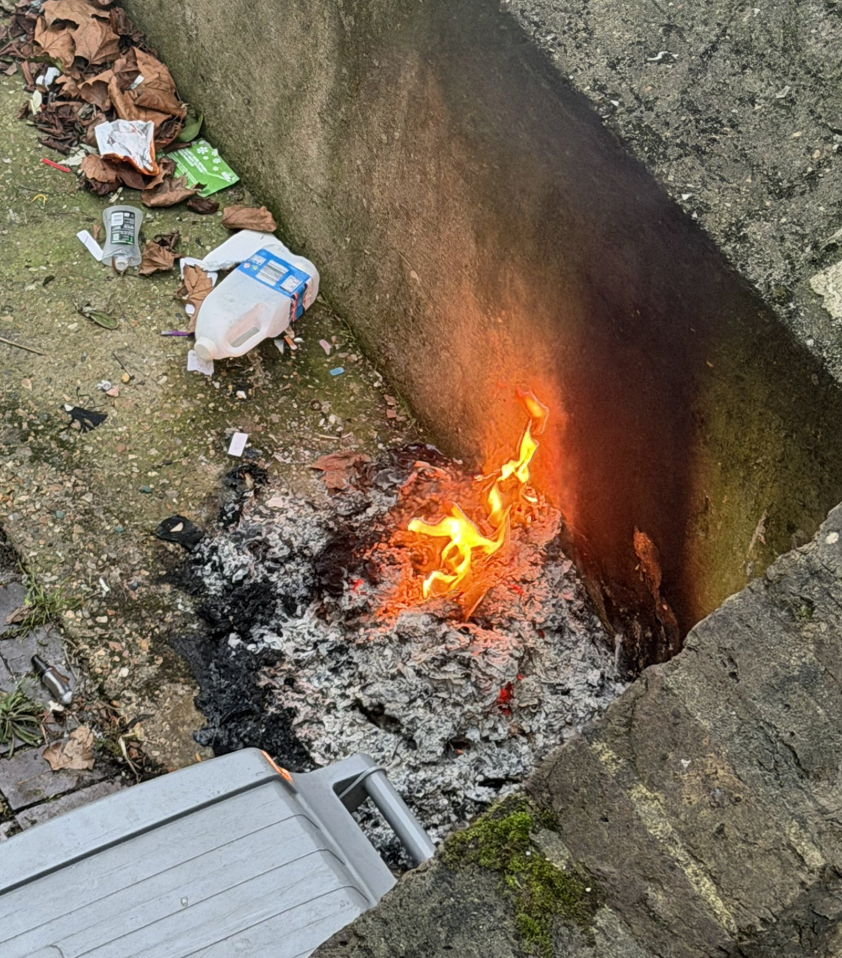
This culture clash sometimes burst out into the open: just after Christmas, I had to call the Fire Brigade because a nearby household was burning rubbish outside. They seemed to think that this was an acceptable way of getting rid of their waste.
The most shocking thing my wife saw was a woman wearing a type of body covering that not only concealed her face and eyes, but seemingly covered them to the extent that she couldn’t see, and had to be guided down the street by her young son. I’d like to hear Sadiq Khan tell us that this kind of diversity is a strength. Is it really?
For months we’ve known that it was time to leave
Alas, my experiences in Brent were also shared by others living elsewhere in London if the ‘@MythoYookay’ X account, which catalogues the various cultural shifts happening in our towns and cities, is anything to go on. In Green Park, one of London’s supposedly nicer bits, my wife once encountered a man sat under a cashpoint outside the tube station openly masturbating. Some nearby police officers weren’t much interested in intervening.
For months we’ve known that it was time to leave London. The final straw was when, shortly before Christmas, cycling down Park Lane to a Christmas lunch, I heard a noise. Thinking it might be carollers, I pulled out my earphone. Instead of Yuletide cheer, I heard “ALLAHU AKBAR!!” on repeat. Hundreds upon hundreds of men were screaming for the release from an Italian prison of a convicted terrorist. It was another shining example of that diversity which we are told is a wellspring for strength.
Perhaps if we had lived in nicer parts of London, we would have held out longer. Or not. The shocking scene of a jewellery shop in Richmond being robbed, in broad daylight, last month, shows that even the most affluent bits are now suffering.
The tragedy is that the decline of London is so avoidable. If the police cracked down on low-level crimes, like fare-dodging, graffiti spraying and phone snatching, it would pay dividends. But, all too often, officers seem reluctant to act. And the criminals get away with it.
The city has bounced back before. I hope it will do so again. On our last day, as I drove my wife (and Tennyson) out of London, we saw a self-driving Waymo heading in the other direction on a test run. It gave me a pang of hope: London might again be a place of vitality and dynamism and joy. But, for now, I feel that only when I see London in the rear-view mirror, or through the window of a plane. I pray that feeling changes.






Comments