


I am writing this on the 17th floor of the Novotel Sukhumvit, on Soi 4, aka “Soi Nana,” in Khlong Toei, Bangkok. For anyone that knows the Big Mango, they’ve already guessed where I am, psychogeographically: from that tell-tale word “Nana.”
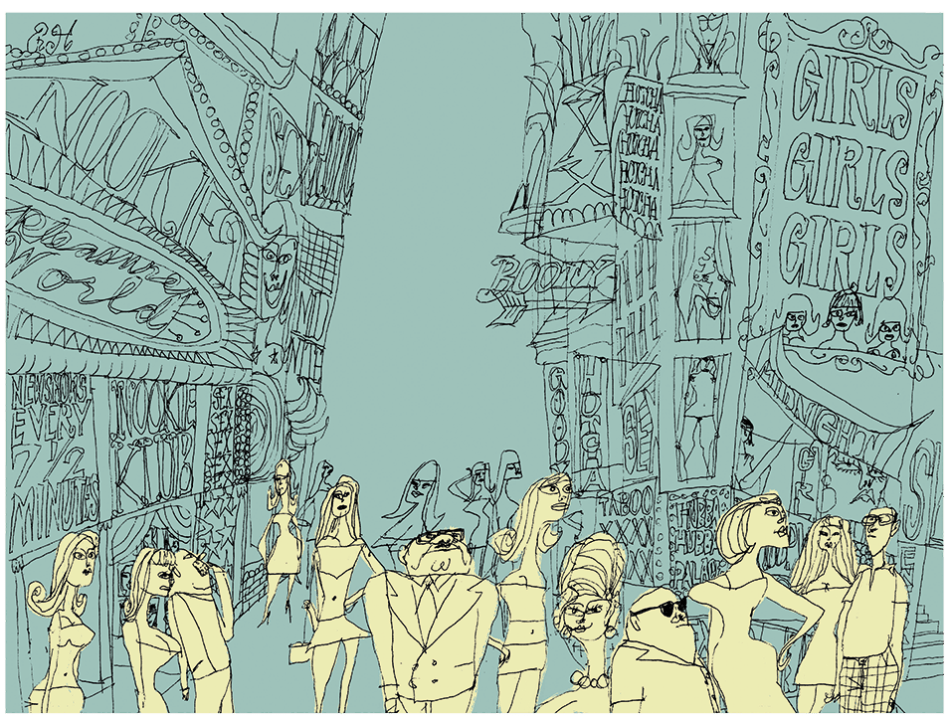
For those still in the dark, I am on the rude, ribald, rambunctious street that is Soi 4, which is full of tattoo parlors, 7-Elevens, dried-squid-sellers, fake Italian winebars, blaring “British” pubs, slightly dodgy pharmacists, hair salons that do laundry as well – it culminates in Nana Plaza, a multitiered al fresco mall of gaudy and noisy go-go bars that probably constitutes the single largest collection of sex workers on the planet.
As prostitution is technically prohibited in Japan, the actual transaction is done via cake
In other words, I’m in one of Bangkok’s most notorious red-light districts. Not by mistake, but by intention. If you need proof: I’ve been coming to this precise corner of Bangkok so long I can recall when this hotel, the sky-scraping Novotel, was a chic, low-slung seafood joint which did great cioppino. And I can also remember what came before the seafood joint – a sleazy open-air beer garden, which I rather liked.
Clearly I am seduced by Soi Nana. But the truth is I am intrigued by red-light districts anywhere in the world, and I actively seek them out. This is not just for the obvious reasons, even if William Faulkner did once opine that “living above a brothel is the ideal for any writer, it’s quiet by day so you can work, but there’s plenty of company at night.”
The reasons I like red-light districts are numerous. One, they can tell you an awful lot about the society that hosts them; two, they are magnificent places to observe the divine comedy of humanity, in all its flawed, lovable, weird, yearning, melancholy, funny, shocking, fried-cockroach-eating, happy-sad strangeness; and of course three, they generally have the wildest bars with the weirdest drinkers with the wackiest stories. So which red-light districts have stayed with me in memory? Which are the quaintest, or quirkiest? Let’s start with my present locale. Bangkok actually has at least three red-light zones. Patpong is the oldster, and it still retains the faintest whiff of the days when it was frequented by GIs having some R&R from the Vietnam War and watching the notorious “ping pong shows.” It is also past its best as a shiny erotic spectacle, and is now being gentrified into a chic boystown for arty high-society Siamese gays.
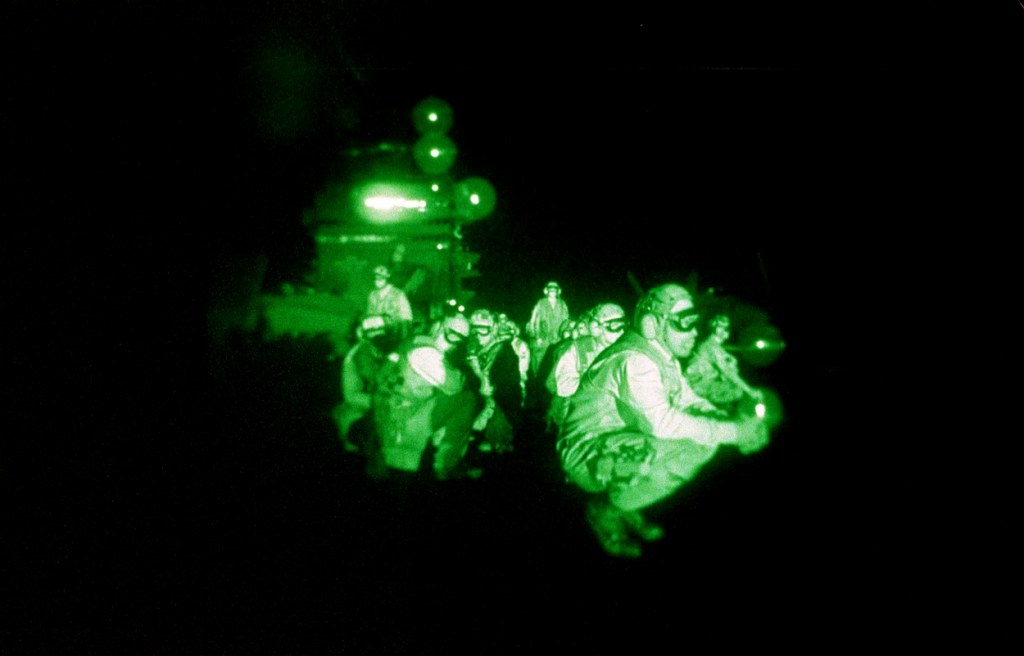
The third red-light zone here is Soi Cowboy. This is the place to go if you want to be dazzled by neon and you like the idea of sitting squished together with Japanese salarymen as you watch 100 girls gyrate on a glass floor above you, at which point you understand the meaning of “no panty bar.”
Despite these attractions, it is still Soi Nana that most compels me, because it poses so many questions. Why, for instance, are the kathoeys – the ladyboys who patrol the soi with the hauteur of catwalk models – so frequently enormous? I’m not talking merely tall. I’m talking 6’2” in flats, hands that can slam-dunk a basketball. Is there some genetic correlation between gender dysphoria and greater size? A hormonal explanation? Nobody seems to know. I’ve asked doctors, I’ve asked the kathoeys themselves. The doctors shrug; the kathoeys tell me to buy them a drink.
Then there’s the newer mystery: the women in niqabs: faces covered, only eyes visible, working the same patch as women in hot pants and crop tops. Their clients are generally Arab men – Bangkok’s Arabtown is two streets away – but what fantasy is being serviced here? Sex with a respectable wife? Something Freudian involving mother? I have no idea. I find it genuinely baffling, which is a feeling I treasure.
Moving beyond Thailand, Asia in general is properly diverse – for good and bad. Big Mango Street in Jakarta is dull, despite the name. Geylang in Singapore is orderly, expensive, with excellent food. As for Hong Kong, to my surprise it barely has a red-light zone, unlike Kolkata, which definitely has – and I wish it didn’t.
In Kolkata I saw girls who looked distressingly young, daubed in makeup. I was told they were Nepalese girls brought down from the mountains. It is probably the only occasion I have fled a red-light district in moral horror – which is my failing, of course. But at least I am honest.
Japan, as always, is in a category of its own. In Osaka there’s an entire neighborhood where exquisite young women sit displayed in the ground floors of traditional wooden houses, the front wall simply removed. They pose on cushions in nurses’ uniforms, or tartan skirts, or artfully loosened kimonos. Each is supervised by a madam sitting nearby, invariably scrolling her phone, suffused with terminal boredom. As prostitution is technically prohibited in Japan, the actual transaction is done via cake. No, really: you buy a cake and that entitles you to take the girl upstairs where you can have your cake and eat it.
Europe is almost as varied when it comes to red-light districts. For real cultural peculiarity, I recommend Germany. I was once sent on an assignment, with an American photographer friend, to investigate the sex business in Cologne. The Germans are pretty relaxed about sex work, and in Cologne that relaxation has been industrialized.
For example, you can visit Europe’s biggest single brothel, Pascha, with its “ten floors of whores.” You can also go to one of Germany’s many FKK clubs – 1920s nudist clubs which have become upmarket bordellos, often complete with hot tubs, saunas, luxury gin bars, leggy Ukrainian girls and overexcited Taiwanese businessmen.
If that’s too posh, you can visit the official streetwalking zone on the grim post-industrial outskirts. We went on a wintry dusk and as soon as the first streetwalker saw my friend’s camera – he wasn’t using it, it was poking out of a bag – she brutally attacked him with a bottle of Bailey’s Irish Cream.
You could have a ‘souvenir girlfriend’ for the night, if she liked you – and you had the necessary US dollars
Where else springs to mind? I will never forget Cheb, on the Czech-German border, which for a while after the fall of the Berlin Wall became a magnet for prostitution – and the selling of garden gnomes. I am not joking. Driving around Cheb, you’d pass a massive brothel, then a store selling a great selection of gnomes. Then, another cat-house. Then more gnomes. Cheb and its outskirts aren’t the place for everyone, but it’s an absolutely brilliant destination if you desperately want to have bleak, soulless commercial sex just after buying a plastic elf clutching a fishing rod.
Further east, Minsk in Belarus was notable. There I found that the brothels had been made semi-official and were inside the posh hotels, which gave them an air of faded Soviet planning – but with added lingerie. Meanwhile Cuba was similar yet completely different – prostitution was tolerated but it wasn’t localized, it was everywhere. The very first day in-country, a remarkably beautiful girl approached me on a beach and, within two minutes, asked if she could come back to my hotel room. This was about 2 p.m. I said “No” in confusion and she stalked off, giving me a scornful glance which said, “You will regret this.” Ahhhh, she wasn’t wrong.
As for my favorite (Nana aside) that is probably Ho Chi Minh City. Back in the day, prostitution was illegal in Saigon and yet courteously organized: it was mostly found in a fun little bar district, where it was agreed you could have a “souvenir girlfriend” for the night, if she liked you – and if you had the necessary US dollars.
I confess I arranged a souvenir girlfriend, called Bun, and she was very pretty. We went back to my luxe French colonial hotel and then the hotel manager found out and rang up angrily saying “police come, police come now.” It was me that was in trouble: I was about to be arrested.
I thought Bun would be horrified but she just laughed, chucked her dress on, grabbed my hand and led me down some dingy backstairs. Then we escaped through a firedoor and climbed on her motorbike and roared away exultantly, into the sultry whirling starlit tropical night.
All of which brings me back to why I am so drawn to red-light districts. Yes they can often be tough, maudlin, challenging. All of this is true. And yet, if you want to see the vivid pageant of humanity, there is nowhere better.
This article was originally published in The Spectator’s February 2, 2026 World edition.



Comments