Germany’s radical right AfD party is threatening to end the career of hapless conservative Chancellor Friedrich Merz by winning two state elections in former communist east Germany. A hungry fox has entered the chicken coop of German politics and is ready to wreak havoc.
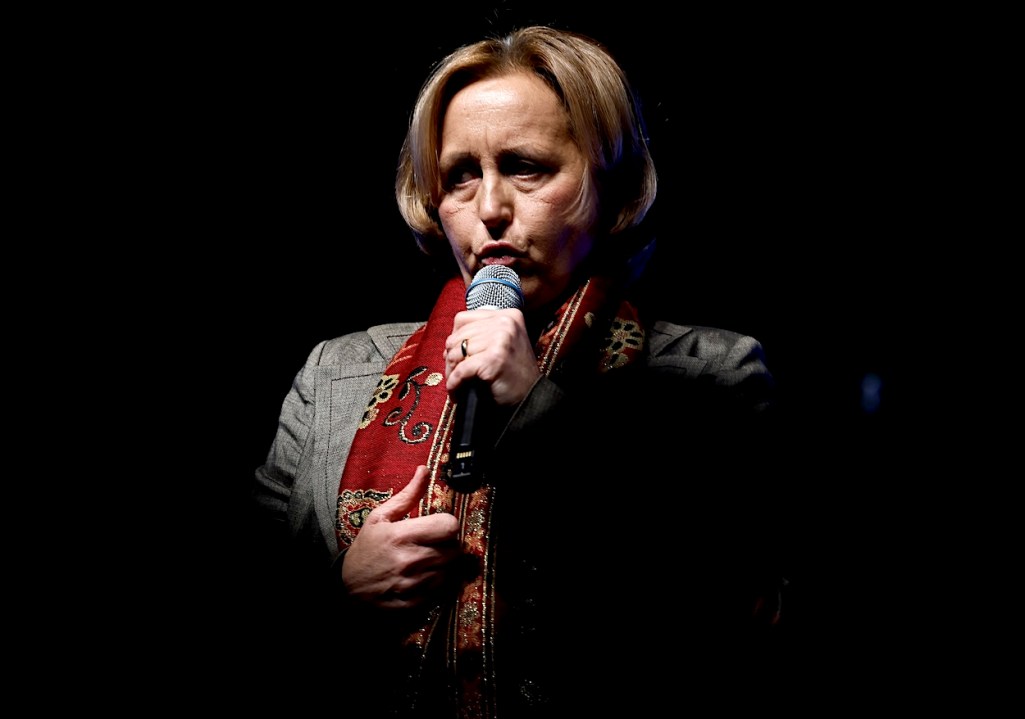
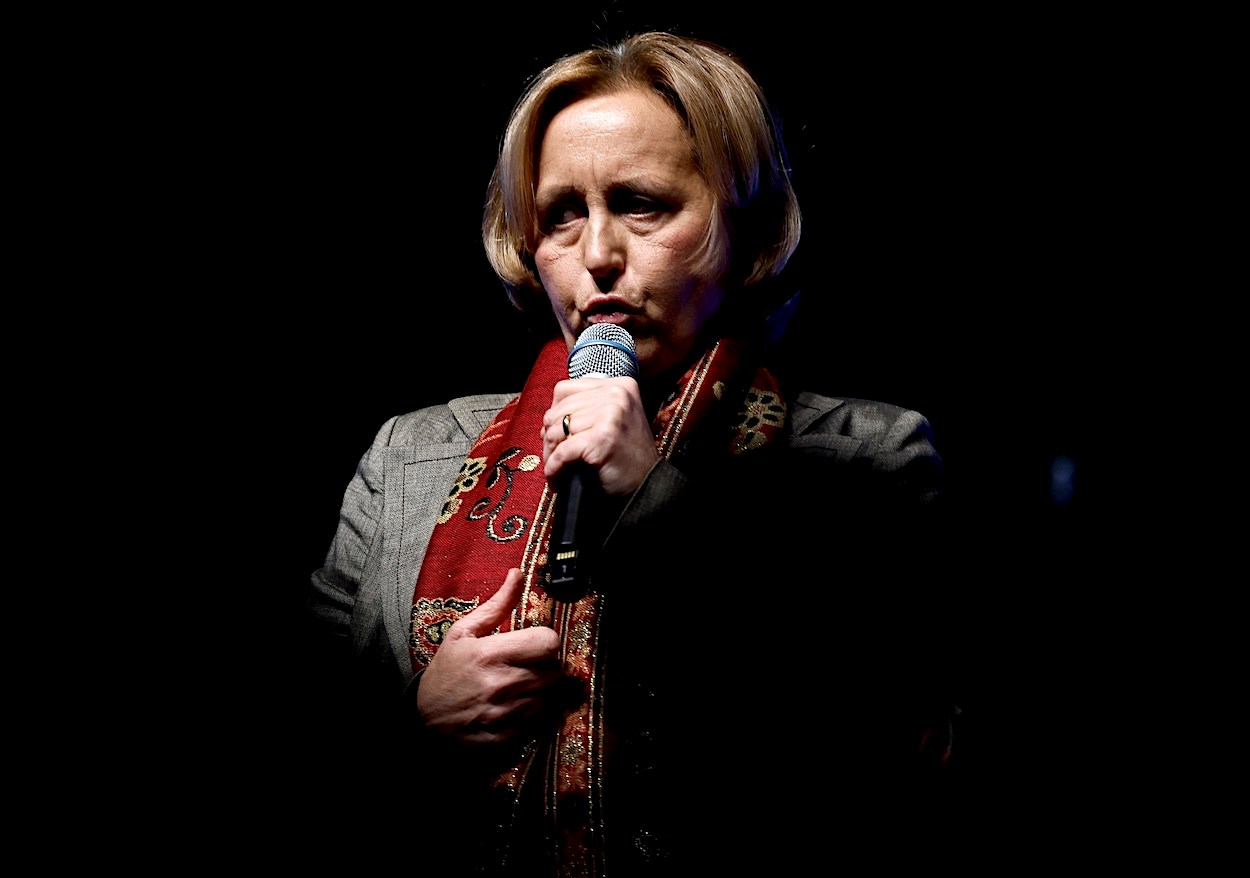
The AfD has topped the polls in Saxony-Anhalt and Mecklenburg-Vorpommern, crushing Merz’s CDU and causing the most severe crisis in postwar German history. One of the more unusual leaders of the upstart insurgents is the blue-blooded deputy leader of the AfD fraction in the Bundestag, Beatrix von Storch, who was born with the title Her Highness Duchess of Oldenburg – one of those many ancient German principalities that vanished in 1918 in the collapse that followed the first world war. In today’s egalitarian Federal Republic, Frau von Storch is about as aristocratic as they come, but she is not just noble, she is royal. As a scion of the House of Glucksberg, which gave its genes to most of Europe’s monarchies, she is a third cousin of our own King Charles – and related to the reigning monarchs of Spain, Denmark and Norway too, not to mention the deposed royal houses of Russia and Greece. As such she is in a very distant line of succession to the British crown but believes that most Brits ‘are glad that a German won’t sit on the throne’.
When I caught up with her last week in Berlin, Frau von Storch, 55, was busy campaigning for the weekend state elections in the capital and in the neighbouring state of Mecklenburg-Western Pomerania, and was more keen to talk of what she terms ‘the new elites – who inhabit a parallel world that no longer has anything to do with the working population’, than her own regal heritage.
In words that will ring bells on this side of the North Sea too, she castigates the ‘new elites’ for ‘celebrating “diversity” while radical Islam continues to spread; they push the “Green Deal” while our industry is being destroyed. While women and girls are being raped, they tell us we can choose our own gender’.
For many observers outside Germany as well as inside the country, the prospect of a hard right party coming to the fore and even forming a future national government is a frightening one given the country’s dark political past, and the internal security service, the BVD (the Federal Office for the Protection of the Constitution, the equivalent of MI5) constantly monitors the party, searching for evidence of neo-Nazism.
Frau von Storch is suitably scathing about the agency’s efforts: ‘The BvD is not independent but follows government directives,’ she says. ‘The established political parties are abusing the domestic intelligence agency to combat their political competitors.’ She points out that the agency failed in court in their attempt to prove that the AfD were ‘confirmed right-wing extremists’ because ‘their arguments were very weak. They admitted that they could not prove that we wanted to abolish democracy or the rule of law. Instead, they accuse us of “hostility towards Muslims” just because we warn of the dangers of Islamization. That’s simply ridiculous.’
Any suggestion that her party may have a taint of brown is especially sensitive for Frau von Storch because she has an uncomfortably close family connection with the Third Reich herself. Her maternal grandfather, Count ‘Lutz’ Schwerin von Krosigk (1887-1977) was Hitler’s finance minister throughout the entire 12 years of Nazi rule from 1933-45. He continued as a senior minister in the short-lived Doenitz government that followed Hitler’s suicide, and was briefly jailed between 1949-51 for profiting from Jewish victims of Nazi rule.
Beatrix was a child of six when the Count died aged 89, had few meetings with her grandfather, and has no memories of him. ‘He accepted his punishment as a just atonement,’ she says of his jail sentence. She is identified with the moderate conservative wing of the AfD rather than its abrasive nationalist faction, and as a member of a family who lost land when Germany’s borders shifted westwards in the territorial adjustments that followed the debacle of second world war, I suspect that she has scant sympathy for those members of her party who are pro-Russian and dance to Vladimir Putin’s tune. Indeed, she and her husband, the businessman Sven von Storch – a fellow aristocrat from Mecklenburg – founded a pressure group that has campaigned – so far without success – for compensation to be paid to the original landowners of land and property seized by the Soviets in the east after 1945.
The advance of the AfD is directly threatening the survival of the Christian Democratic Chancellor Friedrich Merz, but Von Storch says that he is the author of his own downfall since as a nominal conservative he has committed the cardinal sin of fiscal incontinence. In words that will also raise echoes here in Britain she says: ‘Merz promised a sound fiscal policy but instead he has set in motion a trillion euros in new debt. By the end of the decade Germany will be spending tax revenue only on pensions, Interest payments and defence. Everything else will be financed through debt. Not even the voters of his own party will forgive this breach of trust.’
Frau von Storch has warm words for Britain’s contribution to the new-right renaissance
The rise of the insurgent parties of the new right is not confined to Germany, but is a Europe-wide phenomenon. Frau von Storch has warm words for Britain’s contribution to this renaissance: the Reform UK party led by Nigel Farage. Asked whether Reform and the AfD are sister parties, she replies: ‘I am delighted by Nigel’s success. The success of Reform strengthens our shared ideals throughout the west. Reform and we pursue the same goals: preserving the nation state, national borders and sovereignty. We do not want to be controlled by the European Union or any international organisations.’
There can be little doubt about Beatrix’s seriousness or determination. ‘For us one thing is at stake,’ she says: ‘To prevent Germany’s decline.’ That is the long journey she set out upon as she evolved from membership of the liberal, pro-business Free Democrats to the foundation of the AfD in 2013. A former MEP, she now is no. 2 in the party in the Bundestag where the AfD forms the official opposition to the coalition government that Merz’s CDU heads with the Social Democrats.
So far, the established centre and left-wing parties have kept the AfD out by erecting a ‘Brandmauer’ (firewall) against any form of cooperation with them in local or national government. Von Storch does not believe this barrier will long endure. ‘We will either enter government in alliance with other parties or form one of our own’ she says of her party’s ambitions. ‘However we can exert the strongest influence we shall.’
She expresses barely concealed contempt for those of her own privileged class who have done nothing to arrest Germany’s decline: ‘There are those with big houses and lots of money who have just watched the decay,’ she says. ‘And there are those with little or nothing who go out on cold winter nights and campaign for us and fight for our nation’s future.’




Comments