
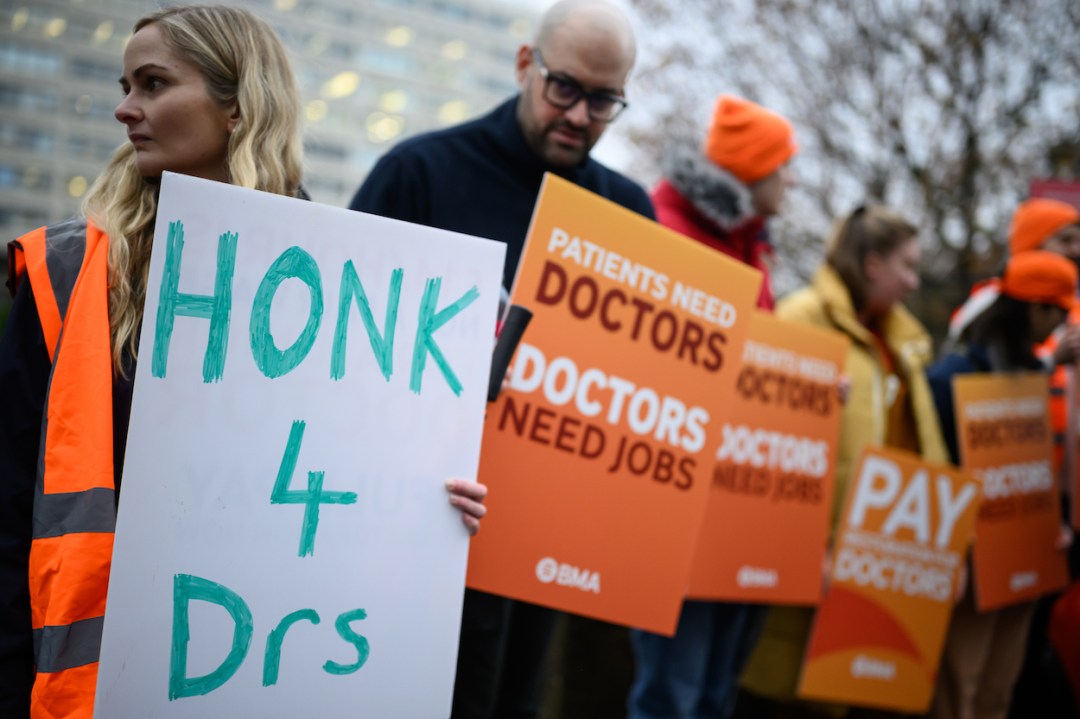
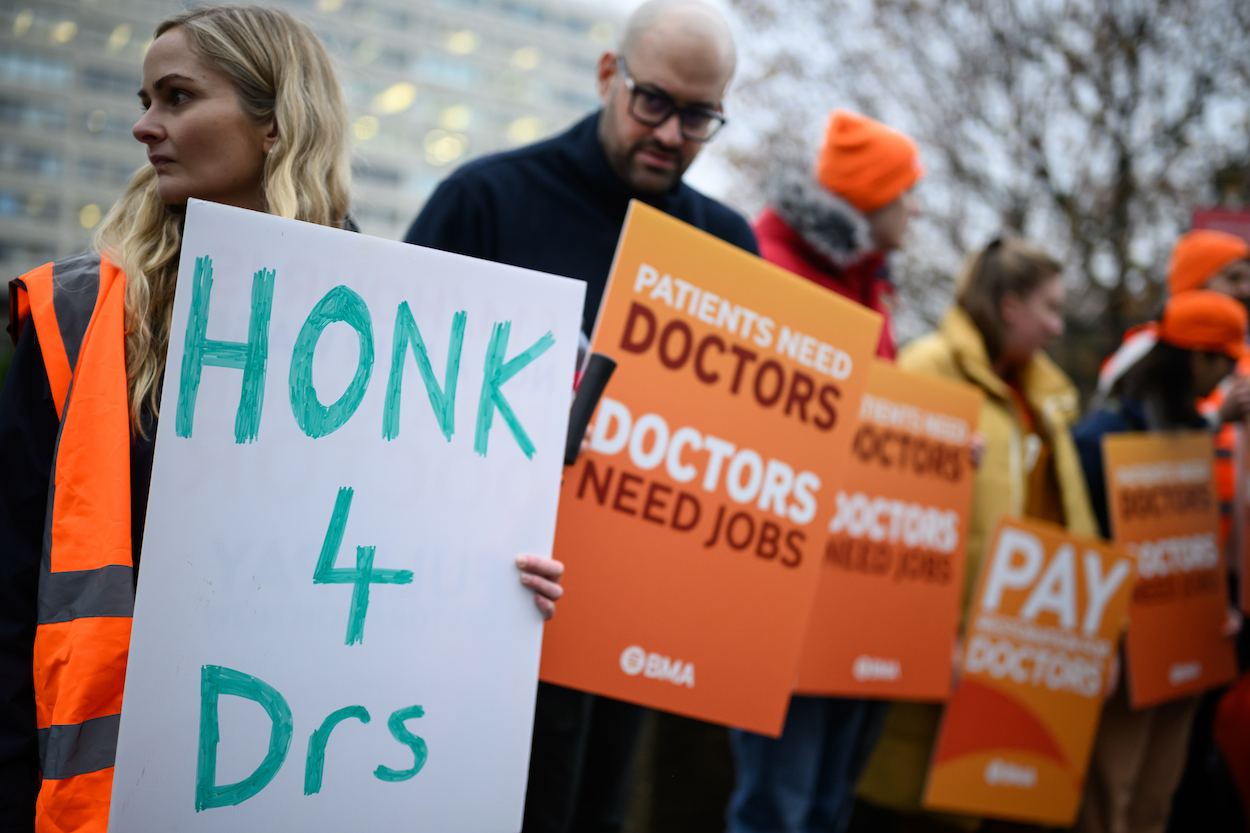
The British Medical Association announced yesterday that junior doctors will be going on strike again next month, with a four-day walkout beginning at 7 a.m. on 15 June. It will be the sixteenth time they have gone on strike since 2023.
The BMA is pressing ahead with this despite being given a very generous offer in March. The government was willing to concede a 4.9 per cent average pay rise this year, meaning that junior doctors would be on average 35.2 per cent better off than four years ago. Some more experienced junior doctors could, with additional earnings such as for working unsocial hours, be paid more than £100,000.
The BMA continues to insist that this is not enough and that they will settle for nothing less than full ‘pay restoration’. The BMA claims that they have seen pay eroded by a fifth in real terms since 2008/9 and have published a methodology to help explain how they reach this figure.
But as the Taxpayers’ Alliance has pointed out, it is somewhat disingenuous to pick 2008/9 as a starting point. During the 1990s and 2000s junior doctors received very strong real term increases in pay. From 1989/90 to 2008/9 real terms pay increased for junior doctors by 35 per cent.
This was possible because of the strength of the economy at the time. Britain was a net exporter of energy with a booming financial services sector. Perhaps the BMA ought to be going on strike until the government passes planning reform, fracking and another wave of deregulation in the city.
There is also the fact that the BMA is choosing to use RPI inflation in their calculations. The Office for National Statistics calls RPI a ‘very poor measure’ that tends to overstate inflation by around one percentage point. When we calculate the ‘real terms pay cut’ for junior doctors since 2008 using the CPI (the standard measure), we find a much less shocking figure of just 4.7 per cent.
As frustrating as this statistical sleight of hand is, there is a bit of good news. The NHS has been getting better and better at dealing with this industrial action without disruption to services. During the last round of industrial action in April the NHS managed to deliver 94.1 per cent of the elective activity it managed the year before.
So while striking junior doctors can do some damage to the NHS, they cannot bring it to a grinding halt.






Comments