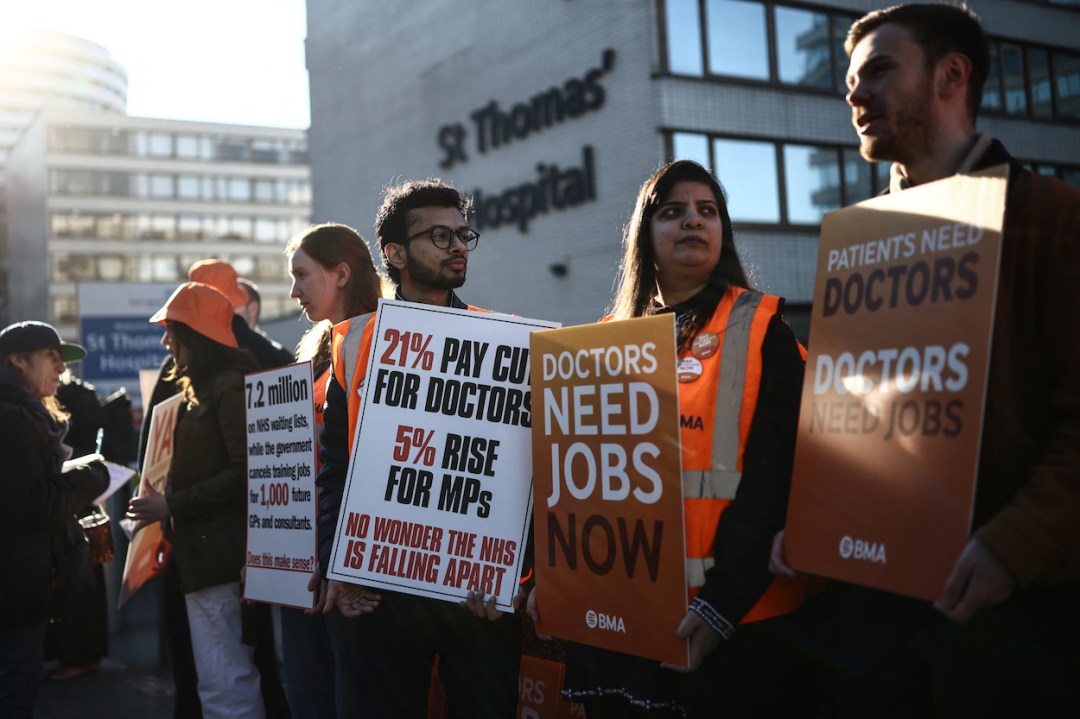
Doctors are currently facing a moral dilemma. Strike, and risk potential harm to patients, or continue, and face the personal consequences. We chose this career, and most will be conflicted.
Do I condone strike action? No, but I can’t entirely condemn it either. Though media coverage often reductively attributes striking to money, the reasons run deeper. They are about working conditions, respect and long-term opportunity, all of which have been eroded, in parallel with pay. We often see opinions on strike action presented by commentators who are no longer practicing medicine. I struggle to reconcile with these views. The work today is not comparable.
I am lucky – I’ve reached the top. But I am concerned for my younger colleagues. They will work years towards a job in a system that no longer seems to respect them, with more debt than any other generation, and few of the benefits of years gone by. With job market bottlenecks, some will even be forced out of medicine or abroad.
I could talk about pension taxation and real terms pay decline, but we know that already. What we don’t talk about is the human cost of this work, and how that can erode one of the most important aspects of healthcare: goodwill.
Like many of my colleagues, I’ve witnessed death in every guise: peaceful and chaotic; clean and bloody; old and young. It’s the job, and that’s all it ever has been. We cope differently: a cry in the car before driving home; an extra glass of wine; even a dark joke, made too soon.
I remember each one. Everything except their faces. Perhaps it has been my mind’s way of protecting me all this time. In the past, I took these events no further than the hospital door, but that defence was breached some time ago.
It only took one case. ‘Are we all in agreement to stop?’ I nodded along with the others in the room. Chaos turned to silence as the resuscitation ceased, and an arm around my shoulder guided me out. A strange numbness came over me. I felt exposed.
In the months that followed I continued to work and the memory faded, as they usually do. But one day, through an unfortunate coincidence of events, the stars aligned. The trigger was visceral and I was transported back there immediately. Jolted into fight mode, the next four months were a blur of anxiety and fear, which invaded every aspect of my work and home life.
I felt ashamed but begrudgingly accepted a referral to the trust’s support services. The occupational health doctor was perceptive. Perhaps it was the unwashed shirt. Maybe it was the dark rings under my eyes, or my knee that bounced up and down uncontrollably.
He took me through a questionnaire – moderate anxiety and depression. PTSD was mentioned, though not formally diagnosed.
‘Have you considered taking time off?’
‘No.’ Of course I hadn’t.
The weeks went by and, though I took steps to remain safe in my clinical work, I tried to ignore the building pressure. This finally peaked in a session with a psychologist. As I walked in and sat down, it only took three words. ‘How are you?’ So simple. So effective. Disarmed, and unable to speak, I wept for most of the appointment. Later, I booked in with my GP who greeted me with the same opening lines, eliciting the same reaction. He suggested I take time off. I resisted. It was unthinkable.
But he knew what he was doing. Skilfully, he prised my fingers from the hospital door, eventually pulling me free. Finally broken, I conceded defeat and was signed off. It was the hardest decision of my career.
I can hear the critics: ‘You knew what you were getting yourselves in for.’ I get it
My story is not unique. I tell it not for sympathy, nor to sensationalise. You might even question the worth or relevance of an anecdote, a mere case report. N=1 is not what evidence and systems change is based on. Many however, will recognise similarities in their own career.
It does, however, illustrate how trauma compounds over time. It’s a glimpse of what it means to be responsible for life. Though complications can and do happen, when they do it is hard not to take them as personal failure. Some burn out completely. Others leave the profession. Regardless of the reason for leaving, when we do, the rota gaps grow. Those who are left often cover through goodwill, and when that stops, so potentially does the service.
This personal cost is not quantifiable and cannot be remunerated. We deal with it differently and often avoid discussing it. But it would be rare for one not to feel affected at all, and whether we realise it or not, it takes a toll.
I can hear the critics: ‘You knew what you were getting yourselves in for.’ I get it. Yes, we chose this path. It was never going to be easy. But when the rest of the ‘perks’ are stripped back, morale becomes strained, and we question whether the personal cost is worth it. In the name of self-preservation, and implicitly the preservation of the service for our patients, striking becomes thinkable. This goes against our natural intuition.
Whatever your thoughts, look beyond the surface-level argument about pay. Consider the hidden cost and the slow erosion of goodwill. That is the real threat.


Comments