There is a short video on the internet in which the late football commentator Hugh Johns reminisces about what the game had in the 1970s that made it great. He starts making a list – ‘skill, entertainment, cut-throat football’ – and then pauses for a disparaging comment about what came after. The disparagement is mild, though; this is a genial, nostalgic soliloquy, not a rant. Then the list, delivered in a soft Welsh accent, restarts: ‘There were characters, there were elegant players, and there was fun.’ Everything you could want, as far as Hugh Johns was concerned.

Johns died in 2007, but I can’t imagine there have been any developments in football since then that would have caused him to knock the Seventies off the perch he built for them. That said, I’m not here to adjudicate the great and never-ending debate about football’s true golden age. I do, however, want to point out something else that Hugh Johns might have added to his list when building his case for the glorious Seventies. Trophies. My word, they were beautiful in those days.
To illustrate what I mean, I invite you, readers, to recall the cup that the champions of England – the winners of the old First Division – used to hold aloft, up until the advent of the Premier League in 1992. It looks like something from an Arthur Rackham illustration of a fairy tale, the precious vessel in which an elfin king might have jealously guarded an elixir of youth or a lock of hair from his one true love. Yet there it was in the hands of gnarled greats like Tommy Smith or Kenny Burns.
Or try the extraordinary original trophy for the European Super Cup, which used to be contested by the winners of the European Cup (now the Champions League) and the late, lamented Cup Winners’ Cup. It is an enormous medieval-looking goblet that the design team for Game of Thrones might have come up with but then discarded as too ridiculous. It never looked better than in the straining arms of the Ajax team, winners on a squally night in Milan, in 1973 (with every sideburned one of them wearing, for some reason, what look like bathrobes from the team hotel).
And what of the Inter-City Fairs Cup? This appears in a beautiful photograph being gazed at by Billy Bremner, who is waiting for customs clearance at Manchester Airport after Leeds had beaten Ferencváros in the second leg of the 1968 final. Its exact dimensions are hard to grasp – is it small or far away? – and the handles at the side look like angel wings. The website Game of the People deems it a trophy that ‘looked like it could easily have hosted a bunch of silk roses. It had the grace of the inter-war years, the simplicity of austere post-war Europe.’ It was also called the Noel Beard Cup, named not after a roadie with Hawkwind but after the cutler who made it. It couldn’t happen now.
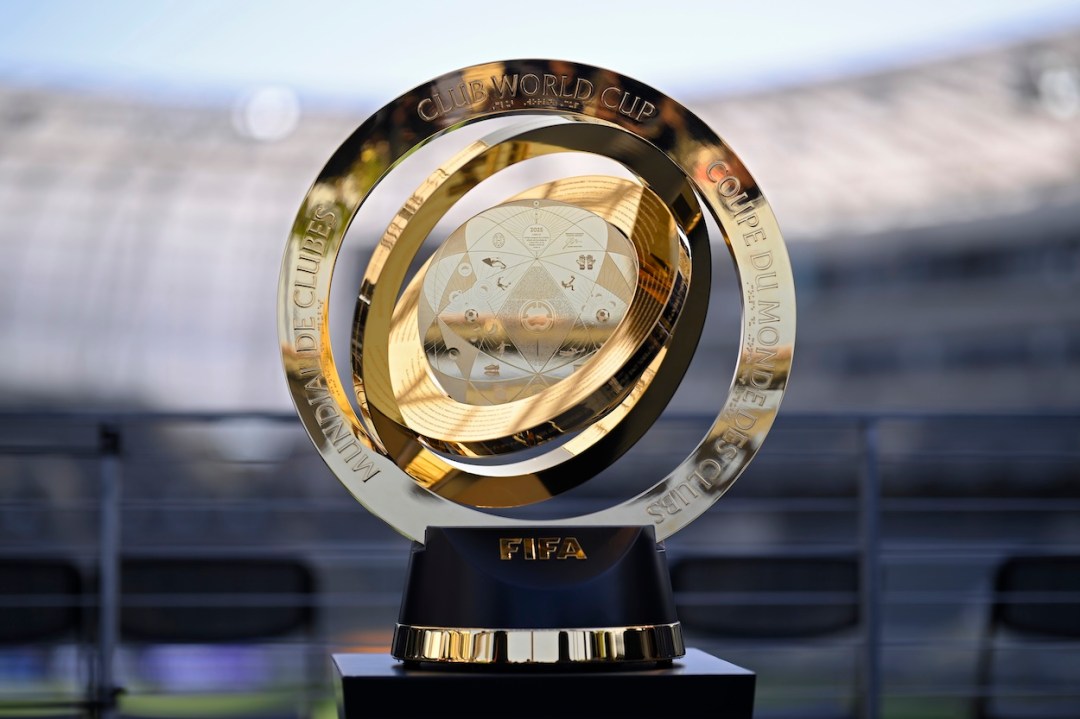
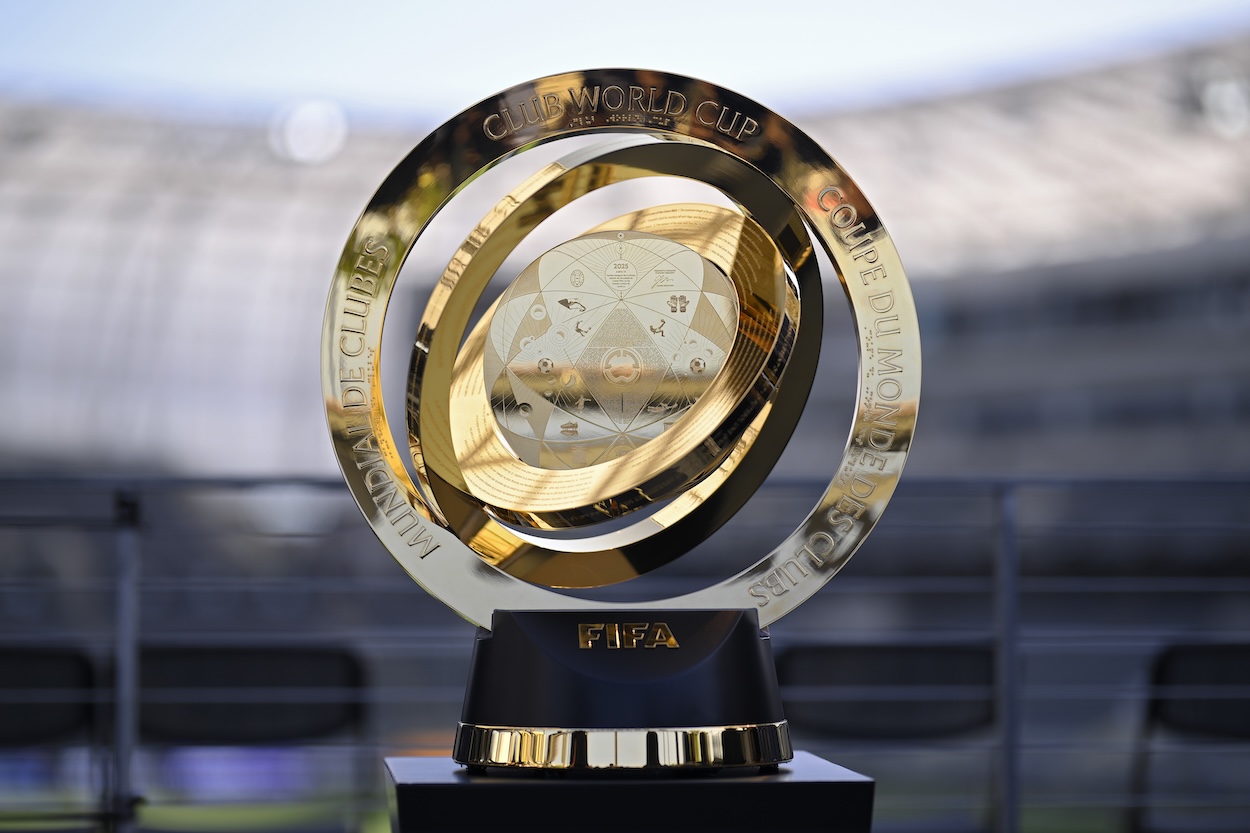
Ah, yes. Now. I don’t wish to carp, but the newer trophies cannot compare. The prize for winning the Premier League leaves me cold, with its golden crown that manages somehow to be both plain and gaudy. The newest version of the European Super Cup is bland. The cup you get for winning the Championship play-offs final is no better. And the latest addition to the roster, the Tiffany-crafted Club World Cup – presented last year, you may remember, by Donald Trump to Donald Trump (oh, and to Chelsea also) – is eye-catching and ostentatious, certainly, but too bombastic for its own good. It looks like something a Master of the Universe-style Wall Street stockbroker might have on his desk, just for sliding his finger along while he’s making phone calls that will destroy the economy of an entire town in the Midwest.
Seventies football can get a bad rap, but it did get some things gloriously right
And it’s not as if football can look to cousin sports for inspiration. The trophy on offer for winning the Prem in rugby is minimalist and forgettable. South Africa, New Zealand, Australia and Argentina compete each year for what looks like one of those ashtrays on string legs that were so common in – oh, the irony – the Seventies. Only the Webb Ellis Trophy, the Rugby World Cup, holds out some hope: a dainty, golden confection that reaches new heights of idiosyncrasy when lifted to the skies by a second-row forward whose hands are bigger than the trophy itself.
I grew up in Ireland in the 1970s, where we also had the exquisite Liam MacCarthy Cup for hurling and the Sam Maguire, based on the eighth-century masterpiece, the Ardagh Chalice, for Gaelic football. The FA Cup, the League Cup, the European Cup – all still with us, thank goodness – and those other departed trophies formed a kind of glittering beauty parade through our lives. This parade was made all the more enchanting because the trophies were the weird rewards for winning contests that involved enormous skill, yes, but were practised at the cost of a lot of pain, sweat and effort. Triumphs splattered with blood and mud. Hugh Johns was onto something. Seventies football can get a bad rap, but it did get some things gloriously right.



Comments