
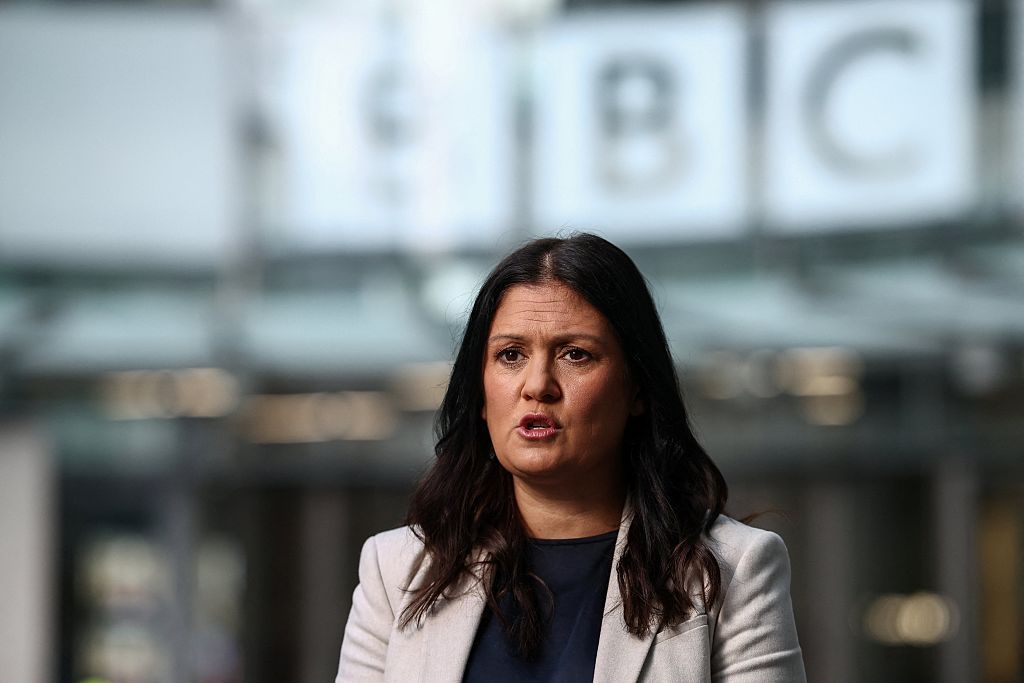
The BBC is lopping bits of itself off again. On the amputation list this time around, according to the Gurdian, are the linear versions of channels BBC Three and BBC Scotland.
We’ve been here before. BBC Three spent the years between 2016 and 2022 as an internet-only streaming treat. Its return to full TV channel status always seemed a little odd, particularly considering its supposed youth remit. The Guardian reports that its most-watched programme last Tuesday had a grand total of 74,000 viewers. Television is a mass medium; when your show hits figures as low as that, you might as well start hiring a few church halls and scout huts and putting it on there. Similarly, BBC Scotland, which launched in 2019, attracts very few Scots to its live offering. These cuts will doubtlessly save the Beeb a few pence. But they still feel terribly small beer.
The creation of BBC Three and BBC Four, like many things that happened with the encouragement of the Blair government, seemed like a good idea at the time but led incrementally to terrible outcomes. The two main functions of BBC Two – to innovate cheekily and to be highbrow – were farmed out to the newbies. This left BBC Two without much of a reason to exist, and it duly filled up with either the bland and forgettable, or things that should have been on BBC One anyway.
These latest cuts are the delayed effect of the freeze on the licence fee instituted by the Tory government. The grotesque anachronism of the licence fee is even beginning to register with Labour. It is mooted that culture minister Lisa Nandy is considering an alternative funding model for the beloved Beeb, sticking a monthly £11 ‘internet levy’ on to household broadband bills to pay for it. Over the last decade, more and more people have, quite legally, stopped paying the licence fee. If Nandy’s wheeze comes to fruition, you will fund the BBC whether you like it or not. This is progress, apparently.
This raises the bigger question – just why are progressives so desperately devoted to the BBC? When almost every other formerly treasured piece of heritage or pre-Blair institution, some of them going back centuries, has been casually junked as archaic old tosh, the BBC is treated as the nation’s holy cow. Progressives are positively manic about it; they start hyperventilating at the propect of its demise.
The clue, I think, is in its continued reach as a news provider. Nandy has also mooted that the BBC’s news output should be prioritised on social media as a state-decreed ‘trusted source’.
Ofcom’s 2026 News Consumption Survey found that the BBC is still the most-used news provider, reaching 77 per cent of UK adults across TV, radio and online. (ITV reaches 50 per cent.) The BBC News website is by far the most widely consulted news source in Britain, even if some people’s regard for the BBC as a whole has plummeted.
I keep an eye on the BBC News homepage, and it is a most peculiar place; a strange vision of an alternative universe, where truths inconvenient to the progressive world view are either downplayed or simply ignored. It isn’t hard to see why it is regarded by the ghastly Nandy as a ‘trusted source’. Ironically, it is a major purveyor not so much of disinformation – though there’s enough of that – but of underinformation. Its sins are mostly ones of omission. It has simply ignored awkward facts and hot potatoes that don’t align with its overarching progressive world view.
This is why people look at you as if you’re mad when you tell them the truth about transgenderism, or the long roster of sex offences involving Pride organisers, or immigration scandals. They trust the BBC, and they can’t believe they haven’t been told. Sonebody would surely have said.
The BBC, still, largely controls the Overton window. But progressives have used the brand’s reputation as a shell company to launder their tosh, always in the infuriatingly bland and plausible tone that used to count for something. This means that the public are misled, their news adulterated through a progressive filter, like meths strained through an old sock.
This, I think, is why progressives like Nandy are so devoted to the BBC. I don’t think they give much of a monkey’s about the other output. But BBC News is viscerally important to them. Their rhetorical fantasy of the world must be maintained, at any cost. And aybody who points out the glaring, gaping holes in its output must be a horrible and nasty person – a foreign bot or a crypto-billionaire fascist, or whatever.
I know it may be very hard for readers to believe me, but this is genuinely how these people think. I know, because I walked among them for many years. This is how, for example, a ludicrous and inflammatory article about ‘bare nails’ being a sign of ‘white supremacy’ – since removed – made it on to the BBC News website recently. It would simply never have occurred to anybody there that this was unpleasant and highly contentious bilge. The BBC is still in thrall to identity politics gibberish and still – like Labour – bemoaning division while stoking it more than anybody else.



Comments