
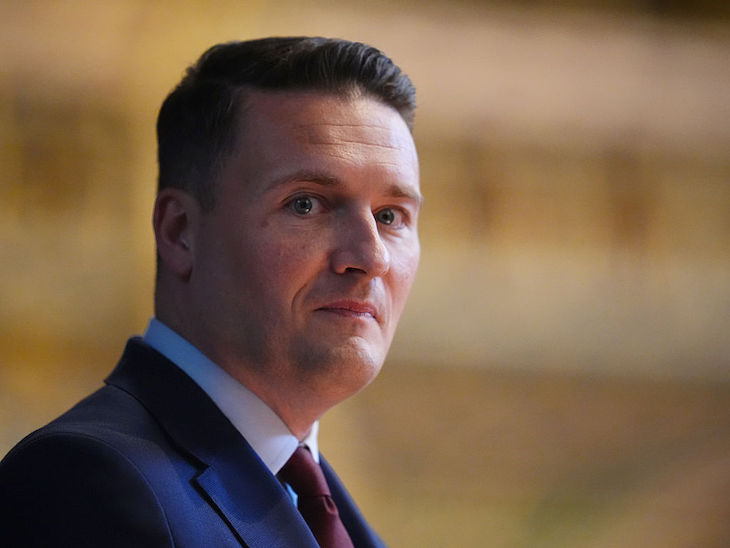
Wes Streeting’s resignation letter began with a paragraph praising his own record in managing the NHS. He said:
“The results are in and I am pleased to report that I have delivered against the ambitious targets you set for me when I became your Secretary of State for Health and Social Care. Today’s figures confirm that we surpassed our waiting times target despite strikes, and that waiting lists fell by 110,000 in March – the biggest monthly drop outside of Covid since 2008 – meaning that we are on track to achieve the fastest improvement in NHS waiting times in history.
The only question that matters in government is whether we leave our successors a better situation than we inherited. Ambulance response times for heart attacks and strokes are now the fastest in five years. A&E waiting times are improving, with four-hour waiting figures also the best in five years. We’ve recruited 2,000 more GPs and satisfaction has risen from 60 per cent to 74.5 per cent since we came to office. We hit our target of recruiting 8,500 mental health staff three years early. We’ve achieved this at the same as balancing the books for the first time in nine years and smashing the 2 per cent NHS productivity target by achieving 2.8 per cent, which means the investment we’re putting in goes further and that the public can have greater confidence that their money is being well-spent.”
While Streeting has certainly made substantial progress the picture on NHS performance is more complicated than his presentation would suggest
Clearly, Streeting will be looking to talk up his record as Health Secretary as his Labour leadership campaign begins. He has been helped this week by new data which shows that NHS waiting lists have fallen by more than 515,000 since July 2024, and that there has been a 6.4 per cent increase in performance since July 2024.
In Westminster, the consensus view is that Streeting’s performance is the one bright spot in the almost past two years of Starmer’s government. The public agree with this assessment as well, if opinion polling is anything to go by. Between 2024 and 2025, the proportion of British adults who said they were satisfied with the NHS rose by 6 per cent, the first rise in satisfaction since 2019. A positive view of the Health Secretary is also shared amongst much of the Healthcare blob. Streeting is widely regarded as an exceptionally effective minister amongst those working within the NHS, and ancillary charities.
So Streeting has real achievements to build upon. But there is more to this picture. When Keir Starmer became Prime Minister in July 2024, the government began to develop performance targets for what they planned to achieve by the end of this Parliamentary term.
These targets were published by the NHS in January of 2025, and included a commitment to treat 92 per cent of patients within 18 weeks by March 2029. The 92 per cent target is what the NHS is supposed to provide at a minimum according to the NHS constitution, it is one of several ‘constitutional targets’ that the NHS has. The government set an ‘interim target’ for the NHS to reach 65 per cent on this target by March of this year, the latest data suggests that they managed to reach 65.3 per cent. So when Streeting says that the NHS is on track on waiting times, he is correct.
But what Streeting misses from his narrative are that other interim targets appear to have been missed. The target which most people will be familiar with will be the four hour target in A&E. The government set itself a target of treating 78 per cent of patients within this four hour window by March of this year. The data shows that in March the NHS managed only 77.1 per cent, and worse – that in April this fell to 76.9 per cent. Other targets have also been missed. The proportion of people waiting more than 52 weeks for treatment was meant to be below 1 per cent, it is currently sitting at 1.3 per cent. Interim cancer targets have also been missed, with the 62 day target for starting treatment reaching 72.8 per cent against a target of 75 per cent.
So while Streeting has certainly made substantial progress the picture on NHS performance is more complicated than his presentation would suggest.
Waiting lists, which are a strange flawed metric for NHS performance for many reasons (many people on the waiting list are dead), is the number which most people in the media and public care about, so perhaps it is fair for him to emphasise his success there. What’s more, when these interim targets were being set, the government assumed they could expect a better relationship with the trade unions than the Tories, Streeting could not have known that the BMA would continue to be so obstinate.
Perhaps the most accurate summary of Streeting’s performance as Health Secretary is, in a government where every other cabinet minister has lurched from disaster to disaster, we’ve at least hit some of our targets. Don’t expect to hear that home truth in any of his speeches in the coming weeks.





Comments