When I think of my childhood summers, I think of Mr Whippy. I think of those familiar, distant Pavlovian chimes, carrying the promise of frozen, sugary goodness. I think of the zombified children sprinting across the common towards a tutti frutti Mercedes-Benz Sprinter. I think of 99 Flakes with all the toppings, of oyster delights half-dipped in chocolate, of plastic cones filled with radioactive-blue soft serve and gumballs…

The ice cream van has been dying a slow death these past 30 years. In the halcyon era of the soft-serve automobile, it was estimated that there were more than 30,000 ice cream vans roaming the UK. Today, that figure sits at around 2,500, with some estimates as low as 1,500.
If the ice cream van is a rare sight, its siren call is even rarer. Just last month, it was reported that vans in Rotherham, South Yorkshire, would only be allowed to play their distinctive chimes between noon and 7 p.m., with a minimum of two minutes between each 12-second burst. Many of these regulations are already national policy, but the proposals would give the local authority stronger control. I understand not having vans loitering outside of hospitals and places of worship, but some of these restrictions sound a tad Cromwellian. Either that or we’re living in a bad remake of Footloose where the town reverend sounds like Sean Bean and hates Strawberry Mivvies.
To track the decline of the British ice cream van, we must first understand its rise. Before the late 19th century, ice cream was something of a rarity. In England, the first recorded serving of ice cream was at the Feast of St George in 1671, though it was only King Charles II and the fortunate guests at his table who tasted the dessert.
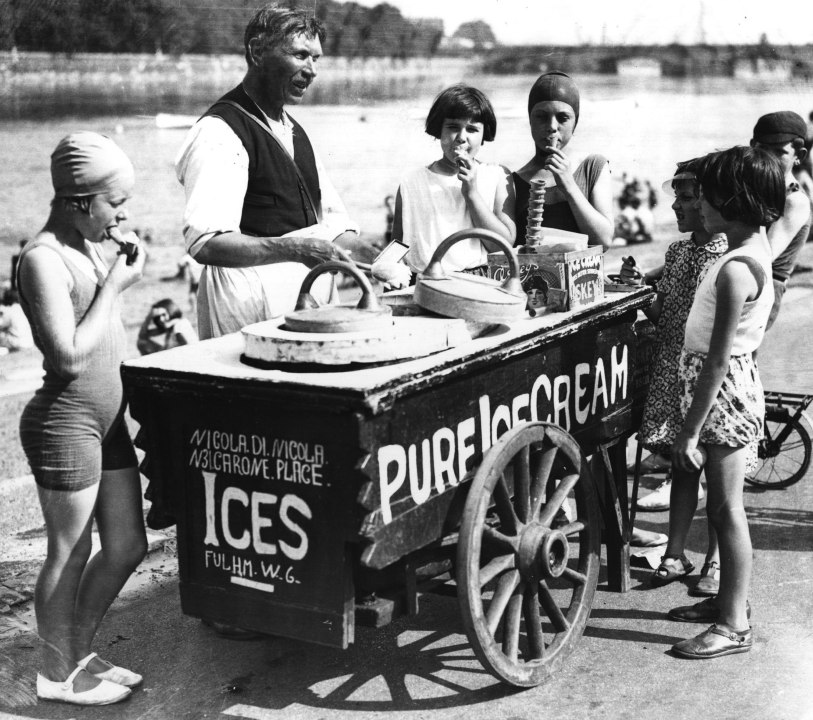
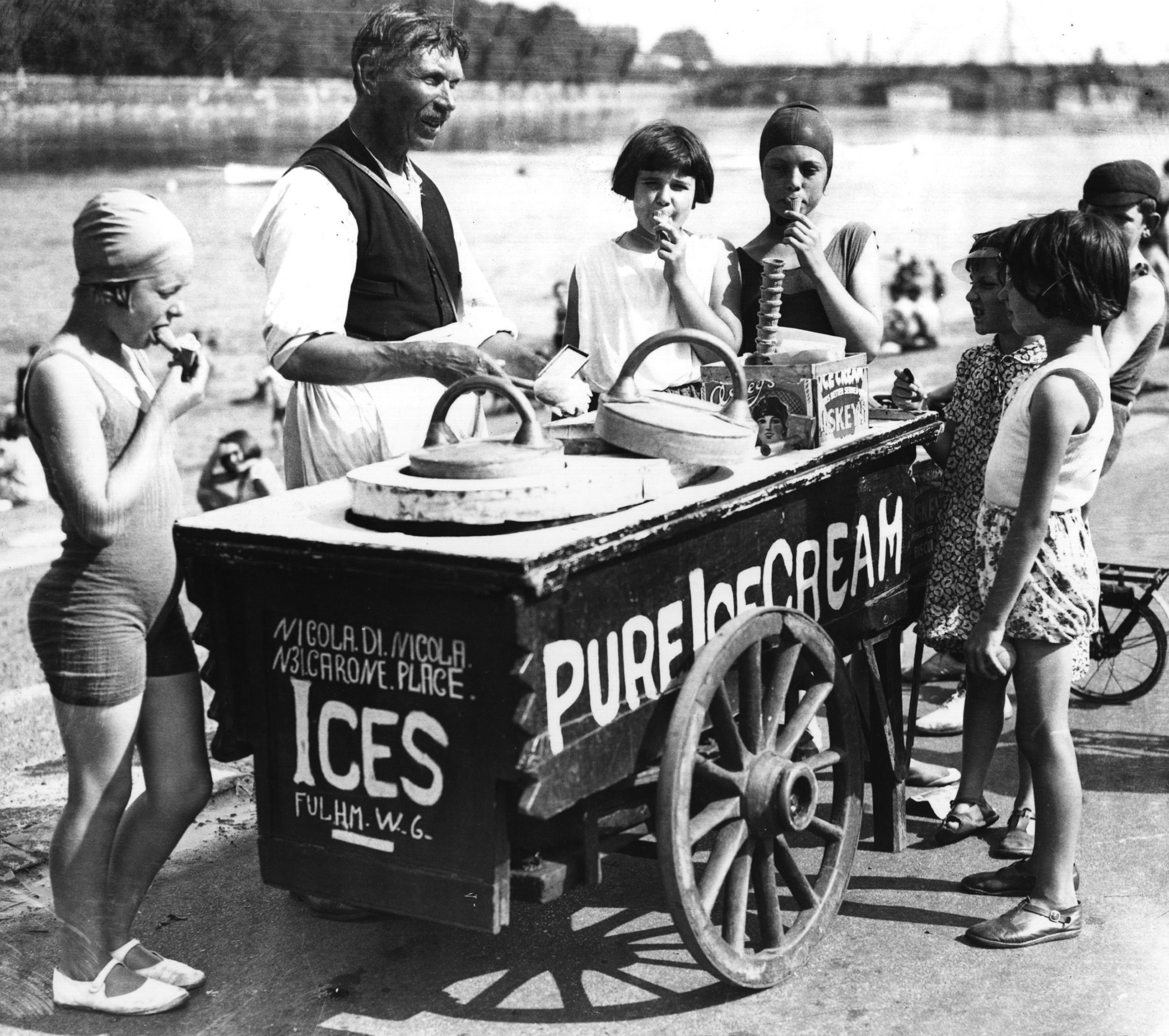
Ice cream became readily available on the streets of London in the 1800s in the form of ‘hokey pokey’ pushcarts: the earliest incarnation of the modern ice cream van. But, this being Victorian England, hygiene ratings were rarely five stars. Consumers would tongue the ice cream from a penny-lick glass before handing it back to the vendor. The vendor would then dunk it in some filthy bath-warm water, give it to the next schmuck and pray they didn’t cause a typhoid epidemic.
Things got a little less spitty when Wall’s introduced its ‘STOP ME AND BUY ONE’ ice cream tricycle in 1923. (If you’ve ever seen one of those chichi gelato bikes in east London, it’s basically a less contrived version of that.) The tricycles were a hit and, by 1939, T. Wall & Sons had more than 8,500 bikes across the UK.
What matters is the way it makes you feel. It’s the same as greasy spoons, traditional pie and mash shops, and boozers that don’t sell food
Everything changed on St Patrick’s Day, 1956, when Irish brothers William and James Conway took their pimped-out truck around the streets of West Philadelphia to sell a Hulk-green ice cream for the occasion. After a successful launch, the brothers decided to make the truck their full-time business. They called it ‘Mister Softee’.
In 1958, Dominic Facchino saw what Mister Softee was doing in the States and started a rival company over here. Enter the capo dei capi of soft-serve ice cream vans: Mr Whippy. In 1965, Whitby Morrison built his first ice cream van with soft serve equipment that was powered by the engine. Wall’s Ice Cream bought Mr Whippy in 1966. Ice cream vans went all over the country. Everybody fell in love with the 99 Flake. I scream, you scream, we all scream for ice cream. You get the point.
But the glory days were short-lived. By the mid-1980s, the impervious glacier of the ice cream van industry was beginning to melt (I apologise for the shoehorned pun). The rise of domestic freezers, supermarket supremacy and noise restrictions all facilitated the ice cream van’s decline. Things were made worse by the now infamous turf wars in Glasgow in the 1980s, in which criminal gangs would sell drugs and stolen goods from ice cream vans in the city.
Mr Whippy et al have continued to suffer in recent years. Low-emission zones. Exclusion areas. The rising demand for healthier foods and plant-based alternatives. The ice cream van has become the Shelley Levene of the British culinary world: an outdated tinpot, past its prime, competing with gentrified gelato trucks which sell scoops for £7 a pop.
When you consider the actual product, the ice cream van’s decline isn’t really surprising. Is the ice cream good? Not really. Is it overpriced? Absolutely. Would I want to eat soft-serve ice cream at home? You’re out of your mind if you think I’m eating that garbage in my flat.
But none of that matters. What matters is the way it makes you feel. It’s the same as greasy spoons, traditional pie and mash shops, and boozers that don’t sell food. None of these things are ‘efficient’, ‘clean’ or ‘useful’, but they are nostalgic, and they represent our shared, chaotic cultural identity. They tell you never to give in to nostalgia – at least that’s what Alfredo says in Cinema Paradiso – but I don’t agree. Nostalgia is one hell of a drug. As is sugar. And right now the temperature’s in the 20s, my back is stuck to the chair and I could really do with a soft serving of nostalgia. But I know that Mr Whippy won’t come. He’s too busy looking for a new job to dust off the van, pop on those 12-second chimes and pay his ol’ pal a visit.






Comments