
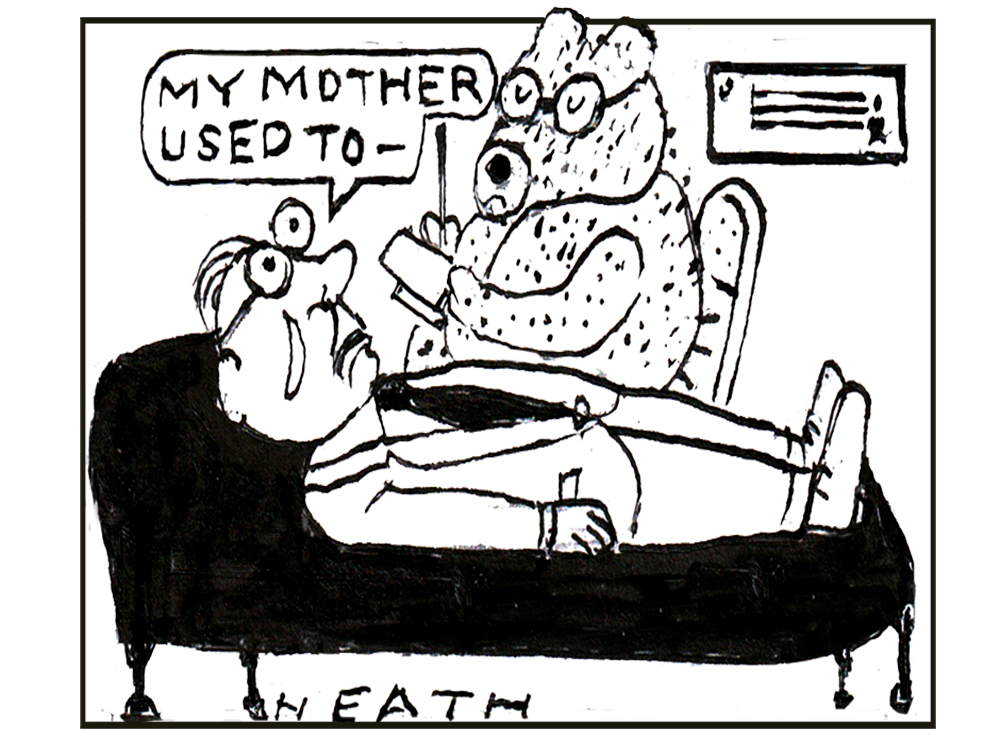
It is widely known that when a Duke of York is down, he is down, and the recent hit-piece in Heat – “‘Pathetic’ Andrew’s tantrums over prized teddy bears” – found a new way of kicking Andrew Mountbatten-Windsor. Its royal source said that “being forced to move [out of Royal Lodge] has sent him into a full-on meltdown because he keeps telling people the bears won’t cope with the change… as he says, it’s their home too.” When it was reported last month that Andrew’s teddy bear collection was being sent to a south London storage facility, I was on the verge of feeling sorry for him; until I realized I was actually feeling sorry for the bears. There are no wonderful games to play in a lock-up.
Of course I anthropomorphize teddy bears: that is what they are for. The psychoanalyst Donald Winnicott called them transitional objects – occupying the space which opens up when a child realizes he is a separate person from his mother. The transitional object may have the softness and soothing calm of the mother, but, unlike Mother, is wholly within a child’s control. It is unsurprising that they are much more common in countries such as America and Britain, where children are put in their own rooms, away from their parents, earlier than in countries like Japan, where children continue to sleep with the mother until they are at primary school.

This might be why they are even more common among those, like the former prince, who were separated still further from their parents at boarding school. I’m not suggesting that being sent away to school is a psychic injury – the only traumatic experience I can remember from boarding was when, during a feud with the boys in another dorm, I returned after doing my homework and found my teddy bear hanged from the ceiling by the cord of my dressing gown. Inter-dormitory warfare was one thing; but this was surely contrary to the Geneva Convention.
Sir John Betjeman wrote of his fears that “an analyst one day/ Of school of Adler, Jung, or Freud/ Should take this agèd bear away,/ Then, oh my God, the dreadful void!” (It didn’t happen; Betjeman died with Archibald Ormsby-Gore in his arms.) But I don’t think any decent analyst would; unless he was afraid of the competition.
In Teddy Bear and Freud, the therapist Gerald Fox argues that teddy bears are a model for talking therapies: non-judgmental, supportive and allowing a free flow of ideas. He observes that the first teddy bears arrived at the same time Sigmund Freud was developing his theories, during the first decade of the last century.
Fox may have been overstating his case – he doesn’t seem to have got over his mother disposing of his old and smelly teddy bear when he was seven – but it is now orthodoxy that teddy bears can help with trauma. Many police forces and fire brigades have a supply of “trauma bears” to give to children when they witness road traffic accidents or domestic violence. And it doesn’t really matter what the trauma is. One of Andrew’s bears had a vest saying: “It’s tough being a prince.”



Comments