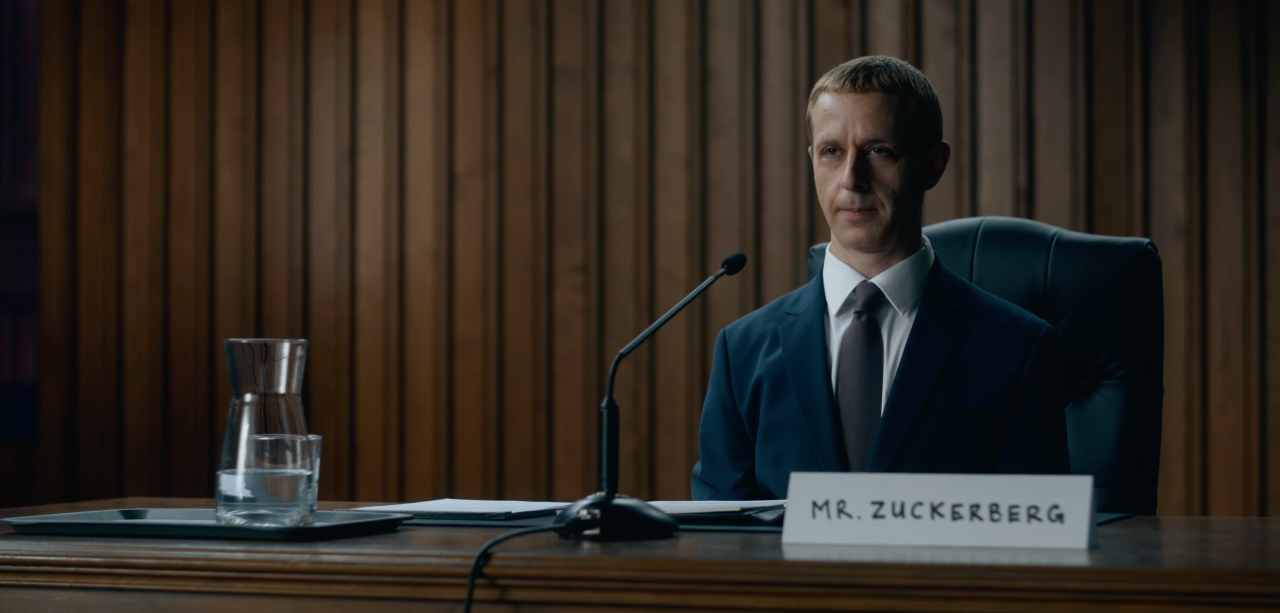
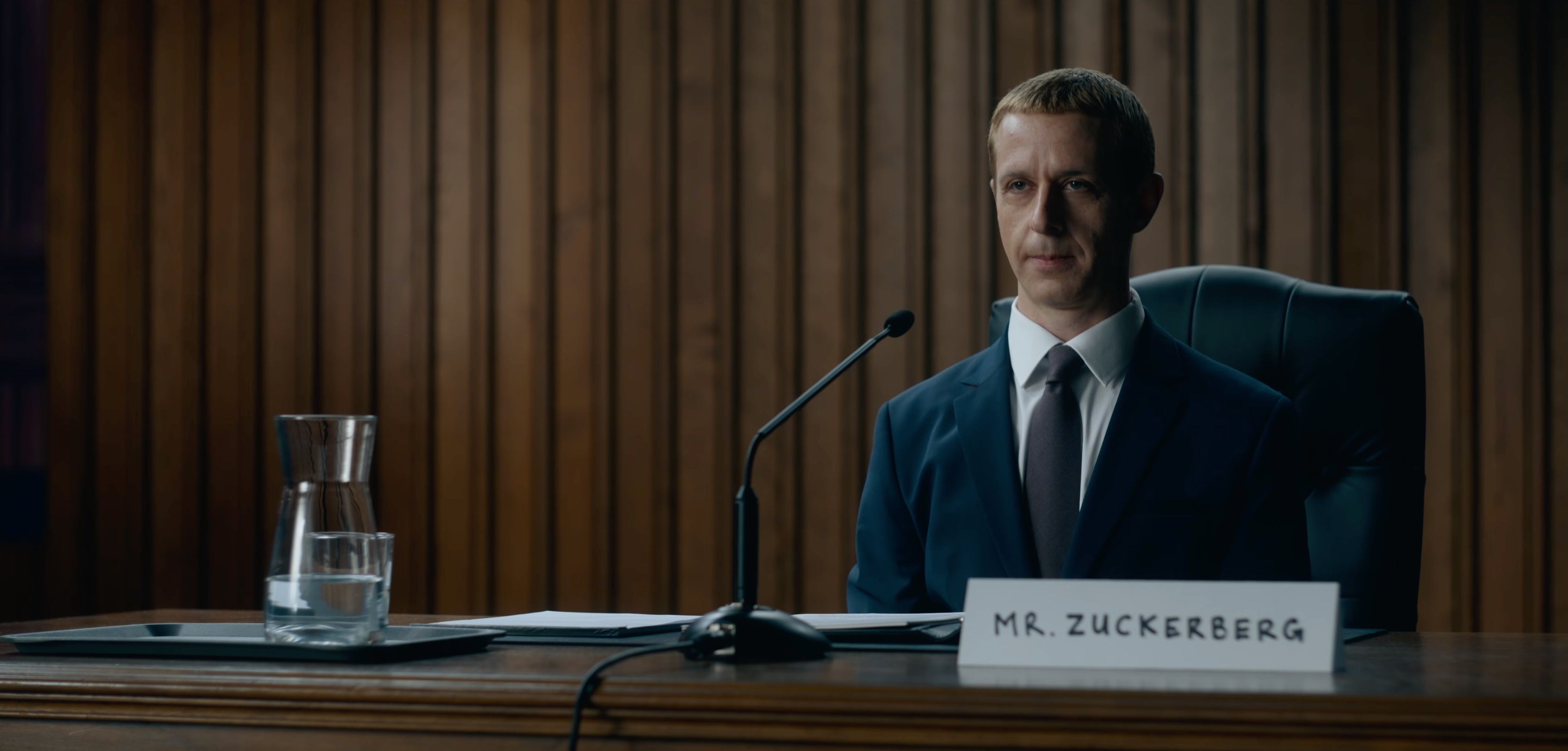
Yesterday, a teaser dropped for Artificial, a biopic directed by Luca Guadagnino based on Sam Altman’s brief ouster from OpenAI in 2023. Earlier this summer, a trailer was released for The Social Reckoning, Aaron Sorkin’s Meta drama, which is a follow-up to his 2010 film about Mark Zuckerberg and the founding of Facebook, The Social Network. And in the past few days, audiences at the Venice and Telluride film festivals have been hyping up Nathan Fielder’s documentary You Can See Everything about the Theranos founder/fraudster Elizabeth Holmes, as well as Alex Gibney’s Musk documentary. (Gibney made an earlier documentary about Holmes, who has already been the subject of a biopic, played by Amanda Seyfried in The Dropout.)
Everything – from politics to romance to religion to tech – is converging under the umbrella of ‘entertainment’
You wonder whether there was an orchestrated effort to release these trailers all around the same time, or if that’s just the way film festival season works. I wouldn’t be surprised if it were the former. It’s as if Hollywood has applied the logic of film franchising, where one box-office success or bestselling novel spawns innumerable offshoots, to create a Silicon Valley cinematic universe.
Elon Musk, Sam Altman, Mark Zuckerberg and Elizabeth Holmes docs and biopics are like new Avengers releases for doomers and degrowthers (because these films, let’s face it, typically ooze with contempt for their subjects – though Fielder’s doc may be an exception to this rule). In the teaser for Musk, one person says “he’s the real life Iron Man,” though Gibney sees Musk as more of a Doctor Doom. When asked if he thinks Musk could influence the election using data taken from DoGE and fed to an AI model, Gibney said it’s a “good conjecture” and would be “Cambridge Analytica on steroids.”
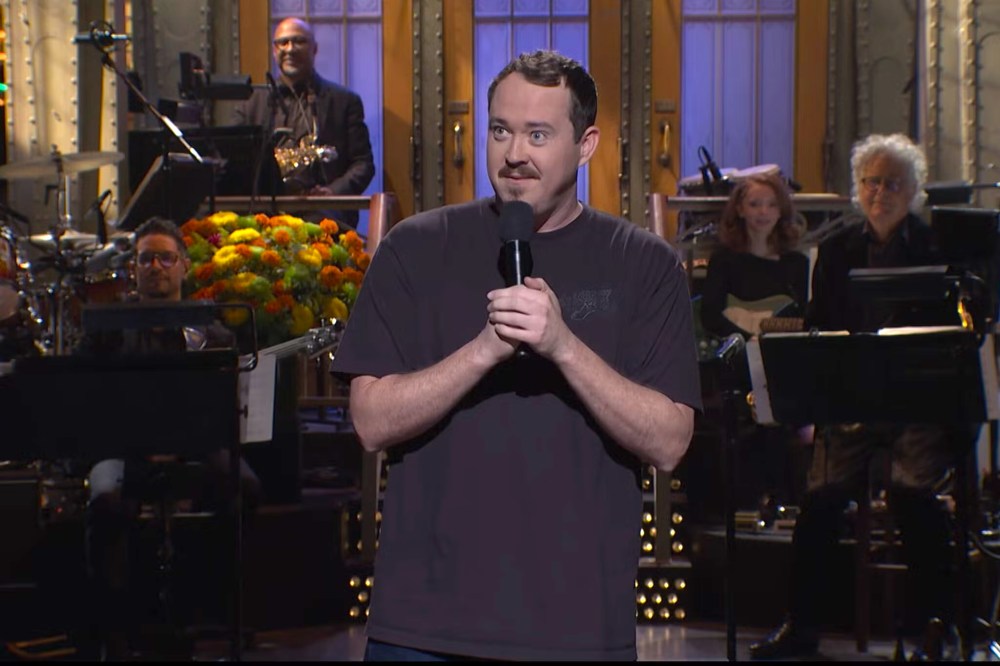
A Musk character will also appear in Artificial, played by Ike Barinholtz. Amazon MGM Studios – the film’s production studio and distributor – dropped the Altman biopic after it was completed, saying it would be “better served if it were released by a different studio.” A few months earlier, Amazon and OpenAI had announced a “strategic partnership,” in which Amazon invested $50 billion in OpenAI. Not to get too “meta,” but I can almost imagine this deal being dramatized in some future film about, let’s say, Jeff Bezos, Sam Altman and the AI bubble. An Amazon Studios film about OpenAI, in which an investment deal disrupts the release of an Amazon Studios film about OpenAI, in which…
When all the world’s a franchise, what are these movies but part of another storyline in the Silicon Valley multiverse? The storyline includes everything from Sarah Wynn-Williams’s memoir Careless People to Sheryl Sandberg’s Lean In, as well as The Social Network and now its “sequel.” (The gathering of the tech titans at Trump’s inauguration was like a slightly surreal crossover episode.) News reports, memoirs, documentaries, biopics and television footage start to seem less like reflections of real life than pure entertainment – which, of course, you can order on Amazon or stream on Prime Video, opine about on X and whose stars you can follow on Instagram, thus feeding the Silicon Valley machine and providing more material for the franchise’s next instalment.
It’s not exactly a novel idea that everything – from politics to romance to religion to tech – is converging under the umbrella of “entertainment.” But it’s one thing for the news to be entertaining, or to believe there’s an element of artifice or staging to it, and another to see our world through a director’s cut. Do we need things to be so artfully packaged and spelled out to understand them? In Gibney’s documentary, Musk, who refused to be interviewed, appears as an AI avatar and repeats things Musk has said in public. Weird, yes – but arguably it’s weirder to form our opinions about other living figures from the fictionalized versions of them, however compelling.
The events that these four films are based on took place roughly within the past five years. Why is there such an appetite for re-tellings of very recent, or even ongoing, events? For one thing, filmmakers need to capitalize on our very short attention spans. (Netflix announced its “Instadocs” series earlier this month, “a new fast-turnaround documentary series.”) Films pegged to Silicon Valley drama also help make sense of our insane times of rapid tech acceleration, but more specifically, they suit our need for heroes and villains right now. Perhaps the challenge for a good filmmaker is to show that reality is not as clear cut as the Marvel universe.





Comments