At the end of last week, I caught a budget flight to Milan to see a woman. As soon as I arrived I was bundled into a Fiat Panda and sped southwards for Bologna’s annual art weekend, its events ranging from the reverential to the ridiculous. In the latter camp was MAMbo’s John Giorno retrospective, which – for Giorno is a bona fide hero – promised to be superb.
It wasn’t, but a bad homage to Giorno is a homage to Giorno all the same. Born in Brooklyn in 1936, he joined the merchant navy as a young man and, on returning to New York, became both a highwire avant-garde poet and an acolyte of Andy Warhol, who filmed him sleeping for five hours straight and presented the result as mode-shifting cinema. The result is presented in its entirety here, surrounded by wallpaper covered with Giorno’s poster-poems.

Giorno didn’t hold back. Forcefully gay at a moment when, even in boho New York City, that could be a nosedive of a disadvantage, he sourced his verse from salacious newspaper cuttings, pornographic samizdat, whatever; it wasn’t in the least facetious, rather, a raised fist in defence of his medium and identity, and from early on he mulled fusing it with the white heat of technology.
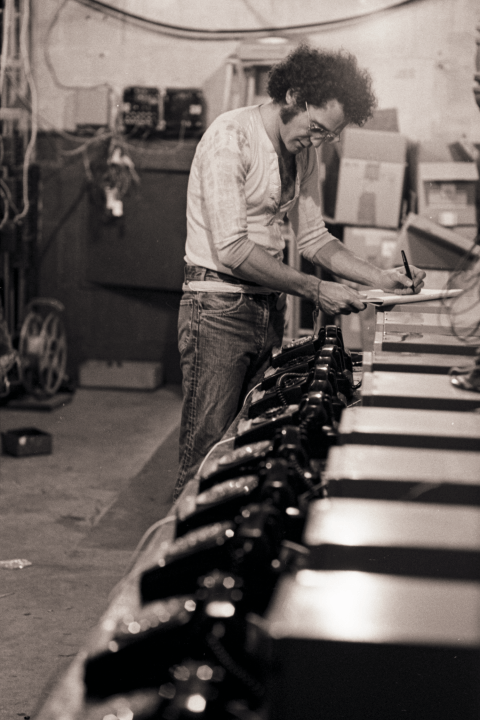
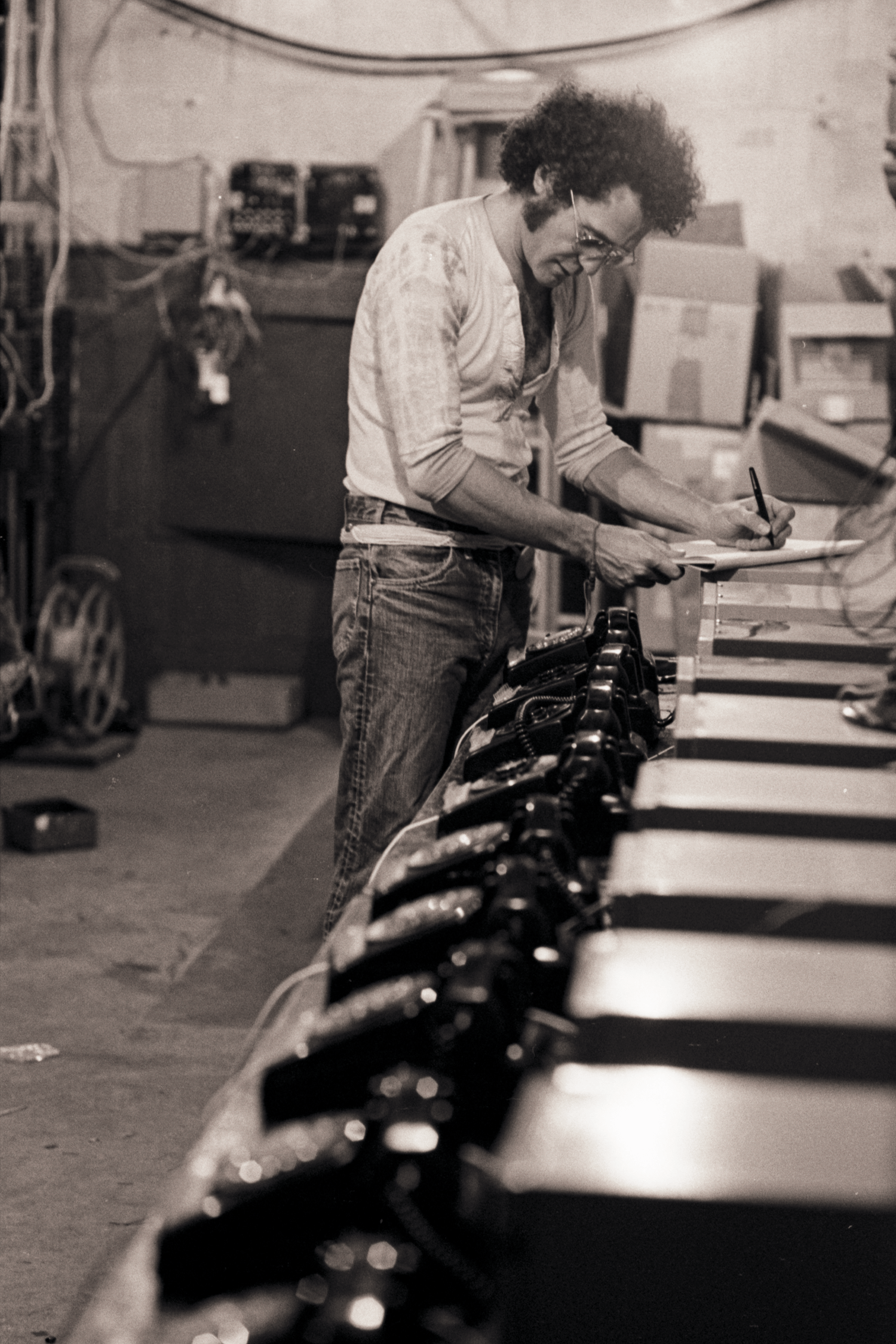
One morning in the late 1960s, he received a call from a friend who regaled him with ‘boring gossip’. ‘I didn’t want to hear it,’ Giorno said. ‘I kept thinking: why am I so irritated? Why couldn’t this voice be reading a poem?’ He thus devised what became his magnum opus, a dérive mixing crass Warholiana with Rauschenbergian conceptual rigour whereby anyone who phoned a local number would be greeted with a recording of a poem read by its author; because poetry, Giorno stressed, existed as much to be heard as read.
Witnessing McCracken’s struggle through a chosen set of paintings is thrilling and very often heartbreaking
‘Dial-a-Poem’, as the conceit became known, was a massive success and a master stroke. It’s presented here via a series of vintage dial-up telephones arranged down the museum’s central aisle, through which the visitor can dial up a poem in English, French, Swiss German, Italian or Thai. I don’t understand the last three languages, but the conceit – if not the randomly arranged, unfocused show it holds together – is great.
On the wackier end of the scale was a performance held in a palazzo by a hairy man in red gingham pyjamas: he sat down at a table and ate 100 tortellini in one sitting, shook my hand and thrust a cup of pasta dumplings in brodo and a glass of lambrusco at me, leaving me clueless and really quite happy. This was undoubtedly the most comedically Latin ‘art’ stunt I’ve yet come across; and fabulously entertaining it was, too.
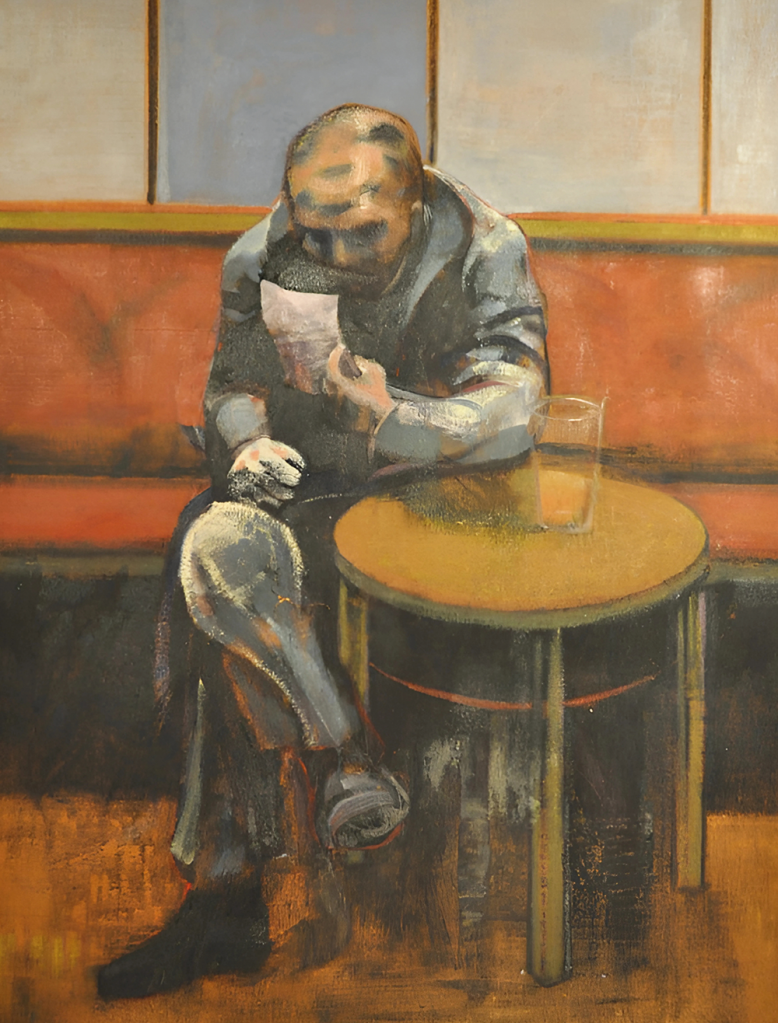
And just as well. Back in London, the art’s been as grim as the weather. I was thus drawn to the paintings of John Wilson McCracken, the central figure in a show exploring art and mental health at Two Temple Place. The Belfast-born McCracken(1936-82) was a promising art student who early on suffered a bulldozing breakdown that knocked him out of the game. Over the course of the show, we see him trying to rediscover his artistic mojo, staging happenings far from the seat of art power – that is, in Hartlepool – and signing a series of depleting, Bacon-inflected paintings of lonely men in desperate settings.
The best of these is ‘Man in Pub’ (date unknown) (see below), in which the titular figure tilts his gaze pint-wards and appears to bleed into his local’s unrelentingly beige palette. Great as the picture is, McCracken never did regain his confidence and died horribly young. Witnessing his struggle through a carefully chosen set of paintings is periodically thrilling and very often utterly heartbreaking.
The big story elsewhere was CONDO: London, an initiative by which various of the city’s galleries play host to artists from overseas dealerships. The best of these probably came courtesy of Kate MacGarry, who partnered with LA’s Chris Sharp to field a decent show by the Californian artist Deborah Hanson Murphy (1931-2016). The still lifes here see assorted, scarcely identifiable objects arranged on a single plane, both turd-like and monumental: think Morandi, had he ever borrowed from the drippy surrealist Yves Tanguy.
This code-sharing event was just one of 23, few of which were up to much: I made it to 17 of them, trudging through the puddles to the point where my sneakers are now holes disguised with electrical tape and odour-eaters. I realise that the job of a contemporary art correspondent is an entirely frivolous one; but Christ do I suffer for it.



Comments