How would you like your nostalgia served, sir (and it is usually ‘sir’): in mist-shrouded monochrome or crazed lysergic Technicolor? Last week I saw two bands in the same venue, a few days apart. Neither having released any new material for more than a decade, both duly crammed their sets with their greatest hits. And yet one felt like the future, and the other like the past.
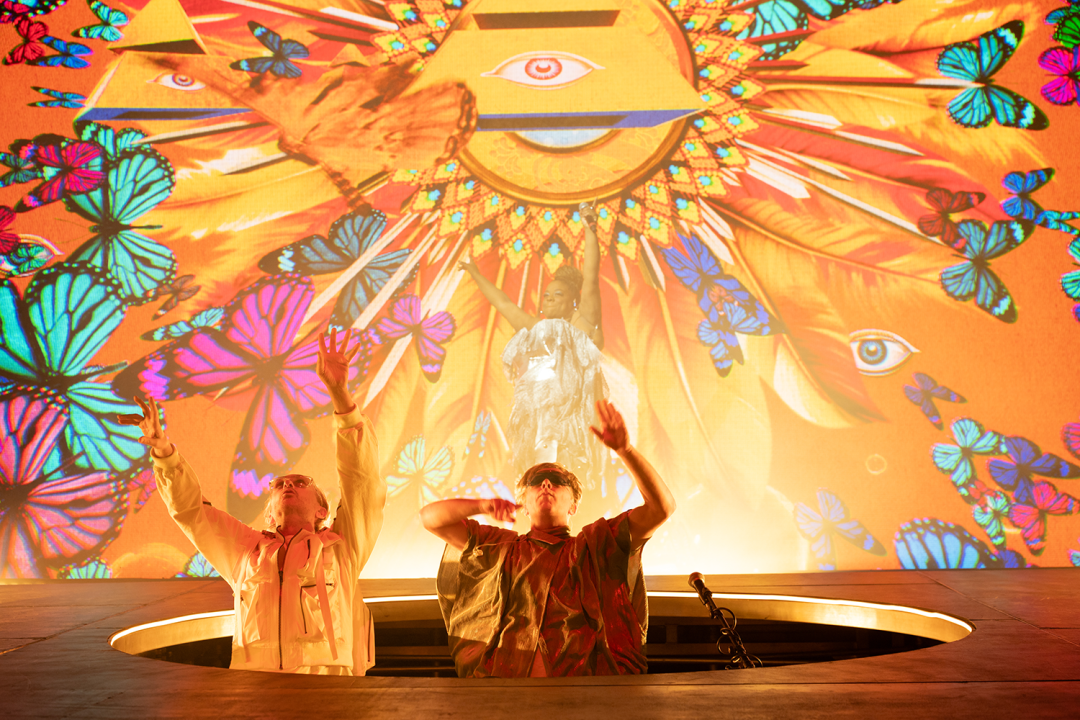
Felix Buxton and Simon Ratcliffe, aka turn-of-the-millennium electronic duo Basement Jaxx, should be credited for having great sport with that in-built characteristic of almost all electronic outfits. Namely, that two or three blokes pushing a bunch of keys and buttons cannot hope to ever forge the kind of compelling visual identity so crucial to rock groups.

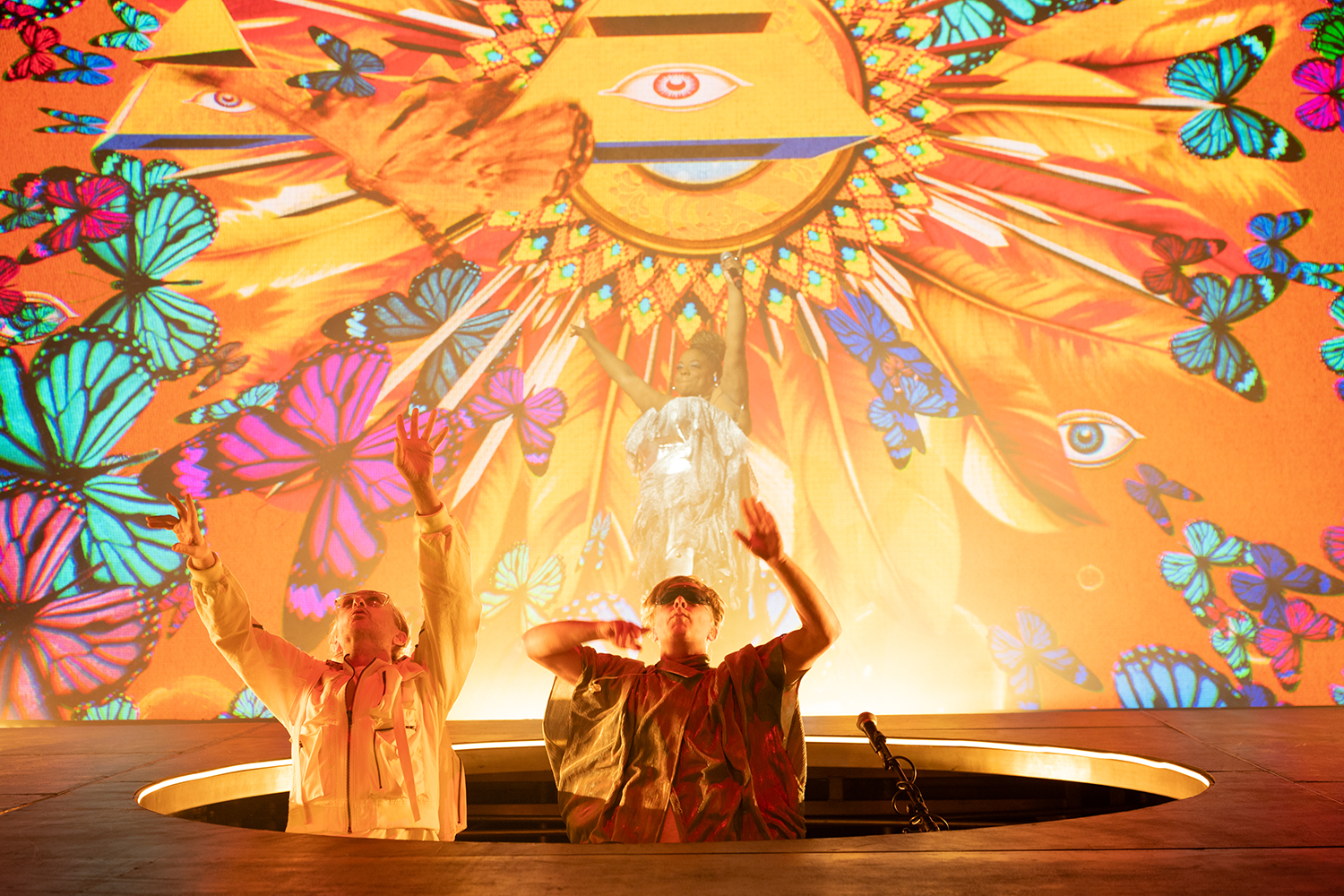
In Edinburgh, this felt less like a double-edged sword and more like a free pass to reinvention. The blank canvas that is Basement Jaxx was scrawled upon in unrelentingly entertaining fashion, as the duo revelled in presenting their music in a universe of kitsch sci-fi surrealism. There was lots of skin-tight silver bodysuits, man-sized vegetation, pulsating neon superviruses, lasers, moonbeams and all manner of eye-popping excess, played out on a stage dominated by a precipitous pyramid set from which a glittering troupe of singers, dancers and musicians spilled out and spun down.
The duo served notice early on that nobody was going to have to suffer for their art when two of their biggest hits, ‘Good Luck’ and ‘Bingo Bango’, were performed during the opening ten minutes. Marshalling a relentless rhythmic drive to live drums and percussion along with bursts of electric guitar and trumpet, Buxton and Ratcliffe gave their machine music a chaotic lease of life in a big beat blizzard of house, garage, punk and soul. Rough, raw and highly energetic, by the time they smashed through ‘Where’s Your Head At?’, accompanied by a simulated simian stage invasion, I was feeling almost giddy.
The contrast with Echo & the Bunnymen, who played the same venue a few days later, could hardly have been starker. Among their post-punk peers who are still treading the boards – U2, Simple Minds, the Cure, New Order – Echo & the Bunnymen have so far enjoyed the most desultory of third acts.
The band haven’t released a new record since 2014’s earthbound Meteorites, and only singer Ian McCulloch and guitarist Will Sergeant remain of the original line-up. At the Usher Hall, the onstage chemistry between the pair reminded me of nothing so much as an unhappily divorced middle-aged couple forced to keep the family business ticking over in order to make ends meet. Nobody looked as though they were having much fun.
Named after their 1985 compilation Songs To Learn & Sing, this tour is billed as encompassing 1978 to 2026 – which was half right, at least. The set largely comprised of songs from the band’s opening run of four classic albums. Only one song, the title track of the band’s 2001 album Flowers, dated from this millennium.
For many years now, the key component to spending a successful evening in the company of Echo & the Bunnymen has been the mood of the mercurial McCulloch. This is not to denigrate the beautiful psychedelic-tinged guitar playing of Sergeant, or any of the supporting musicians, who were on point throughout, but merely to acknowledge that McCulloch doesn’t necessarily present as match-fit for every fixture.
By the time they smashed through ‘Where’s Your Head At?’, I was feeling almost giddy
This time, I fancy we caught the singer on one of his better nights. Though the silken croon of old was sometimes more a dry shout, there was still plenty of stirring majesty in renditions of ‘The Cutter’, ‘Rescue’ and ‘Bring On The Dancing Horses’. ‘The Killing Moon’ shimmered appropriately. A closing ‘Ocean Rain’ soared.
‘Nothing Lasts Forever’ and ‘Villiers Terrace’ included snatches of songs by the band’s formative influences – Lou Reed’s ‘Walk On The Wild Side’, David Bowie’s ‘The Jean Genie’, the Doors’ ‘Roadhouse Blues’ – which underscored the evening’s prevailing mood of melancholic yearning. Not just because Echo & the Bunnymen seemed slightly sadly shackled to a very old version of themselves, but because McCulloch appeared trapped in a persona that felt exhilarating 45 years ago but now feels more like a last refuge.
The tousled-haired existentialist in the black trenchcoat, wearing sunglasses in a swirl of dry ice, might be a pretty cool look in your twenties, but it’s less so in your sixties. I wondered more than once whether he was still doing this not because he wants to, but because it is all he knows how to.



Comments