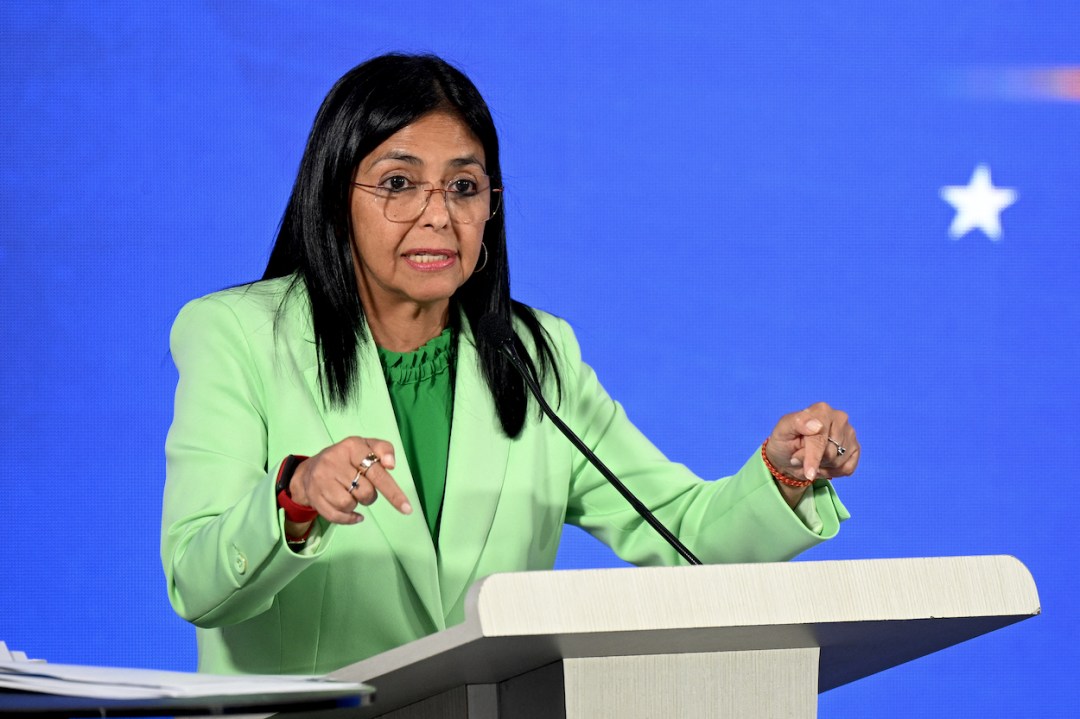
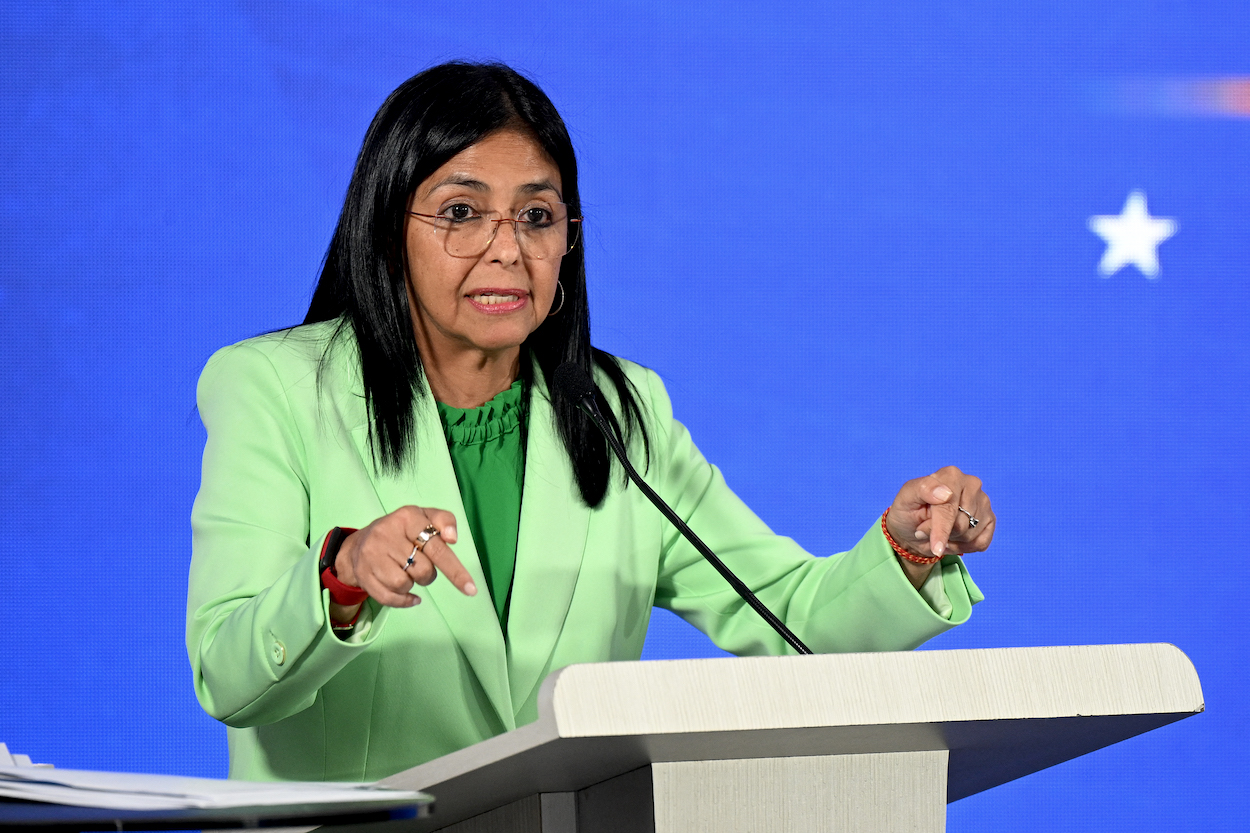
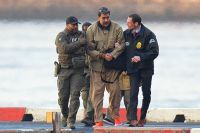
In the chaotic aftermath of Operation Absolute Resolve – the early morning extraction of President Nicolas Maduro and his wife Cilia Flores from their Caracas fortress – Washington is buzzing with a dangerous level of cognitive dissonance. Over the weekend, President Trump characterised Maduro’s successor, Delcy Rodriguez, as ‘gracious’ and ‘willing to do what is necessary to make Venezuela great again’. By Sunday, the President was warning she would pay a ‘bigger price than Maduro’ if she fails to cooperate. I believe that Trump is displaying a fundamental misunderstanding of the ‘Honduran Blueprint’ he is currently following.
The capture of Maduro on Saturday mirrors the 2022 arrest and 2024 sentencing of former Honduran president Juan Orlando Hernandez. Maduro is currently facing narcoterrorism charges in the Southern District of New York just as Hernandez did a few years ago.
But here the comparison ends. Hernandez was the leader of a ‘client state’ who relied on US legitimacy. When the US withdrew that support, his authority completely collapsed. Rodriguez, however, leads an ‘adversarial state’. Her legitimacy is derived not from Washington’s approval, but from her ability to frame herself as the lone defender against it.
On 4 January, while Trump was praising her ‘graciousness’, Rodríguez was on state television calling the operation against Maduro a ‘barbaric kidnapping’ and declaring that ‘there is only one president, and his name is Nicolas Maduro’. This wasn’t just rhetoric. It was a signal to the Venezuelan military that she remains a ‘true believer’ who will not trade the revolution for a plea deal.
Rodriguez is the daughter of Jorge Antonio Rodriguez, a left-wing guerrilla fighter who died in police custody in 1976. For her, the US Department of Justice is part of the same entity that has historically targeted her family’s movement. Her survival depends on a shared pact of impunity with the men who hold the guns. The leadership of the Venezuelan military, including Defence Minister Vladimir Padrino Lopez, are also under US indictment. But even more critical is the role of Diosdado Cabello, the interior minister and the regime’s ‘iron fist’. While Washington focuses on Delcy’s ‘graciousness’, they overlook the man who appeared on state television on 4 January clad in a tactical vest and helmet, urging calm while deploying troops and pro-government colectivos nationwide.
Cabello controls the state’s intelligence apparatus and the irregular armed groups that serve as the regime’s final line of defence. In an audio recording released by PSUV, the ruling party, Cabello made his position clear: ‘Here, there is only one president, whose name is Nicolas Maduro Moros. Let no one fall for the enemy’s provocations.’ If Rodriguez were to ‘cooperate’ with the US to ‘make Venezuela great again’, she would be signing the extradition warrants for the very men who guarantee her safety. In Caracas, such cooperation would be treason, which carries a death sentence.
The danger of misreading Rodríguez is most visible in the ongoing migration crisis. While exiles celebrate, the reality on the ground is a power vacuum. If the US pushes for a ‘quick deal’ with a woman who has no intentions of dealing, the result will be a protracted standoff. A Delcy-led ‘resistance state’ will likely respond to US pressure by further weaponising the migration of its citizens.
I met doctors, teachers and engineers who were driving taxis to survive
In my 2023 interviews with Venezuelan migrants in Cartagena, Colombia, many described selling everything they owned to pay people smugglers after being unable to access essentials such as food and basic medication or to sustain their professions. Doctors, teachers and engineers were driving taxis to survive. One woman, a former Chavez government employee, told me she had fled simply because she reached a breaking point where she ‘couldn’t manage anymore.’ However, it was only after she arrived in Colombia that she was officially branded a ‘traitor’ and barred from ever returning home. Her crime was providing humanitarian aid to fellow exiles once she was across the border. To Caracas, even a desperate citizen helping another is an act of treason. Still, almost all of the members of the diaspora I met expressed a deep longing to return to Venezuela one day – if it ever became a country they could live in again.
Migration flows are the new regime’s ultimate pressure valve. By maintaining a state of ‘national emergency’, Rodriguez can continue to push the middle class out of the country, shifting the burden of Venezuela’s collapse onto the US southern border while she consolidates a leaner, more loyalist core at home.
The US has successfully removed the head of the snake, but Delcy Rodriguez is the heart of the system. She is a pragmatist only so far as it preserves Chavismo. If Washington expects her to be a transitional figurehead who will quietly hand over the keys to Miraflores, they have no idea who they are dealing with. She is not a partner. She is a survivor.
Comments