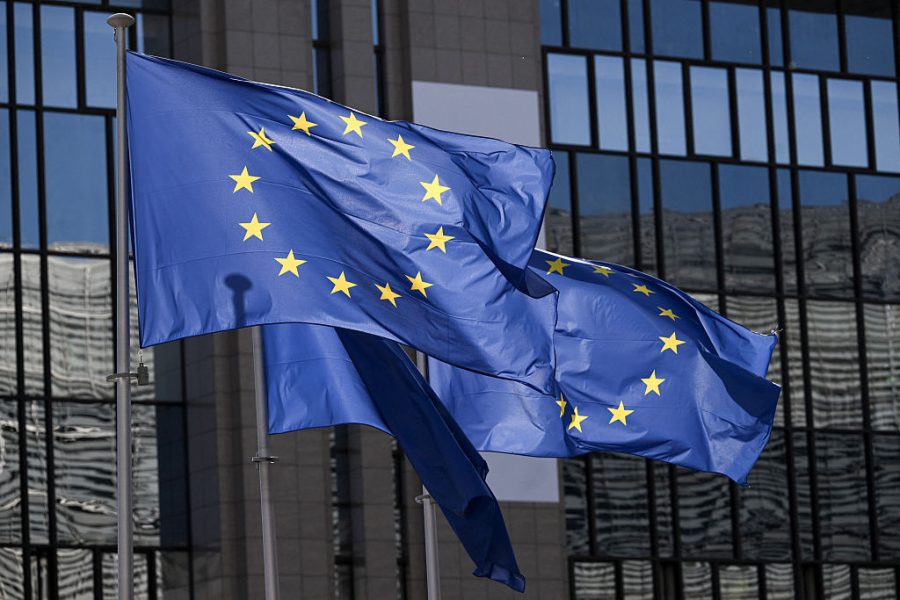
As world leaders grapple with Donald Trump’s second term, his war with Iran has accelerated European multipolarism, with leaders on the continent searching for alternative solutions to American isolationism. How far should Europe pool security and defence? Should there be a European version of the Anglo ‘Five Eyes’ alliance, as the Netherlands’s coalition government, led by their new prime minister Rob Jetten, has suggested? Is the proposal from Renew Europe – the European Parliament’s centrist grouping – for a Nato-like trade alliance between European countries and their democratic allies – like Canada, Japan and South Korea – realistic?
The crisis has also injected some energy into Brussels, with reports that the European Union is trying to resolve the ambiguity around its own mutual assistance clause. Less well known than Nato’s Article 5, the EU’s Article 42(7) states that ‘member states shall act jointly in a spirit of solidarity’ if activated – including through military aid. It has only been triggered once, by France, in response to the 2015 terrorist attacks. There remains ambiguity, however, about how and when member states should activate the clause.
For those countries which are members of both Nato and the EU, the clause also says that Nato remains ‘the foundation of their collective defence’. It is unclear how to resolve tensions between the two and how the EU instrument actually works.
Any flexibility shown by the EU raises interesting questions for London
The issue of resolving the EU’s mutual assistance mechanism is a consequence of the attack on the island of Cyprus, as part of the wider conflict in the Middle East. Cyprus is one of four EU countries not part of Nato. While the drone attack was directed at British territory on the island, this has not quelled concerns about the Republic of Cyprus being targeted – whether deliberately or accidentally. There is an assumption that the British Overseas Territory is subject to Nato’s clause, through the UK’s membership, but this remains at the discretion of the British government. Cyprus did not activate the EU mechanism but their president has sought to move the issue up the agenda for greater clarity. Cyprus currently holds the presidency of the European Council.
There has also been renewed discussion about Cyprus joining Nato – something Nicosia has long coveted. Membership has been complicated by the frozen conflict on the island, with Turkey consistently vetoing Nato cooperation with Cyprus over the unrecognised Turkish-controlled territory on the Northern side of the island.
Membership is controversial though. Some see it as a step towards resolution of the Cypriot question, a shared security formula towards reunification. Others fear the opposite could happen – it could entrench partition through multilateral recognition. What is certain is that there is now new attention on the Cypriot issue, compared to the 50th anniversary of the island’s division in 2024, which appeared to pass by without serious attention from Europe at large on resolving the question.
Cyprus isn’t the only nation seeking to resolve cooperation ‘anomalies’. Moldova has announced its intention to leave the Russian-led Commonwealth of Independent States. While cooperation ceased years ago, the move is a symbolic one towards European integration for a country which has an ambitious goal to join the EU by 2030.
The Icelandic government, which came to power in 2024 with a goal to hold a referendum on EU accession, has expedited its plans and has announced a referendum at the end of August on whether to resume negotiations about joining. Most polls show no clear winner except that the issue of security edges it for the ‘Yes’ campaign, especially after Trump’s threats against its neighbour, Greenland (Trump also often referred to the two territories interchangeably).
The result of the Icelandic referendum will be closely watched by its EFTA-partner Norway, which has seen support for joining the EU slowly rise over the past decade. In February, arch-Europhile Ine Eriksen Soreide was confirmed as the leader of Norway’s opposition conservative party, Hoyre. This could see a renewed push for Norway to reopen questions about membership. This is happening with speed, with Soreide announcing last month that, in her opinion, Oslo ‘would be best served by being full members of the EU’.
Alongside Moldova, there are nine other EU candidate, and potential candidate, countries. With much energy and focus on Ukraine and Moldova, Balkan countries have feared their processes are stalling (North Macedonia has been a candidate for over two decades). Looking to get on the front foot, the Serbian and Albanian prime ministers issued a joint text last month calling for a ‘realistic’ path for a quicker integration, which would see countries join most EU institutions but cede veto rights and a role in parliament. How such a path would work in practice remains unclear, but it was an interesting alternative to the two-tier Europe envisaged by Emmanuel Macron a few years ago.
Any flexibility shown by the EU raises interesting questions for London, at a time when the Labour government is seeking closer ties with Brussels. This week, Keir Starmer announced that the Iran war and subsequent energy crisis are clear grounds for closer economic integration. Could the EU reform in time to admit Britain to a second tier? And what price would be paid by the UK? It isn’t clear that the British public are willing for the question to be reopened. Yet the UK is currently stuck between a fraying special relationship with America and a Europe which is both expanding and turning inward. As other countries advance their own solutions to Trump’s isolationism, ten years after Brexit, it is still unclear who Britain should turn to.



Comments