
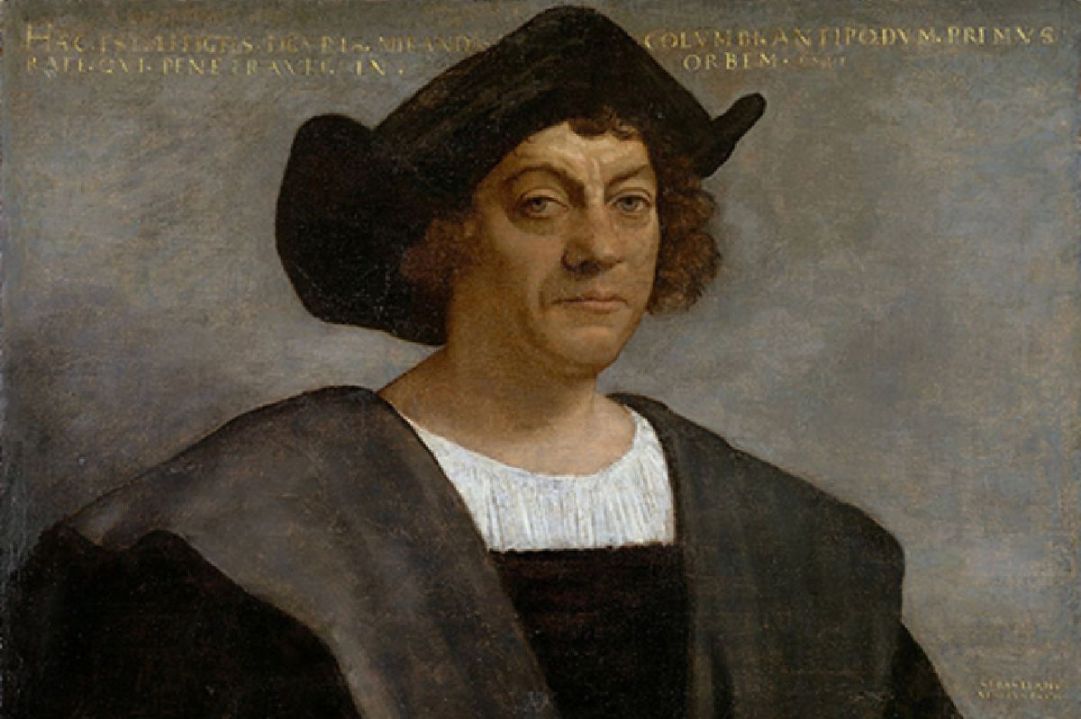
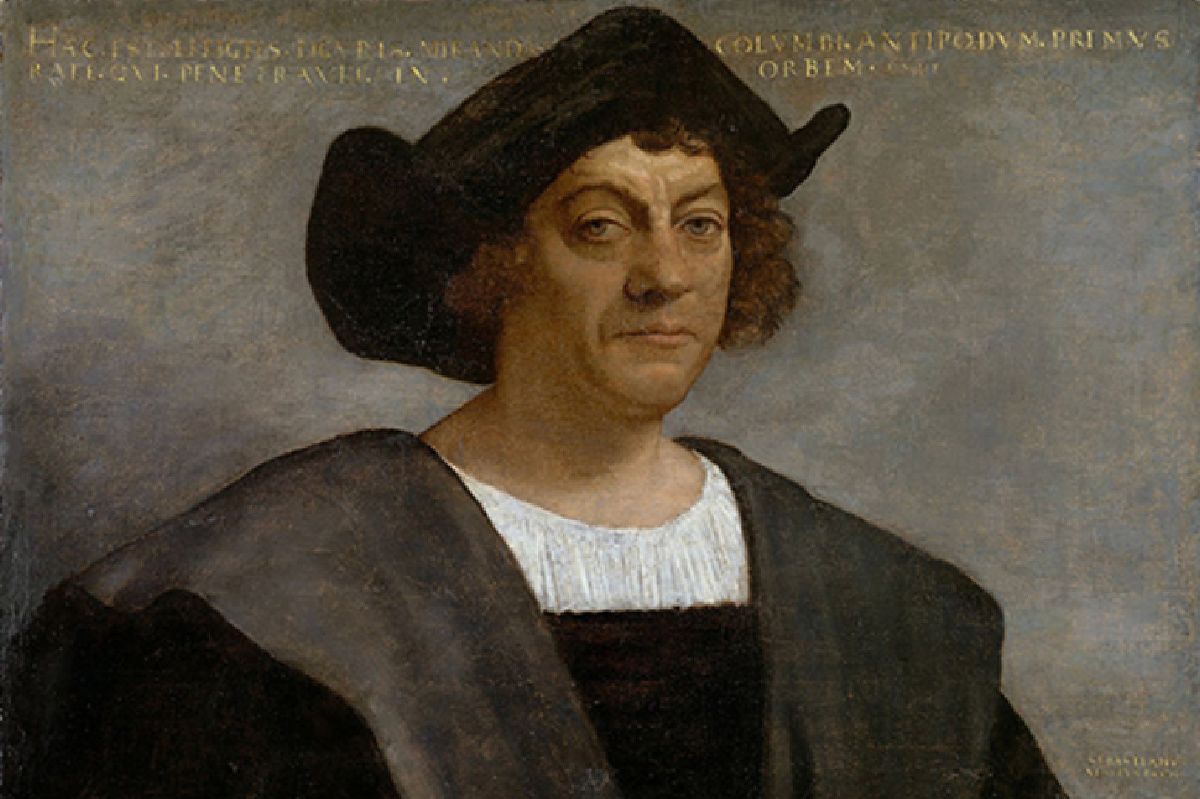
This weekend, two statues were installed on the White House grounds. On the north side of the Eisenhower Executive Office Building stands a statue of Christopher Columbus. On the south side is “Freedom’s Charge,” a life-size portrayal by Chas Fagan of two soldiers in the Continental Army, one with a rifle, the other with a billowing Bunker Hill flag.
In ordinary times, the temporary placement of such tokens of America history at the White House might pass without comment. These are not ordinary times. On the contrary, America is just now emerging from a destructive frenzy of woke self-loathing and iconoclasm.
Just a few years ago, no emblem of American achievement was safe from crusading vandals. Statues of or monuments to presidents and warriors, inventors, explorers and captains of industry, all were subject to desecration, removal, or outright destruction. This was the era of the 1619 Project, when the New York Times and other organs of the propaganda press disseminated the grotesque calumny that the United States was created in order to perpetuate the chattel slavery. That statue of Columbus that now stands at the White House is an exact replica of one that protesters toppled, smashed and dumped into Baltimore harbor in 2020. The new statue is fabricated in part from pieces of the original fished out from the harbor. First dedicated by Ronald Reagan in 1984, the statue’s reincarnation was rededicated by President Trump last October.
Another casualty of that rage for repudiation was a magnificent equestrian statue of Caesar Rodney, a signer of the Declaration of Independence from Delaware. On July 2, 1776, despite suffering from cancer and asthma, Rodney traveled 80 miles through a raging storm to Philadelphia to cast Delaware’s deciding vote in favor of independence. His vote assured that the Declaration of Independence was passed unanimously.

In 2020, on the occasion of Rodney’s 292nd birthday, President Trump noted that Rodney was “not just a Founding Father, he was a fighter for American freedom, serving under the command of General George Washington at Trenton during the Revolution. Washington bestowed his ‘sincerest thanks’ for Rodney’s service, commending his character as deserving of the ‘highest honor’ and describing his devotion to the American cause as ‘the most distinguished.’” For the better part of a century, a statue of Rodney on horseback and holding a copy of the Declaration stood in Rodney Square in Wilmington, Delaware. But on June 12, 2020, the statue was removed, another victim of the the anti-American revisionist rage that had gripped the country.
To redress that erasure, President Trump announced that a statue of Caesar Rodney would be added to the National Garden of American Heroes, “a vast outdoor park that will feature the statues of the greatest Americans who have ever lived.” The New York Times reported on the statue under the wretched headline “Park Service to Revive Statue of Founding Father Who Enslaved Hundreds.” Buried deep in the story was the grudging acknowledgment that Rodney had inherited his slaves, that in 1767, when he was speaker of the colonial assembly, he had introduced a bill to prohibit the importation of slaves into Delaware, and that he directed in his will his slaves be freed after his death.
What will be Donald Trump’s greatest legacy? Plausible candidates include his restoration of America’s southern border, his revitalization of America’s energy industry or his destruction of the narco-ommunism that had infested Latin America. His war to prevent Iran from acquiring nuclear weapons and exporting terror also deserves a place at the top.
But I suspect that his greatest achievement will be in the spiritual, not the material realm. In a word, Donald Trump has given America back its heroes. In recent years, we have been taught to disparage the giants who made us who we are. Christopher Columbus was supposed to have been bad for the Indians. Donald Trump restores Columbus to the pedestal upon which he used to stand, describing him as “the original American hero, a giant of Western civilization, and one of the most gallant and visionary men to ever walk the face of the earth.”
The late English philosopher Roger Scruton popularized a fancy Greek word for the disease that has held America and the West in its grip for decades: “oikophobia,” “the repudiation of inheritance and home.” By restoring our collective memory through nobly wrought works of art that celebrate America, by demanding that federal buildings be beautiful as well as utilitarian, by dismantling the racist impositions of DEI and kindred banners of self-hatred and resentment, Donald Trump has give us back the culture of affirmation. He has repudiating our repudiations. That is why a couple of statues on the grounds of the White House are much more than a couple of statues. They are tokens of our restoration on the eve of America’s 250th anniversary.




Comments