
The symphony of criticism aimed at the government for failing to live up to its promises of boosting Britain’s defences came to its crescendo this week. The lead author of last year’s strategic defence review (SDR), former Labour defence secretary and Nato secretary general Lord Robertson of Port Ellen, gave a speech at Salisbury’s Guildhall in which he savaged Sir Keir Starmer’s administration: he identified ‘a corrosive complacency today in Britain’s political leadership’ and accused ministers of paying ‘lip service’ to ‘the risks, the threats, the bright red signals of danger’.
One of the mainstays of the criticism aimed at the government is the months-long, ongoing delay in publishing the defence investment plan (DIP). This was scheduled in the third quarter of last year as a costed framework for implementing the recommendations of the SDR drafted by Robertson, former head of joint forces command General Sir Richard Barrons and ex-US national security council Europe and Russia director Dr Fiona Hill. It is now believed it will not be issued until June at the earliest.
Which is to be master? Downing Street or the Treasury?
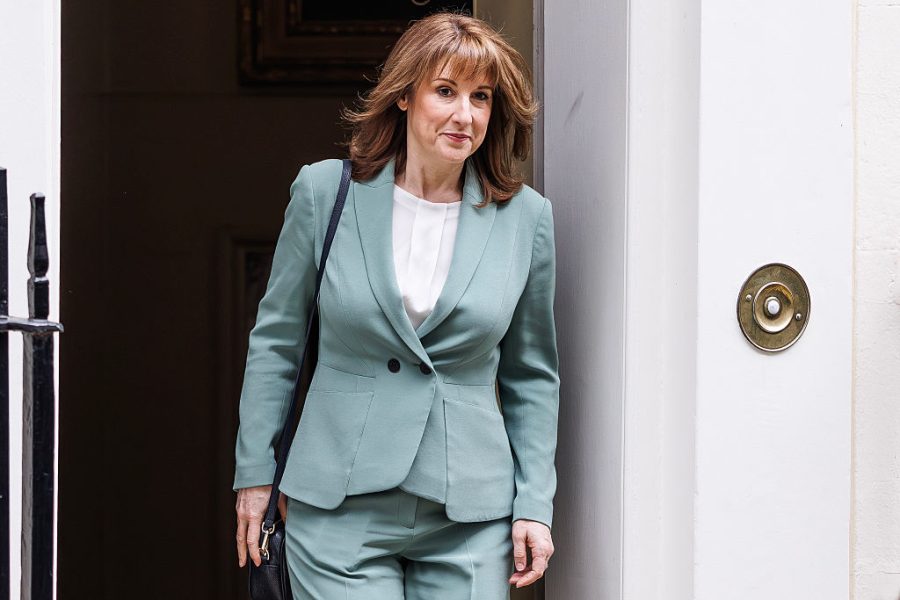
Now we know what is delaying the DIP so badly and damagingly: Rachel Reeves and HM Treasury. The Chancellor of the Exchequer is said to have proposed an increase in military expenditure of under £10 billion over the next four years, plainly inadequate when the armed forces are facing an existing shortfall of £28 billion simply to carry out their existing plans and commitments.
The United States’s and Israel’s conflict with Iran has caused the price of government borrowing to rise and left voters facing higher energy bills and petrol costs. Reeves is making plans to mitigate energy costs for low-income households and will defer a planned rise in fuel duty, limiting her freedom of action in other areas. Because of this she is unwilling to move further on increasing defence spending.

In political terms, Reeves is essentially irrelevant now. The failure to conjure up economic growth, rising government debt and public expenditure representing a proportion of GDP last seen in the 1940s have incinerated her credibility.
But like a desperate, midwitted version of Archilochus’s hedgehog, the Chancellor clings on to what she thinks is the ‘one big thing’ she knows: she cannot raise taxes or break her self-imposed fiscal rules to provide more resources for defence. The rules are regarded as so vital that the government made the impenetrably stupid decision to enshrine them in statute in the Budget Responsibility Act 2024, like an addict signing a promise to stay clean.
The result, in that strange, distorted moonscape which is Reeves-land, is that additional spending for defence can only come by reducing expenditure elsewhere. This, it seems, the Chancellor is unwilling to countenance – supported, no doubt, by those of her colleagues whose departments might otherwise face a tightening of the belt.
Lord Robertson may say ‘we are simply not ready and we need to rebuild war readiness to deter any possible adversary. The First Sea Lord, General Sir Gwyn Jenkins, may warn that the government must ‘step up’ in spending terms to maintain the Royal Navy’s maritime capabilities. The House of Commons defence select committee may advise that the Ministry of Defence ‘must address its readiness for contemporary war and start adopting new technology at scale and pace’. But none of this weighs sufficiently heavily in the balance to overcome Rachel Reeves’s flat ‘computer says no’.
Instead, Reeves’s deputy, Chief Secretary to the Treasury James Murray, was sent over the top to perform the now-ritualistic denialism and insist, without any foundation, that all in defence was well. That he began, ‘I’ve got a lot of respect for Lord Robertson…’ set the tone.
Like every other minister, Murray intoned the mantra that the government had ‘decided to have the biggest sustained increase in defence investments since the Cold War’. This is true but meaningless because the UK is not fighting the Cold War but dealing with the circumstances of today; its current resources are manifestly not adequate.
Murray could not say when the DIP, now at least six months behind schedule, would be published. Instead, he was peevish, patronising and evasive, an impressive triptych in so few words:
It’s going to be published as soon as possible, but it’s important to get it right because this is a plan for the next ten years. It’s about how we spend this record increase in investment in defence. And we’ve got to get it right.
None of this self-exculpatory verbiage means anything beyond intra-departmental squabbles in Whitehall and ministers running from political responsibility. None of it increases the UK’s military capabilities or reach. The Defence Secretary, John Healey, said last week that defence investment was ‘a highest priority’ for the Prime Minister. There can only be one ‘highest’ priority, and if investing in the armed forces is Sir Keir Starmer’s, it is demonstrably not Rachel Reeves’s.
Humpty Dumpty told Alice, ‘When I use a word, it means just what I choose it to mean – neither more nor less.’ The latter part of his remark is often overlooked: ‘The question is, which is to be master – that’s all.’
Which is to be master? Downing Street or the Treasury? Sir Keir Starmer or Rachel Reeves? Britain’s national security can no longer wait for an answer.






Comments