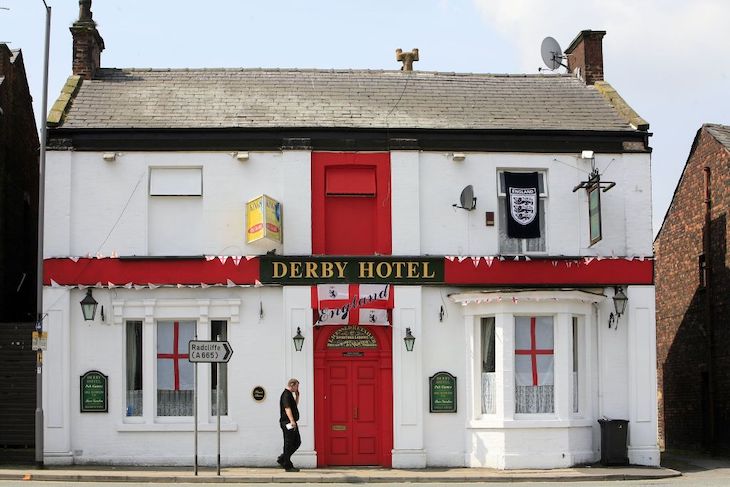
Those endless days of an English summer are nearly upon us. The smell of freshly-cut grass drifts across the village green. Cricket is returning to hundreds of villages across the country. Saturday afternoons spent lazing in the sun watching the lads run back and forth. Longer, warmer evenings mean pints down the local with friends. A thousand little beer-and-music festivals spring up every weekend: steam trains, cider, bad rock music and burnt sausages. Pub gardens start to fill up. England feels alive.
Nowhere is the gamble sharper than with cask ale
And the World Cup is almost upon us. England are among the favourites to win the tournament, which starts tonight. A warm summer lies ahead, huge crowds ready to gather and watch the Three Lions progress. Things look rosy, or so you might think, for pub landlords like me.
But here is the rub. The government has allowed us to stay open until 2am for the big night games. On paper, this is a benefit for Britain’s battered pub industry. The problem is the same old numbers trap.
We are still not making money. We lost 161 pubs in the first three months of 2026, nearly two a day, for all the usual reasons: VAT, National Insurance hikes, pension contributions, energy bills and, above all, staffing costs. Finding good workers is difficult, if not impossible. Tell them they will be working until three or four in the morning for the late kick-offs, and you will not see them back the next day. You gain one night and lose the next day’s trade.
And what about the extra barrels, bought and paid for in advance? Extra TVs dragged into the garden, maybe even a temporary bar under the trees? All of this comes at a price. What if the crowds don’t come? I am already hearing it from regulars: “Hmm, it is a bit late. Might just stay in and watch at home, get a few cans with the mates.” It’s understandable, when a round in most country pubs now costs not far off what a night in Mayfair might set you back.

Every landlord I know is being told the same thing by customers: “You will have the big screen on, will not you? Extra barrels? Food deals? Stay open late?” On paper, the World Cup sounds like a lifeline. In practice, it is a high-stakes gamble for landlords.
Nowhere is that gamble sharper than with cask ale. It is the one category that still defines the British pub. Real ale is something unique to these islands. It is live, unpasteurised, naturally conditioned beer that cannot be replicated at home. In many ways, it is analogous to the story of Britain itself: quirky, stubbornly individual, full of character. You can travel a handful of miles and find a pub serving ales you have never seen or tried. The names of these beers make you smile before you have even lifted the glass. Old Speckled Hen, Doom Bar, Bombardier, Landlord, Ghost Ship, Reverend James. Each one is a little piece of local history and eccentricity poured into a pint.
That is why organisations like CAMRA and SIBA matter so much. They have fought for decades to protect real ale, to champion independent brewers and to keep choice and quality alive in the British pub. Without them, the trade would be poorer, blander and a lot less interesting.
Yet cask is also fragile. It has to be dispensed within a tight freshness window. Get the throughput right, and it is glorious. Miss it and you are pouring something flat and tired – or you must write the cask off entirely. In a normal summer, that is painful enough. During a World Cup, with its wild swings in demand, it can become existential.
I have come across a novel and maybe brilliant solution from a British company that sounds almost like a magic bullet. It is a patented cask containment system developed in Cumbria that, I am told, extends the shelf life of real ale dramatically while remaining fully consistent with CAMRA’s definition of live ale. I know little about the technical details yet, but the idea is simple and very British: innovation in service of tradition. I will be installing it at my pub, the Vine Inn in Cumnor in Oxfordshire, and investigating it properly over the course of the tournament. If it does even half of what its supporters claim, it could be the practical answer so many of us have been waiting for.
The World Cup will be brilliant. The atmosphere, the flags, the roar when England score; that bit we can deliver. But the question every landlord is quietly asking is whether we can still afford to keep the real heart of the British pub beating through the summer.
Real ale has survived worse threats than this. With a bit of British ingenuity, perhaps it will not only survive the World Cup but come out stronger. I intend to find out.





Comments