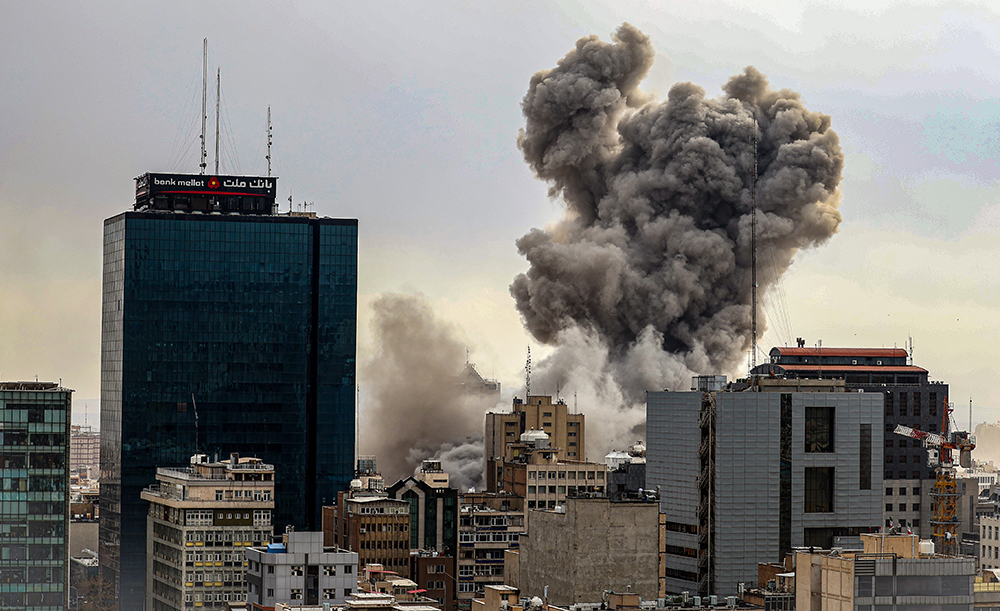
Donald Trump may be the volatile leader of an unstable coalition. America’s numerous interventions in the Middle East may have been marked by chaos, inconstancy and the erosion of western prestige. Nato, and even more so the European Union, may be militarily anaemic and economically sclerotic. And the war in Iran may well have intensified fears about American intentions, as well as placing further strains on the Atlantic alliance. But that does not mean now is the time to step away, shake one’s head and lament the un-wisdom of war. It only reinforces the need to finish the job: to rid Iran of its rulers, its regime infrastructure, its nuclear capability and the Islamist nightmare it has endured for almost five decades.
The justifications for this intervention may be contested but what is not in doubt is Iran’s role, over decades, in seeking to de-stabilise its neighbours, foment conflict across the Middle East and acquire nuclear weapons. It has consistently supported Hamas, Hezbollah, the Houthis, fundamentalist militias in Iraq and Islamist movements in every Gulf state. Iran’s agents have been conducting covert operations, including assassinations, across the West. The regime has used organised crime to advance its goals in European nations. It has developed a cyber capability to subvert democracies. And it has used every technique of evasion, deception and dissimulation to build a nuclear stockpile that it can, in time, deploy with devastating effect against the world’s only Jewish state.
Victory in Iran would give that country the chance to show what a free post-Islamist society could achieve
Iran has supported the Russian invasion of Ukraine with its drone technology, supported China’s slave economy with its oil exports and unleashed brutal, indiscriminate violence against its own population. The rights of women, homosexuals and ethnic minorities have been suppressed while power and wealth have been concentrated in the hands of ideologues and professional sadists. Rarely has the case for regime change been so compelling. It should have come as no surprise that Iran’s leaders have resisted American and Israeli attacks. These are men who are steeped in blood and committed to terror. They knew that any initial assault would overwhelm their conventional forces so they required defence in depth. The strategy has been to levy a cost on every neighbour that might support action against them and use the fraught geography of the Strait of Hormuz to exact a steep economic price on the West. The regime hopes these costs and that price may prove too heavy a burden for a West they deem irredeemably decadent. After all, our politicians are bound by electoral cycles, short attention spans and economically weakened electorates.
The regime may yet be proven right. America’s Nato allies equivocate over efforts to restore freedom of navigation – a core interest of the West. The traumas of past interventions have encouraged formidable resistance within the US political establishment to deploying ground forces. European political leaders, including our Prime Minister, are courting short-term popularity by resisting what they see as Trump’s ‘adventurism’.
But what would the consequences be if this war was allowed to end with the Iranian regime still in place? Our allies in the Gulf – from Oman to the United Arab Emirates and Saudi Arabia – would be left to reflect on our inconstancy. They would be left, too, with a wounded and resentful Iran, plotting its revenge. Tehran would have renewed incentive to fund terrorist proxies and nuclear missile technology, the better to deter and overawe its neighbours. Russia and China would feel confirmed in their view that a weakened West has neither the strength nor the stamina to resist their own adventurism. Iran’s people would see the democracy they dreamt of vanish beyond the horizon, and those who had been anything other than fierce in their loyalty to the regime would be crushed underfoot.
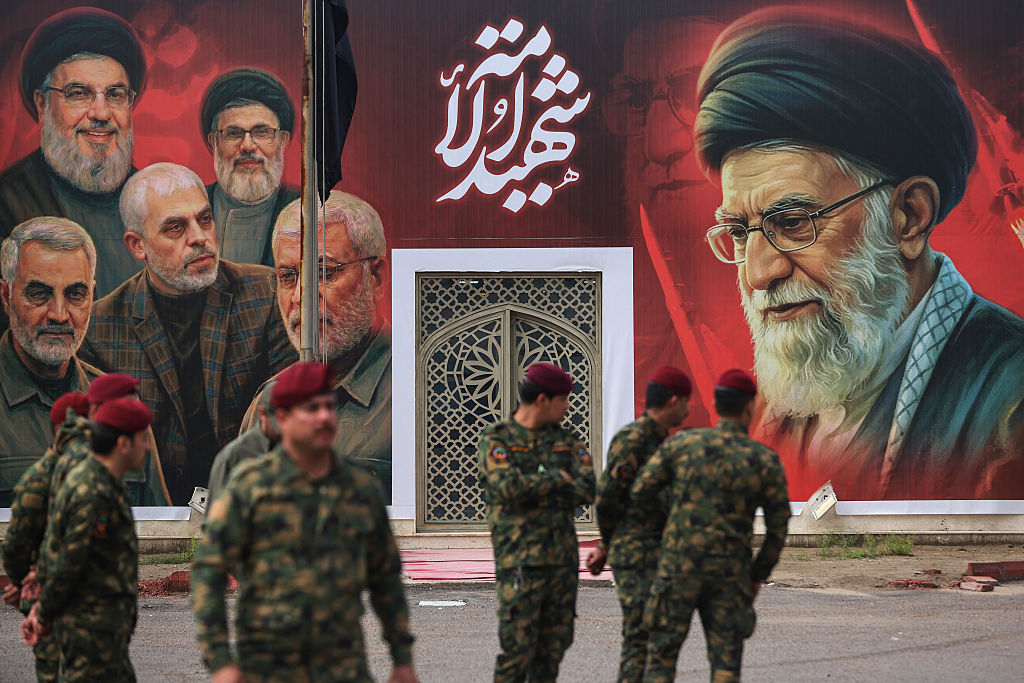
What of the West? Those celebrating such an outcome would be the ‘post-colonial’ left, who would rejoice in an epochal reversal of American power, and the ethno-nationalist right, who rage against Israel, Jewish influence and ‘the Epstein class’ which, as they see it, dragged us into a costly and counter-productive debacle. These are the forces within western society that disdain western civilisation itself – liberal, open, capitalist, creative, Judeo-Christian and confident. These people would feel emboldened in their drive towards identitarianism, division and communal enmity.
Victory in Iran, by contrast, would give that country the chance to show the world what a free, successful, post-Islamist but majority-Muslim society could achieve. It would liberate the talents, voices, and consciences of millions. It would undergird the stability and prosperity of Gulf powers and their orientation towards the West, with the leadership of nations such as the UAE in the vanguard. It would liberate Israel from existential threat and enable both an accommodation with its Palestinian neighbours and western support to that end. It would re-affirm the ability of the West to secure its strategic goals through united deployment of military strength and thus bolster the defence of Ukraine and the security of Taiwan. It would place control of oil and gas in the hands of western allies to counter the huge economic advantages that China has built up.
Victory is far from easy or assured. It will require a commitment of time, troops and patience that has so far not been articulated. But if that commitment is not made then the price will be far higher than what we might endure in the weeks ahead. We can either finish the job in Iran, or it will finish us.


Comments