
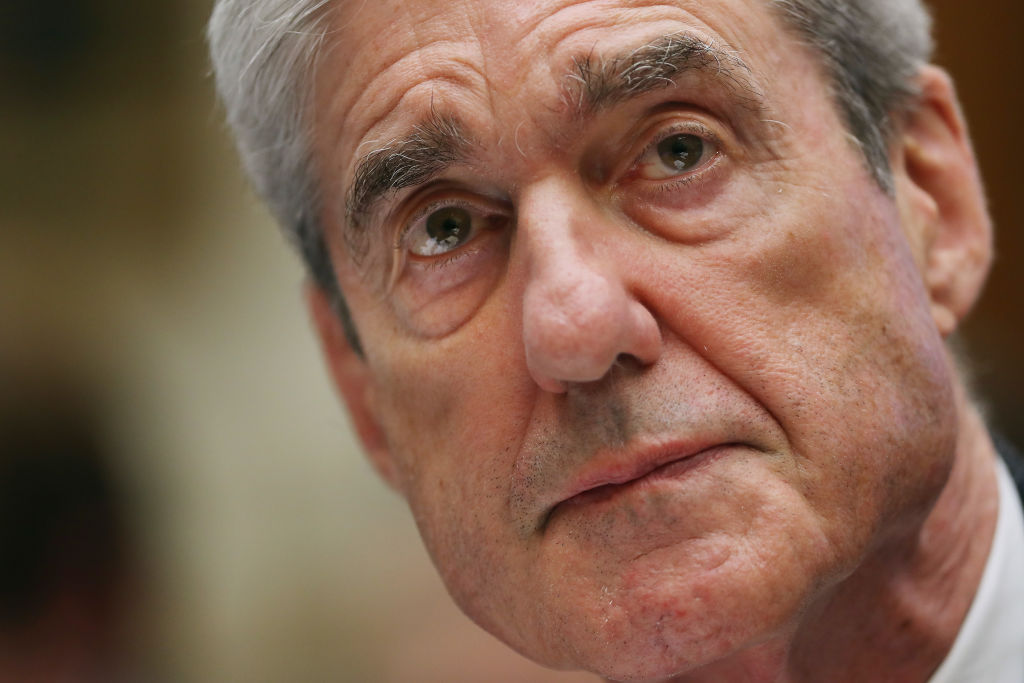
In the pantheon of Trump adversaries, Robert Mueller may rank at the very top. Everything about Mueller – his rectitude, his formality, his blueblood ancestry, his lifelong marriage to his high school sweetheart – was anathema to Trump who has sought, as far as possible, to disestablish the Washington establishment. Yesterday, Trump engaged in a round of gloating over Mueller’s death at age 81, declaring on social media that it couldn’t have come soon enough: “Good, I’m glad he’s dead.”
Gee whiz. No crocodile tears from him for the G-Man who had devoted his life to public service. “It is clearly wrong and unchristian behavior,” Republican Rep. Don Bacon wrote. It should, however, come as no surprise.
When a wan Mueller testified about the report in 2019, it became clear that he was a spent force
When it comes to his real and perceived foes shuffling off their mortal coils, Trump has always offered something other than sympathy. When John McCain died in 2018, Trump initially kept White House flags at full mast and said that he was “never a fan.” Three years later, when former secretary of state Colin Powell passed away, Trump denounced him as a RINO and upbraided him for his “big mistakes on Iraq, and famously, so-called weapons of mass destruction.”
If anything, Trump’s latest animadversion seems likely to help burnish Mueller’s record. He fought in Vietnam, which Trump, diagnosed with bone spurs, shirked. He was head of the FBI during 9/11, which Trump falsely claims that he, Trump, had predicted would occur. Then Mueller took on the role of special counsel in the investigation of Trump’s Russia ties during the 2016 election. Trump called the investigation a hoax and a witch-hunt. After Mueller submitted the report on the investigation, Trump’s then-attorney general William P. Barr offered up a bowdlerized version of it that exonerated Trump, much to Mueller’s stupefaction.
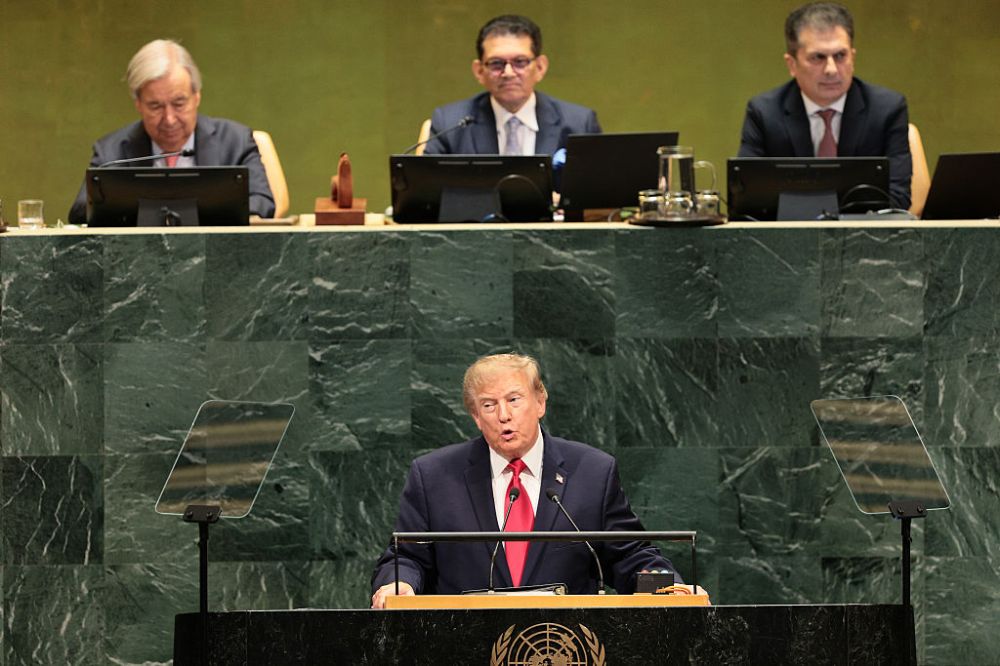
As it happens, I played a walk-on role in the Mueller investigation that provided me with a glimpse of its cautious methods and practices. The National Interest magazine, which I edit, hosted a foreign policy speech in April 2016 that Trump delivered at the Mayflower Hotel in Washington, DC, where he pronounced his fealty to a revived America First doctrine (which he appears to have jettisoned like so much useless ballast with his current foray into Iran). Mueller’s minions, who conducted the actual inquiries, were interested in whether Trump’s first attorney general, Jeff Sessions, had interacted at the Mayflower in some secret or untoward way with the then-Russian ambassador, Sergey Kislyak. I felt constrained to observe that, as best as I could tell, nothing so exciting appeared to have occurred. I didn’t have anything of consequence to convey and ended up in a few footnotes in the report, which was sober and factual.
The real mystery was why Mueller allowed himself to be rolled by Barr. When a wan Mueller testified about the report before the House Intelligence Committee in 2019, however, it quickly became clear that he was a spent force. Indeed, Mueller was never the satanic force depicted by Trump, but resembled the angels in Paradise Lost who “found no end, in wandering mazes lost.”
This helps to explain why Trump’s wrath about the Mueller investigation has never really seemed all that persuasive. The truth is that his campaign did share polling date with a Kremlin agent, as a bipartisan Senate Intelligence Committee report affirmed in 2020. What’s more, Trump did call upon Russia, publicly, to lend him a helping hand in his quest for the presidency. Today, Trump is depicting Ukrainian President Volodymyr Zelensky, not Russian President Vladimir Putin, as the true obstacle to peace. At the same time, he is seeking to bolster, in tandem with the Kremlin, his longtime chum Viktor Orban, the President of Hungary, in his mission to secure a fresh term in April. As Mueller fades into the past, Trump believes, more than ever, in Russia.




Comments