
In 1997 the doyen of Democrat political columnists in the US, E.J. Dionne, published They Only Look Dead. He argued that while the received wisdom was that the Republicans were set to dominate politics for a generation, there were underlying factors which pointed to a Democrat revival. Dionne was both completely wrong but also completely right. George W. Bush won the presidential elections in 2000 and 2004. But the 2000 election turned, famously, on a Supreme Court ruling, and could easily have gone to Al Gore. And in 2008 and 2012 the Democrats did indeed dominate.
They Only Look Dead would be the perfect title for a book about the Conservatives today. They certainly look near-dead. Even with the widespread acknowledgment that Kemi Badenoch has secured her position as leader and is beating up the Prime Minister for fun at PMQs, the Conservative poll ratings stubbornly refuse to shift in any meaningful way. And they are making no dent in Reform’s capture of the right.
But a case can be made that they only look dead. Underneath the surface, the ground is already starting to open up in ways that offer the possibility of revival.
First, and most obviously, Kemi Badenoch is beginning to convince as a leader.
Voters tend to make up their minds quickly about party leaders. Although the received wisdom is that both William Hague and Ed Miliband were holed beneath the waterline from the moment they were pictured in a baseball cap and eating a bacon sandwich, respectively, those pictures simply reinforced the public’s view of them (Miliband’s picture wasn’t taken until 2014, four years into his leadership).
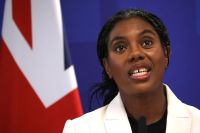
The initial response to Badenoch was ignorance; voters had no real view of her. That seemed bad at the time but was actually promising. It meant that even though she only started to dominate the Commons after a year or so of her leadership, that was the first real impression she was making on voters. You can see how successful that has been from polling last week by More in Common, which showed her beating both Sir Keir Starmer and Nigel Farage in a head-to-head choice over who would be the best prime minister. Indeed, she beat all the other main party leaders in one-on-one contests.
The Tories themselves, of course, languish in third place (although as the polls fluctuate, they sometimes push Labour into third). In that context, another poll makes for fascinating reading – and shows that the space may well be opening up for a Conservative party led by Badenoch to show it is very much still alive. Last week the National Centre for Social Research published a deep dive into voters’ underlying attitudes. And it shows that in many key areas – although not in all – there is a strong match with natural Conservative territory.
In 2018, for example, just 4 per cent said they favoured cutting taxes and a smaller state. That figure has grown to 19 per cent. That’s a logical response to the huge rise in the tax burden under both the last Conservative government and now Labour. But it also needs to be considered in the context of likely developments over the next few years. Whatever Keir Starmer’s fate, for example, and whoever takes over from him if he is ousted (with the possible exception of Wes Streeting) Labour is near-certain to shift left. With Morgan McSweeney gone, Starmer is surely more likely to indulge his own inner-Islington-progressive; and if Rayner, Miliband or Burnham replace him, then the soft left will have free rein. A more fiscally responsible party is therefore likely to pick up support.
Attitudes to welfare are even more striking. For decades polling has shown a sizeable majority favouring increasing rather than cutting benefits. No longer: last week’s poll shows voters favour cuts over more welfare spending by 42 per cent to 27 per cent.
Labour has, of course, been hopeless when it comes to welfare. It could not even get through the tiny £5 billion reduction proposed by Liz Kendall, and it has now scrapped the – very popular with voters – two child benefits cap, a change which Reform also supports (albeit with its own tinge, restricting the lifting to ‘British couples who are both in full-time work, whether that be by birth or naturalisation’). In other words, the Tories are alone in favouring serious welfare reform, a policy backed by voters.
The same is true on immigration. Attitudes have changed significantly in a few years. In 2022 there was a 34 per cent majority for the proposition that immigration is good for the economy. Now a majority believe it is bad. Immigration is, of course, an Achilles’ Heel for the Tories, who presided over the ‘Boriswave’. But the politics of this may change dramatically.
Much of the initial support for Reform was built on immigration being out of control. As Fraser Nelson has shown, however, there are plausible projections which have net migration turning negative this year. Some 400,000 immigrants a year are now leaving, joined by over 250,000 Brits. If immigration stops being an issue, much of the ballast underpinning Reform’s support collapses.
All of which leaves a large opening for a serious, sensible and convincing Conservative party under a leader respected by voters.





Comments