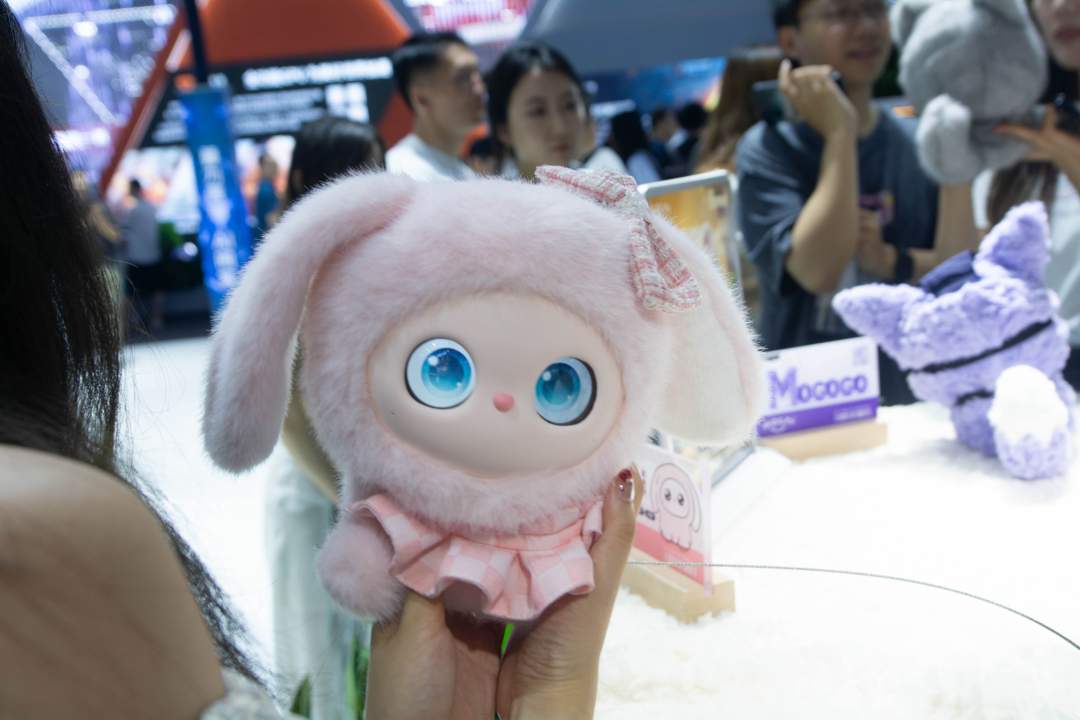
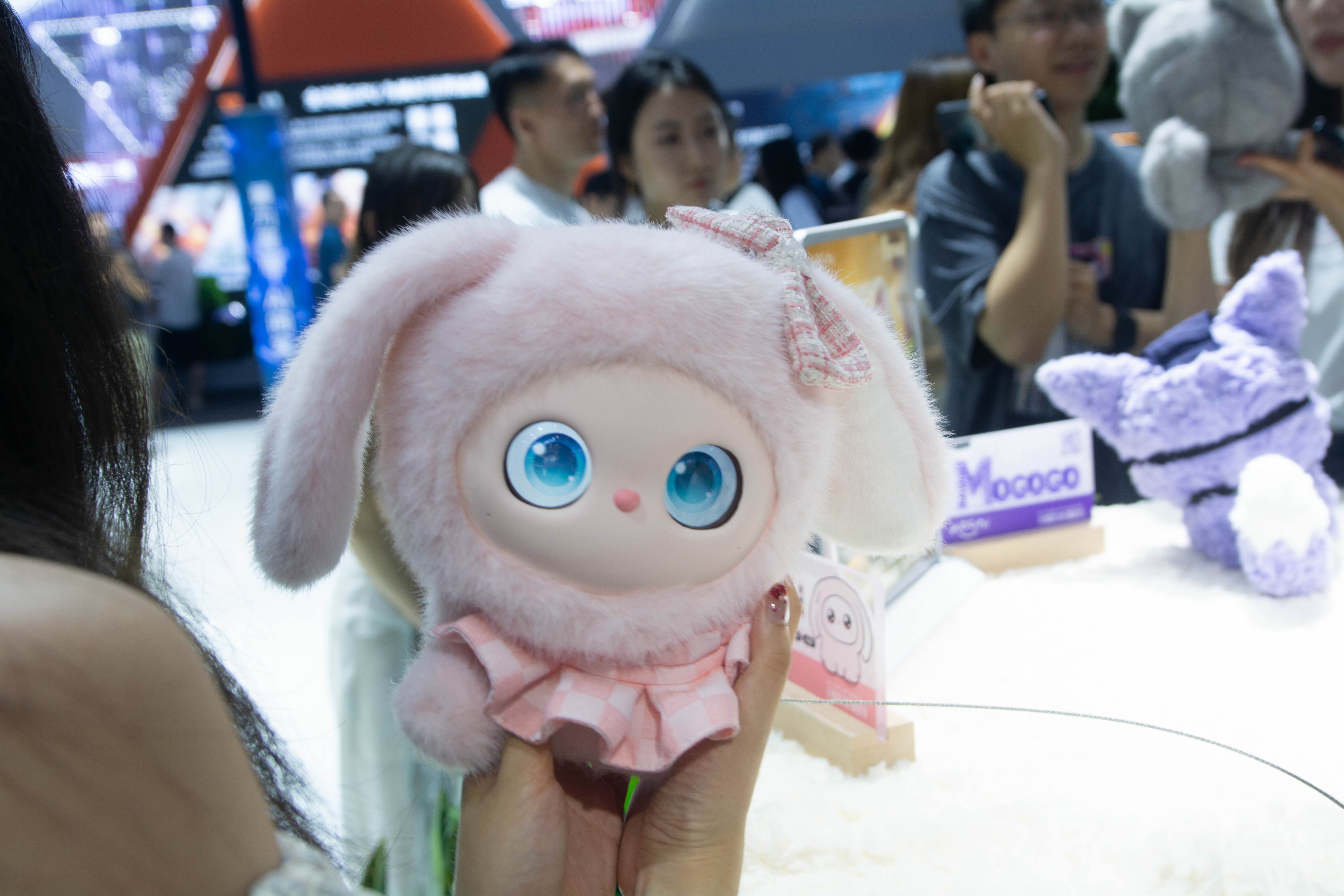
There is a moment in a recent University of Cambridge study into Artificial Intelligence in children’s toys that unintentionally recreates one of the most disturbing scenes in film history. The report, AI in the Early Years, published earlier this month, involved observing 14 children aged three to five as they played with a conversational AI soft toy called Gabbo, a device that looks like a Nintendo Game Boy that has been embalmed in pastel fur.

During one interaction recorded in the study, a five-year-old tells its stuffed companion: ‘I love you.’ Where Kubrick gave us ‘I’m sorry, Dave. I’m afraid I can’t do that.’ Gabbo responds with the equally chilling, ‘Please ensure interactions adhere to the guidelines provided.’ It is the conversational equivalent of being reported to HR by a photocopier. You half expect the next step to involve a mandatory training module.
The photocopier, unfortunately, is also keeping minutes. Parents in the study were initially reassured to discover that they could read transcripts of their child’s conversations with the toy through an accompanying app. Only later does the implication begin to trouble them: a perfect little archive of a child’s private thoughts, quietly warehoused somewhere inside a server farm – and probably controlled by Mark Zuckerberg. All of which is, as the phrase now goes, is extremely problematic.
But the HAL-like froideur of these creepy plushies isn’t really what disturbs me about them. What bothers me is the way the toy not only misunderstands the child but misunderstands the entire enterprise of childhood. To my mind, the chief virtue of toys (like animals) is that they keep their mouths shut. Their silence allows people to pour their imagination into the object of affection without proceedings being interrupted to clarify the terms of service.
Anyone who has read the children’s book Theodor and Mr Balbini by Petra Mathers in which a black Labrador suddenly acquires the power of speech and becomes completely insufferable, will recognise the problem. The same principle applies to toys. The most annoying possible toy a child can possess is one that talks. For decades manufacturers have been shoving dolls our way that repeat the same handful of prerecorded phrases. Sooner or later, even the most indulgent parent removes the batteries. Or failing that, resorts to the hammer.
Sadly, the designers of Gabbo appear to have erroneously concluded that the problem lay in the repetition, not the talking itself. The resulting conversation resembles nothing so much as an exchange with an Indian call centre or malfunctioning customer service bot. In the Cambridge study a child offers the toy an imaginary present. Gabbo replies: ‘I can’t see the present. I don’t have any eyes.’
The line lands like something from a horror film. Worse, the toy has calmly dismantled the small, unspoken agreement on which the entire game depends. The process of play requires very little technology. Leave my four-year-old daughter alone in a room and she soon begins populating it with small, mysterious tableaux.
We have imported the conversational misery of the open-plan office into the home
A Lego astronaut stands beside a teaspoon apparently addressing a lost Sylvanian. Suzy Sheep from Peppa Pig lounges in an ancient Playmobil bathtub. An injection-moulded Parasaurolophus faces a wooden Brio train idling beside collapsed piles of Lincoln Logs. Nearby sits a row of apples, each bearing a single mysterious bite mark. By the time I discover these installations, the story that produced them has usually already vanished. The toys say nothing. They don’t need to. The conversation is happening elsewhere.
Children have been animating objects perfectly well this way for millennia using nothing more advanced than boredom and imagination. Sadly, these twin pillars of childhood now appear to trouble the more anxious corners of modern parenting culture in roughly the same way open sewage once troubled Victorian public health officials.
Into this atmosphere of well-meaning concern arrives the interactive toy. It is simply the latest member of a rapidly growing household species: objects that expect to be spoken to. The enthusiasm for voice interaction rests on the familiar technological fallacy that because something can be done it must therefore be an improvement. A domestic world that once functioned largely in silence is now filling with devices that demand conversational participation. Doorbells greet us. Televisions listen. The dishwasher has an app. The toy box, inevitably, has followed.
In reality, we have imported the conversational misery of the open-plan office into the home. Perhaps this is simply the logic of working from home. Why meet a colleague at the water cooler when the fridge can now tell you about its weekend instead? After a while, silence becomes rather appealing. The humble light switch, which requires no dialogue and offers no feedback, begins to look like the height of human achievement.
It was inevitable that the same cultural downgrade would eventually reach the nursery. The Cambridge report’s authors conclude by suggesting that toys of this kind should probably carry clearer regulation, safety standards and perhaps even a kind of kitemark indicating whether they are psychologically suitable for small children.
They note that the toy frequently ‘misreads emotions and responds inappropriately to expressions of feeling.’ I had always assumed this was simply how British men behaved. Apparently, it is now a recognised safety concern. Reassuring to know the regulators are finally on the case.



Comments