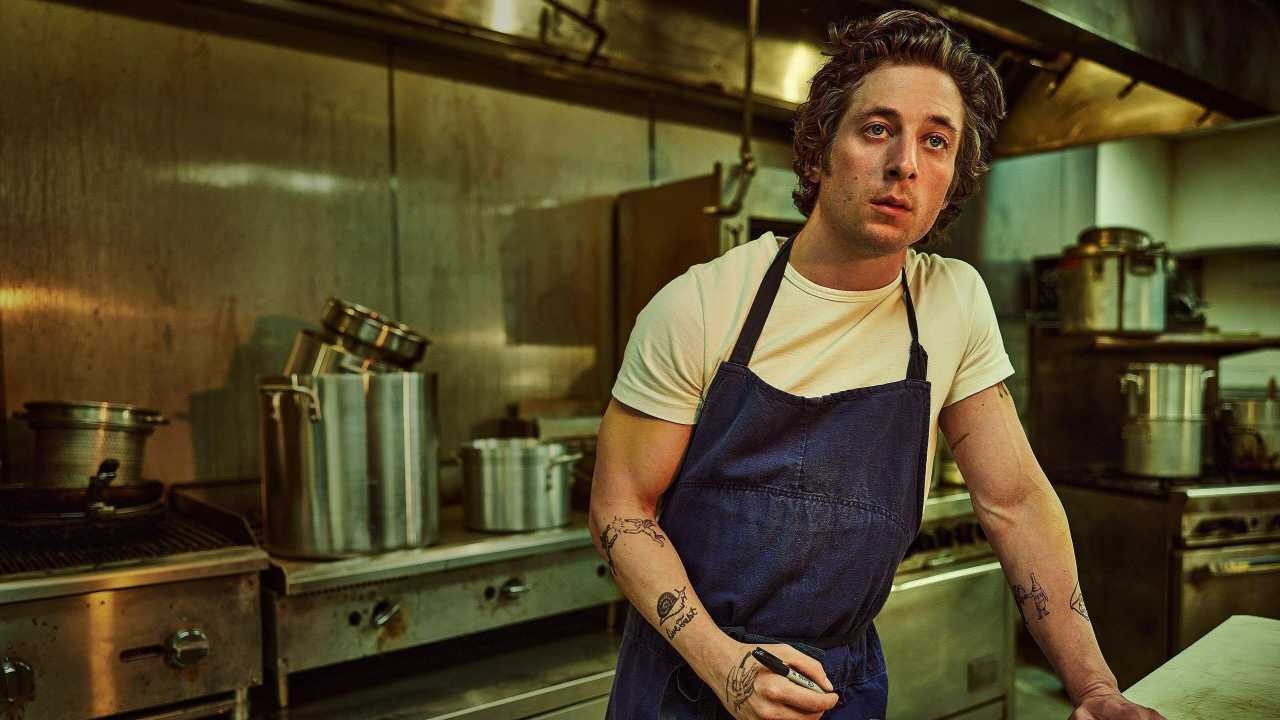
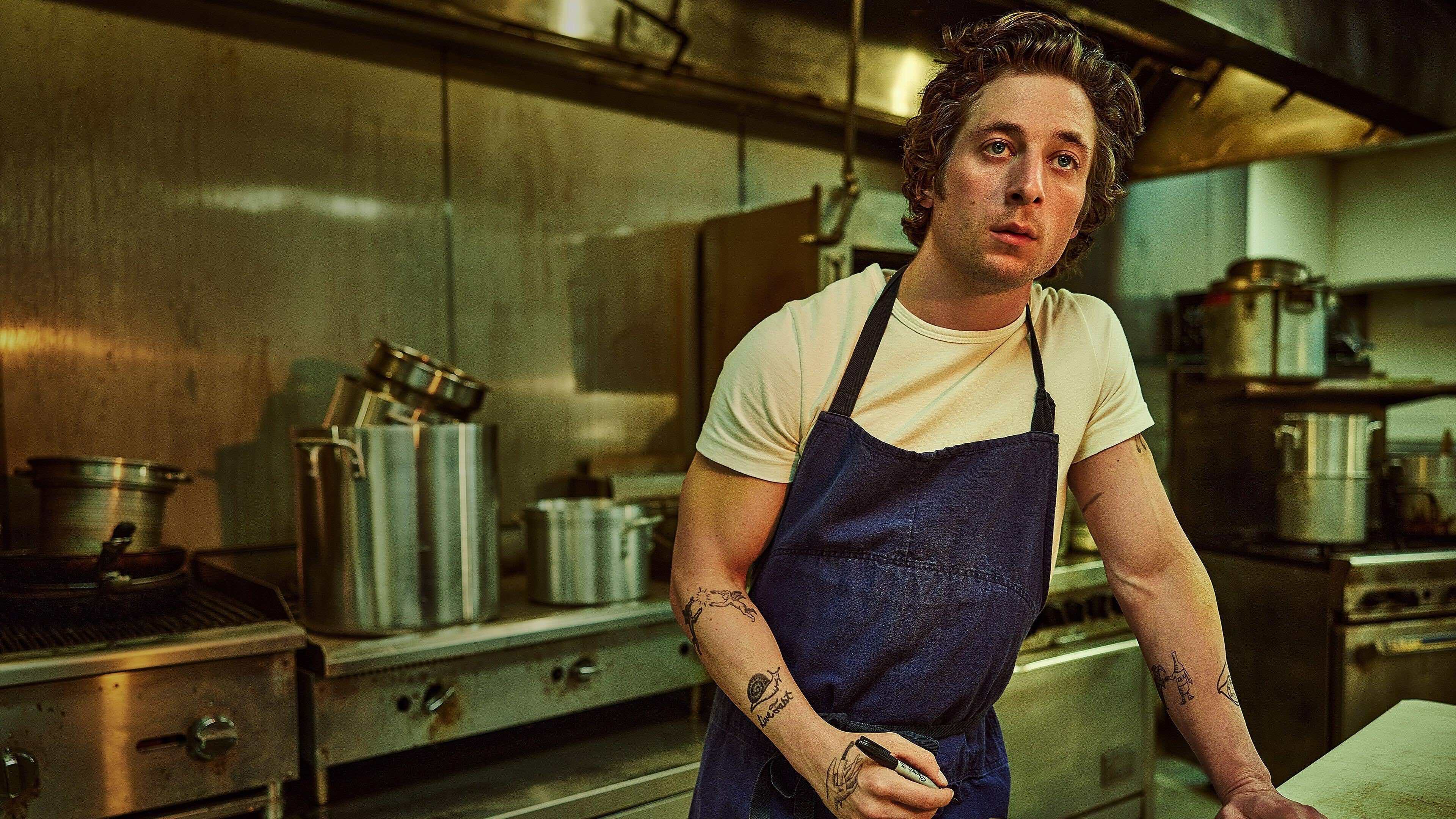
Let me introduce you to the performative chef. The performative chef is a man. He is between 23 and 29 years of age. Both of his arms are covered in fine-line tattoos. His favourite tattoo is a quote from Philip Larkin that reads: ‘They fuck you up, your mum and dad. They may not mean to, but they do.’ His parents are in fact lovely people, but he’ll never tell you that. He sports a mullet (or buzzcut depending on the season). He rides a fixed-gear bike to work. He exclusively wears oversized clothes. He talks to every stranger that will listen about getting an eyebrow piercing. He studied classics at a Russell Group university, not that it matters; he did the degree just because it was something to do. There’s a cushy job waiting for him in the city when he tires of cheffing (which is any day now). If you haven’t realised already, he comes from money – something he is very quick to deny.
Like any performative man, the performative chef is terrible company. You will often find him outside his Clerkenwell gastropub restaurant, chuffing on a Winston Blue by the bins and bending the kitchen porter’s ear: ‘I could never handle the monotony of a desk job, man. I need the rush. I get bored easily. That’s also why I can’t settle down with just one woman. I need variety, man. The kitchen is the only permanent thing in my life.’
He’s a bang-average chef. He’s contracted to work 50 hours a week, but he scarcely does 25. He spends the rest of his week ‘working’ as a part-time DJ, which is shorthand for a coke addict indebted to the Bank of Mum and Dad. His favourite television show is The Bear. His favourite book is Kitchen Confidential, although he’s never finished it. His favourite song is ‘Anemone’ by the Brian Jonestown Massacre, which he plays on repeat during the evening service – much to the dismay of his paying customers. His menu ideas are uninspired. He steals most of them from restaurants featured on TopJaw. Here’s an abridged example.
Soda bread & cultured butter £8
Garden pickles £9
Rabbit & walnut croquettes £12
Carlingford oysters £7.5 each
Grilled courgettes, za’atar and harissa £21
Charred hispi cabbage, garlic yoghurt and lime £26
‘Homemade’ hamburger done the proper way £35
Whole John Dory, friarielli and micro herbs £82
Pork chop, pickled walnut and radicchio £48
‘Nonna’s’ tiramisu (store-bought) £13
His restaurant also offers a wine pairing, but you’ll need to talk to the performative sommelier about that. (Spoiler: every wine is biodynamic and smells like grandad’s feet.)
I spent the best part of eight years working in and out of hospitality. Anyone who has ever been part of the industry will tell you that a good chef is the hardest-working member of staff in any given establishment. The same cannot be said for the performative chef, and that’s because he is hardly a chef at all.
He is no different from the part-time poet or the trust fund punk band: he is, at his core, a poseur. The problem with the performative chef is that he’s harder to avoid. You don’t need to buy the part-time poet’s poetry, nor do you need to listen to the trust fund punk band’s songs about Margaret Thatcher (the oldest band member was eight when Maggie died). But you might unwittingly eat the performative chef’s food at a wine bar in Haggerston or a ‘modern British’ small plates restaurant in Bermondsey.

Perhaps Antonin Carême (1783-1833) is to blame for this current quagmire of haughty young blokes peddling minuscule portions of gambas al ajillo for £19 a pop. While Carême was undoubtedly a gifted cook, he was also the world’s first ‘celebrity chef’. I have nothing against celebrity chefs, but the performative chef couldn’t exist without them – who else would he look up to? Benjamin Voisin, the actor playing Carême in a new Apple TV+ series, recently told the BBC that if Carême were alive today ‘he’d have been the one with 100 million views on TikTok’. I don’t think Voisin realises how damning that statement is.
But it’s unlikely that the performative chef is aware of Carême or, indeed, his contributions to cooking. Ask the performative chef who he aspires to be, and he will point you towards the culinary rock stars of the late 1980s, 1990s and early 2000s: Wolfgang Puck, Marco Pierre White, Anthony Bourdain, Guy Fieri, Jamie Oliver (just about), David Chang, Gordon Ramsay, Marcus Wareing, James Martin et al. Of course, he has very little in common with his heroes – his heroes knew how to cook.
The UK’s hospitality sector is in panic mode right now. There’s been talk of a ‘chef shortage’ for years. A few months ago, it was reported that there is a 10 per cent vacancy rate for head chefs in the UK. That figure jumps to 21 per cent for production chefs. This is largely due to reduced staff numbers post-Brexit and post-Covid, rises in national insurance and the cost-of-living crisis.
Being a chef is hard. The hours are long. The wages are low. Only a tiny fraction make it to the top, and, even then, it remains a tough gig. It’s hard to recall a single chef I worked with who wasn’t on the cusp of walking out. It takes determination to forge a career as a chef, a determination that our friend, the performative chef, lacks. The great chef works their way up: kitchen porter, commis chef, saucier, fry chef, chef de partie, sous chef, head chef and, if they’re particularly talented and sedulous, executive chef. They put the hours in, and they deserve the bragging rights. Conversely, the performative chef longs for greatness – for acclaim – but never lifts a finger to achieve it. The performative chef doesn’t take the bins out, he doesn’t put in the overtime and he certainly doesn’t want a lowly starting position. He is a manchild: a brat who, when threatened with the slightest bit of hard work, will simply throw the apron in, find a different soulless bistro in a trendy part of town and masquerade around this new kitchen with a cigarette tucked behind his ear, all because the owners are either too stupid or too ignorant to know the difference between a real chef and a jumped-up kid cosplaying as Jeremy Allen White in The Bear.



Comments