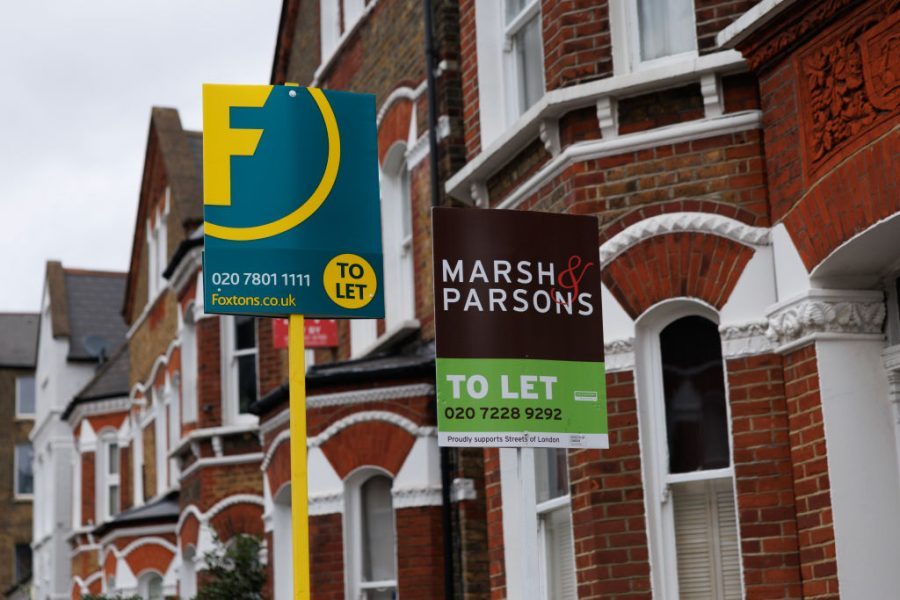
Recently a landlord, Mr Cao, attempted to increase the rent on his central Manchester flat by £50 a month from £1,650 to £1,700. The tenant, Ms Nau, brought the increase to a tribunal under the Renters’ Rights Act, which only allows rent increases once a year and only in line with the open market rent. Ultimately, the tribunal decided to cut the rent by £200, as they believed it had already exceeded the open market rent.
This is rent control by the backdoor; shortages and reduced quality of housing will inevitably follow. Tribunals have no place in second-guessing the true open market rent, nor, even were they omniscient economic planners, would justice warrant stripping landlords of the freedom to set the rent on their private properties anyway.
Landlords are entitled to their private property and to set whatever price they wish for its use
Open market rent obviously changes from year to year. Yet the Renters’ Rights Act, in insisting that rent may only rise to it, has the potential to stop any increases at all. This is because, in deciding what the open market rent is, tribunals will usually look at past figures and not the new ones which might be emerging at a higher rate. Tribunals may try to account for higher demand but this is a fool’s game. The lawyer, surveyor and layman who make up the tribunal cannot see supply and demand curves and any new intersection. Landlords testing the rental market with rent increases or reductions are in the very process of discovering where the new equilibrium price is: the Renters’ Rights Act ties one hand behind their back in this task.
The economist F. A. Hayek summed up the case against planning prices in his Nobel Prize lecture, ‘The Pretence of Knowledge’, when he wrote:
Into the determination of these prices and wages there will enter the particular information possessed by everyone of the participants in the market process – a sum of facts which cannot be known to the scientific observer, or to any other single brain.
In this Manchester court case, the tribunal looked at similar units to find the open market rent, but, crucially, they are just that: similar units. Cao testing the market with a £50 increase is part of the very process which discovers what the property’s extra features – e.g., its natural light, citywide views and being the largest flat in the building – are really worth. The tribunal cannot establish this because it cannot look into consumers’ minds and see their willingness to pay. Very often this is because even consumers don’t know what that might be until they are presented with a particular offer.

The result of fixing prices below their actual clearing rate is a shortage of homes or a diminishing quality of homes as landlords try and account for reduced revenue. This is exactly what a comprehensive literature review of 206 studies from the Institute of Economic Affairs found two years ago. Moreover, when Berlin introduced a rent freeze in 2020 for five years, the supply of rental properties coming to market fell by almost half. The only exempt rental properties, i.e., new units built after 2014, found no similar contraction in their offered supply. Many economically educated left-wingers would concede the general superiority of the free market in allocating resources, including in the rental market. Yet I still can’t imagine them being comfortable with landlords. Why?
Leftists dislike landlords because they are the embodiment of the inequality they oppose, and, following Karl Marx, they’re inherently suspicious of people not living off their own labour. This is ultimately why they favour rent controls.
But both arguments are wrong and do not actually support rent controls. If inequality is the real issue, then higher taxes on landlords, though still incurring a deadweight loss, would probably be a lesser loss than fixing rent, because, the reduced supply of rental properties to the market could still be adjusted for with higher rents. The second point gets off to a questionable start: if landlords not labouring are morally suspect to unjust extractors, then, the seriously disabled are too. This is hardly a conclusion leftists want to reach.
Nevertheless, landlords have worked for their properties, either by working for the money to buy them or, in constructing the houses themselves. Sure, they might not have put in as much work per pound generated as a shelf stacker, but even leftists accept there can be inequality in pounds generated for each unit of work done; hence, they accept a talented chef can earn more than the pot washer on the same hours. To this will be put the son who has inherited a load of properties from his father. It must be admitted, no work has been put in by him. Should private property respect even these claims and the corresponding legal ability of landlords to get rent?
In everyday life we all accept we can come to own things which we’ve put no work into acquiring. Whether it be gathering wild blackberries, picking up nice-looking driftwood, or receiving gifts from friends, we’re entitled to those things, so, analogously, a son is entitled to housing he is given by his father.
Karl Marx is wrong when he claims that only labour can entitle people to a resource. Landlords are entitled to their private property and to set whatever price they wish for its use. The Renter’s Rights Act is a gross injustice against this and must be repealed for that very reason. Or, at the very least, rent must no longer be subject to tribunal review.






Comments