
China’s political interference is in many ways worse than President Trump asserts, but the true nature and scale of Beijing’s activities may be obscured by his efforts to use it for partisan gain. Whatever Trump’s motives in accusing China of meddling in the 2020 presidential election – “the largest compromise of election data in history,” as he put it – Beijing has undoubtedly become more aggressive in its political interference. Beijing has adopted Russian-style disinformation operations in its attempts to undermine its western rivals, and the United States in particular.
The pandemic was a turning point. Until then, Chinese propaganda had been largely defensive – and quite clunky
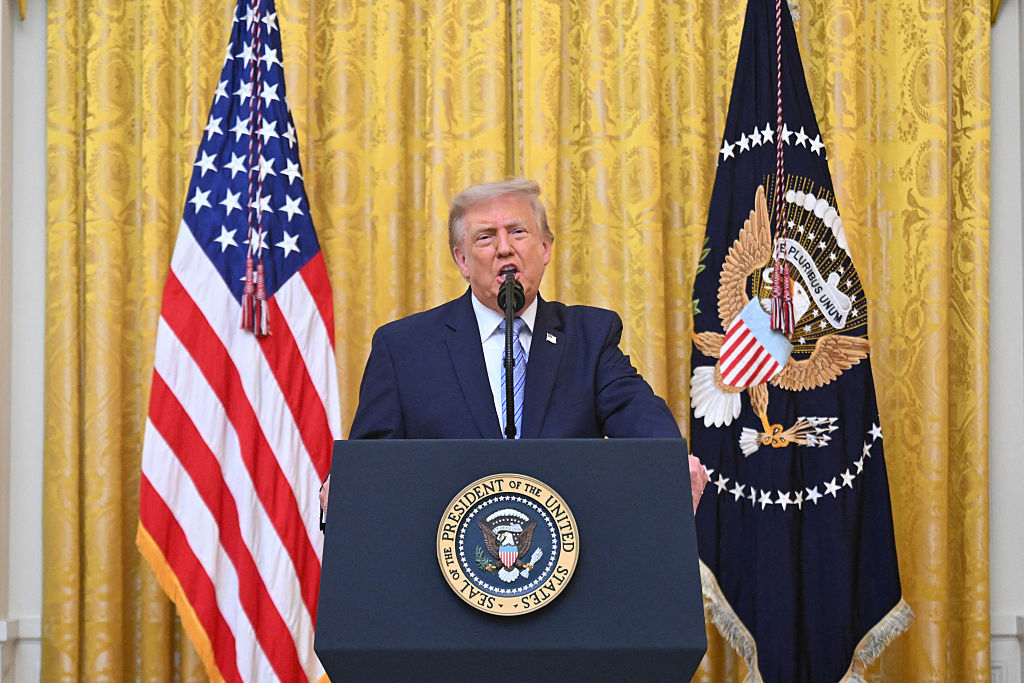
In a primetime television address last night, Trump accused Beijing of illicitly acquiring 220 million US voter files, including names, addresses, phone numbers and political party preferences, and asserted that the electoral system was “dangerously expose[d] … to hacking, exploitation and interference.” He said voter data in 18 states was “bought, stolen or hacked by China” and claimed “those responsible for sounding the alarm” had failed to disclose this to Congress or government officials.
Trump has long obsessed about his 2020 defeat to Joe Biden and Beijing joins the long list of those he believes conspired to rob him of the presidency through “catastrophic” election fraud. The White House also published reams of newly-declassified material, though this did not appear to support his assertions.
Democrats pointed out that much of the material he accused China of stealing is available in public databases and that the US intelligence community had previously concluded that China had not interfered in the election. They accused Trump of seeking to undermine the credibility of the upcoming November midterms elections, where the control of Congress for the remainder of his presidency is at stake. For its part, China’s Foreign Ministry denied the accusations, saying they were “entirely fabricated.” Trump’s claims were “malicious smears” which have “long been proven to be groundless,” according to Foreign Ministry spokesman Lin Jian.
Trump claimed China “fought like hell” to prevent his re-election, though the limited evidence that does exist from state-sponsored think tanks and academic writing in China at that time suggests a far more nuanced debate ahead of the 2020 election. While Trump’s first term undoubtedly changed the conversation on China, ushering in a far more hostile tone, China-skepticism was already becoming bipartisan. There were those in China who regarded Trump as someone they could deal with more effectively than Biden. They also saw strategic advantage in his alienation of allies.
The aim of Chinese disinformation operations that have been exposed was not so much to promote Biden or Trump, as to undermine the broader credibility of American democracy and inflame divisions in American society. A campaign called Dragonbridge, first identified by cyber security investigators in 2019, was described as the world’s largest online disinformation operation. It employed a vast network of hundreds of thousands of fake social media accounts spanning Facebook, Twitter and YouTube. It initially concentrated on deflecting blame for Covid-19 – including false claims that the true origin of the virus was a US Army research facility.
The pandemic was a turning point. Until then, Chinese propaganda had been largely defensive – and quite clunky. It concentrated on issues where China perceived its interests were under threat, such as Hong Kong, Taiwan and Xinjiang. For example, it countered well-documented evidence of repression in Xinjiang with videos of happy, dancing Uyghurs praising the benevolence of the Chinese Communist party.
From around 2020 onwards, Chinese bots began to insert themselves more aggressively into the most divisive issues in US society. By 2021, investigators were describing how Dragonbridge’s army of fake accounts – now encompassing 30 social media platforms and 40 other websites and forums – were urging Asian Americans to “fight back” against racial injustice.
The aim of Soviet (and then Russian) “active measures” was to sow discord and dissatisfaction. There is much debate about the effectiveness of these measures, but China has embraced them with relish. Beijing certainly has a big appetite for stealing large data sets – for example its 2015 hack of the US Office of Personnel Management and the 2017 hack of Equifax credit bureau, which netted the personal data of millions of people. Examples in the UK include the 2021-22 hacking of the Electoral Commission and the 2024 breach of the Ministry of Defence payroll.
If China did steal, buy or hack US voter files, as Trump alleges, that would not be surprising and entirely true to form. However their real value for China is in the way data from multiple large sets can be analysed and cross-referenced using AI, looking for patterns and vulnerabilities as well as high value targets. As AI improves, so does the value of these datasets, whether this be for targeted surveillance, espionage, disinformation – or even worse.
Chinese hacking and interference is a serious threat to American democracy. But that threat lies less in Beijing’s ability to sway an election and more in the efforts of China’s AI disinformation machine to poke at wounds in American society.



Comments