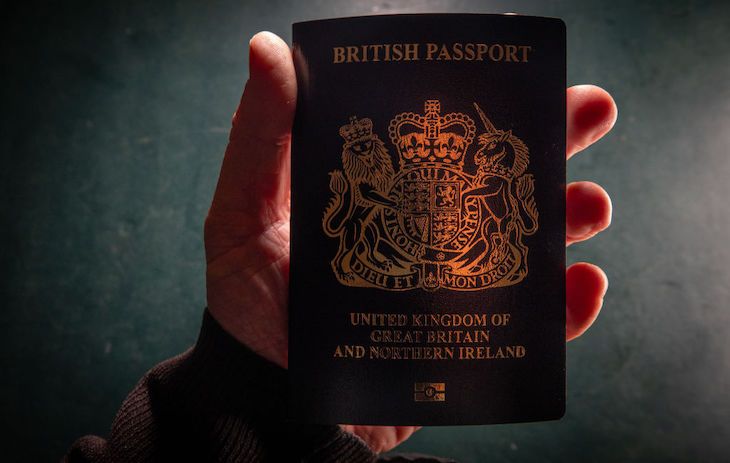
Citizenship is often discussed as a catalogue of rights. There is a less fashionable question, rarely asked: what is the price of belonging? In this essay, I argue that a state should not naturalise a person who does not regard that country as his or her home and who, in the last resort, is unwilling to defend it. Residence is not citizenship. A passport is not merely a travel document with a different cover. Citizenship entails membership of a national community, and membership carries obligations as well as protections. The price need not always be paid in armed combat. But there must be some price one is prepared to pay.
The Country Imagined versus Encountered
I arrived in Britain in January 1991, on a cold winter morning, with three one-pound coins, the promise of a job as a trainee doctor, and immense optimism. I also arrived with an idea of Britain formed, to a degree that now makes me smile, by P. G. Wodehouse. The Britain I encountered was not Wodehouse’s Britain.
I have come to recognise Britain as one of the most tolerant and accepting societies in the world. That does not make it perfect. But it puts comparison in perspective
I have written elsewhere about my experiences of racism in this country. I do not retract or minimise them. They happened, and some were painful. But memory does not keep an accurate ledger of good and bad experiences. I can keep replaying a handful of ugly encounters and allow them to define an entire society, or I can place them beside the hundreds of thousands of ordinary encounters in which I have been accepted, trusted, befriended, disagreed with, laughed with, worked with and treated as a fellow human being.
This is therefore not an essay about whether racism exists in Britain. It does, as it exists in every society I know. It is about the larger question of belonging. After more than thirty-five years in Britain, after working on projects in close to twenty countries across four continents, and having grappled with the complexity of British society, I have come to recognise it as one of the most tolerant and accepting societies in the world. That does not make it perfect. But it puts comparison in perspective.

Those who condemn Britain as uniquely or exceptionally racist too often leave the comparator unstated. Compared with what? Britain should be judged against its own principles and failures, certainly. But an actual country cannot sensibly be compared only with an imaginary utopia. The morally serious comparison should be with other actual human societies, including the societies from which migrants such as me have come. No one forced me to come. I chose to leave India having experienced the horrors of the 1984 Sikh killings. What wilful blindness, intellectual vacuity or deliberate falsehood would make me claim that India was less racist, fairer or a better civic society than Britain?
What Makes Land Home?
The question underneath my argument is one that the modern global citizen rarely asks: what makes an individual belong to a piece of land? Nationality is frequently conflated with nationalism, nationalism with chauvinism, and affection for one’s country with hostility to somebody else’s. The sophisticated person is invited to announce that he is equally at home in Los Angeles, Lagos and Lucknow.
I am sceptical, partly because I spend a lot of time with such global citizens in British academia and I am familiar with their pieties, hypocrisies and fake profundity. The analyst David Goodhart famously captured the fault line in modern Western politics as a divide between people from ‘Anywhere’ and people from ‘Somewhere’. The ‘Anywheres’ are educated, mobile, and comfortable with fluid global identities; their self-worth is derived from portable educational and professional achievements. The ‘Somewheres’, by contrast, are rooted in specific places, valuing stability, tradition, and local community. For the Anywhere, land is merely geography or real estate; for the Somewhere, it is identity and home.
The ‘internationally’ mobile professional – the classic Anywhere – may encounter remarkably similar people in Los Angeles, Lagos, and Lucknow: educated, cosmopolitan, employed in comparable institutions, eating in comparable restaurants and speaking a common professional language. That is not the same as knowing a society. One discovers the depth of one’s cultural inheritance when one is no longer surrounded by it; when the jokes fail, the assumptions differ, the social cues are unfamiliar, or one finds oneself among people whose lives are nothing like one’s own. It took me years to understand the ‘code’ the English use, one that is utterly alien to an outsider. The remark ‘interesting’ made by an Englishman to a statement likely means that he probably agrees with you; ‘very interesting’ means that he considers you an idiot. Travelling and working in Europe and in Anglophone countries also makes me see the distinctive characteristics of British society, often invisible to the Anywhere or purposefully ignored.
Every new immigrant faces the same predicament. For years, perhaps decades, home exists in two places and fully in neither. In the adopted country one hankers for the country left behind; on returning to the country of birth one discovers, often painfully, that it has changed and that one has changed with it. Home is reimagined as a lost paradise. As the saying goes: a man with one watch knows the time; a man with two watches is never sure.
This is not an argument against migration. It is an argument for compassion towards the migrant precisely because migration is psychologically costly. First-generation immigrants may carry divided attachments for much of their lives. As people grow older, many reach again for the emotional landscape of childhood – family, language, food, music, religion, rituals. That is not treachery. It is human. But citizenship asks a different question from nostalgia. Nostalgia asks where I came from. Citizenship asks where I now belong.
Land, Memory and Inheritance
Roger Scruton wrote beautifully about home, inheritance and what he called oikophilia: the love of home. One of his arguments was that attachment to land is not merely contractual; it is intergenerational. A landscape becomes a homeland because memories accumulate within it: births, marriages, quarrels, work, worship, graves, memorials and stories. One generation receives a place from another and, in turn, imagines handing it to the next.
Every new immigrant faces the same predicament
A recent immigrant cannot acquire that particular form of attachment merely by receiving a document. A passport can confer legal status in an afternoon; it cannot manufacture ancestral memory. When I arrived, Britain was not my ancestral land. Many of my English colleagues could locate their family histories here across generations. Their dead were here. Their childhood landscapes were here. The fact that Britain allowed me to enter, work, build a life and eventually become a citizen is not evidence that their prior attachment is illegitimate. It is, in part, evidence of the generosity of the society I entered.
We readily understand why Palestinians regard land as inseparable from identity, why Kurds speak of a homeland, or why Kashmiris experience territory as bound up with history and belonging. We accept Scottish attachment to Scotland and Welsh attachment to Wales. English attachment to England should not require a different moral vocabulary. If attachment to land is morally intelligible for one people, it is morally intelligible for another.
The history of humanity is a history of migration, conquest, settlement, intermarriage and changing borders. There is no pristine people standing on an untouched piece of earth. But that observation does not abolish belonging. If ancient migration invalidated present attachment, almost nobody on earth could claim a homeland.
There is, however, an important difference between saying that migration is as old as humanity and saying that all migration is socially equivalent. Scale and speed matter. For most of human history, movement was constrained by the physical world. Mountains, seas, deserts, seasons, distance and the simple difficulty of travel slowed the movement of people. Migration certainly occurred, sometimes on a large scale, and it could be violent and transformative. But movement and settlement usually unfolded within limits that modern transport has radically altered.
Tiziano Terzani captures the contemporary distortion of our sense of distance in A Fortune-Teller Told Me. Warned by a fortune-teller not to fly for a year, he travelled through Asia by train, boat, road and on foot. Deprived of the aeroplane, he found distances becoming real again. Geography was not just scenery beneath an aircraft. It was mountains, seas, deserts and borders between one society and another. Modern transport has compressed not only distance but time. A journey that once required weeks or months can now be completed in hours. The receiving society therefore has far less time in which to absorb ensuing demographic change.
The Labour government’s decision in 2004, when eight Central and Eastern European states joined the European Union, not to use the transitional labour-market restrictions adopted by most of the older EU member states, allowed European nationals to work, subject initially to the Worker Registration Scheme. The demographic change that followed was substantial. Estimates for 1997 to 2007 put cumulative net migration to the United Kingdom at about 1.85 million. Census data show that between 2001 and 2011 the non-UK-born population of England alone rose from about 4.55 million to 7.34 million, an increase of roughly 2.8 million, or 61 per cent.
Those who condemn Britain as uniquely or exceptionally racist too often leave the comparator unstated. Compared with what?
More recently the pace accelerated again. Long-term international migration since 2021 reached unprecedented levels for the modern UK statistical series. Net migration peaked at about 944,000 in the year to March 2023 before falling sharply to a provisional estimate of 171,000 for the year ending December 2025. The important point is therefore not that migration rises inexorably, but that Britain has recently experienced demographic flows of a speed and magnitude far outside its post-war norm. This is not just a British concern. The absolute number of international migrants alive today is the largest ever recorded: United Nations estimates put the figure at 304 million in 2024, nearly twice the 1990 figure. Modern technology has made large-scale movement extraordinarily rapid. What took generations can now occur in years.
The social consequences of large-scale migration are visible all over Europe. The strain on public services is obvious in many parts of Britain. In addition, integration is not an instantaneous administrative act. Institutions can issue visas quickly; societies cannot manufacture trust, create shared memory or build reciprocal loyalty at the same speed. Schools, housing, health services and labour markets have material capacities, but nations also have an absorptive cultural capacity. Newcomers need time to understand the society they have entered, and the host population needs time to incorporate newcomers into its idea of ‘us’. To say this is not to blame the migrant. The migrant responds to opportunities created by governments, economies and circumstances. It is to insist that the rate of migration is itself a legitimate subject of public policy. A society may be capable of absorbing change over generations that becomes bewildering when compressed into a decade.
Borders Are Not Inhuman
Former Greek Finance Minister Yanis Varoufakis is famous for declaring that “borders are a scar on the face of the Earth, and we need to do away with them.” I read somewhere that national borders are meaningless because they can’t be seen from space. These are fatuous arguments based on a category fallacy, confusing physical geographical structures with moral and institutional ones. Hannah Arendt argued that there was no such thing as abstract human rights without an agency to protect or uphold them. Roger Scruton compared a nation to a home; just as a home that provides a sense of belonging and refuge needs a door, a nation needs borders.
There is some virtue signalling in opposing borders; those arguing against borders may be indulging in performative displays of how loving they are of all mankind, and how they dislike ‘othering’. But a border is not a declaration that the people outside it are inferior. It is a line marking the jurisdiction within which a national community undertakes particular obligations to particular people: law, taxation, welfare, education, democratic representation, security and defence. Universal human worth does not require universal political membership. I can believe that a person on the other side of the world has exactly the same human dignity as I do without claiming that the British state owes that person every obligation it owes a British citizen. If citizenship confers no special relationship between citizen and state, the word has lost its meaning.
Nor is a border necessarily an act of hostility. A front door does not imply hatred of everyone who lives outside the house. It establishes the difference between hospitality and membership. A humane country may welcome visitors, shelter refugees, admit migrants and invite some of them to become citizens. But an invitation to join a national community is meaningful only if there is a national community to join.
The Immigrant’s Duty to the Next Generation
The first generation therefore has a particular responsibility. We may live with divided memories; our children should not be taught to live with divided civic allegiance. If they are born and raised in Britain, Britain is not merely the hotel in which the family happens to be staying while its emotional life takes place elsewhere. It is their country.
Parents can transmit language, religion, food, family history and affection for an ancestral culture without teaching a child that his real home is somewhere he has scarcely lived. If a family genuinely believes that it does not belong in the country in which it has settled, and does not wish its children to belong there, it should seriously consider living in the country to which it believes it belongs. What is corrosive is to demand permanent membership of one national community while teaching the next generation that its deepest civic loyalty is owed to another.
If citizenship confers no special relationship between citizen and state, the word has lost its meaning
I was reminded of this some years ago during a clinical assessment. I went with a community nurse to see a seventeen-year-old young man who was thought possibly to be psychotic. He answered the door. I introduced myself and said that I assumed he had been expecting us because we had written to him. He refused to speak with me. ‘Your country and my country are at war,’ he said. I was taken aback. I told him, ‘I am British and you are British. We are not at war.’ His answer was that I was Indian, he was Pakistani, and therefore we were enemies. And this belief was not part of his mental illness; it was a shared community belief.
Having spent much of my professional life working in inner-city areas across England, I have encountered this tragic dissonance time and again. I have met second- and third-generation Muslim boys born, raised, and educated in England who nevertheless harbour an overwhelming sense that ‘home’ is elsewhere. They live in a perpetual state of psychological exile, estranged from the soil under their feet and tethered to the grievances and identities of lands they know only through family tales or satellite broadcasts. This is a profound tragedy for them, left stranded without an anchor, and a deep tragedy for Britain, which sees its own native-born children permanently alienated, forever lost to the civic community that should have been their birthright.
The clinical encounter stayed with me because the language was so raw. Britain was entirely absent from that young man’s map of belonging. An inherited conflict from the subcontinent was more real to him than the citizenship he and I shared. The anecdote proves nothing by itself, but it illustrates the urgent question: what does citizenship mean if the state calls us fellow citizens, yet we continue to raise children who imagine one another primarily as soldiers of rival ancestral armies?

Philosophy, Policy, and Belonging
To grasp the full weight of this challenge, we must resolve a fundamental tension that haunts modern debates on citizenship: is the demand for mutual loyalty a philosophical ideal, or is it a matter of concrete public policy?
The answer is that it must be both, for one cannot function without the other. A policy without a guiding philosophy is mere administrative mechanics – ticking boxes, counting residence years, and processing forms. A philosophy without policy is mere sentimental preaching, powerless to shape reality.
Philosophically, citizenship is a moral covenant. It is grounded in republican ideals of shared duty, civic virtue, and reciprocal sacrifice. It asserts that a nation is not a random collection of economic units, but a moral community bound across time.
Practically, however, this philosophy must be embodied in policy. One weakness in contemporary debate is that residence, legal nationality, and citizenship are treated as though they were interchangeable. They are not. A resident is permitted to live in a country. A national has a legal status. A citizen, in the fuller sense, is a member of the national community itself.
It took me years to understand the ‘code’ the English use, one that is utterly alien to an outside
This distinction allows us to be generous about migration while remaining purposeful about citizenship. A person may live peacefully and productively in Britain for years without yet feeling British. There is no disgrace in that. The mistake – a failure of policy driven by a poverty of philosophy – is to pretend that the mere passage of time must automatically convert residence into membership. Naturalisation should mark a deliberate transition: not the passive recognition that somebody has stayed long enough, but the active, public adoption of this national community as one’s own.
Britain’s citizenship ceremony already tries this in a limited way. Applicants make an oath or affirmation of allegiance and a pledge of loyalty, promising to respect democratic values, observe laws, and fulfil obligations. The policy framework exists in embryonic form. What is missing is the underlying philosophy that gives those words weight, and the policy mechanisms to ensure they are treated as solemn commitments rather than routine administrative scripts.
The Cricket Test
Norman Tebbit’s much-maligned ‘cricket test’ was crude as a test and important as a question. Sport is an absurd instrument for determining legal status. But there is an important underlying question: where does one’s allegiance lie?
If, after more than thirty-five years in Britain, I still experience India as ‘us’ and England as ‘them’ whenever the two meet, I should at least have the courage to ask what that says about my claim to British belonging. Supporting a cricket team is not treason. No one should lose a passport over a scorecard. Yet symbols matter because they sometimes reveal sentiments that are otherwise hidden. Scots and Welsh people may wish England to be defeated, but they share a sense of nationhood, just as rival cricket team supporters in Indian league cricket share a sense of being Indian.
A British passport is not a travel convenience purchased from the state. If I expect the British state to recognise me, protect my rights, permit me to participate in its political life and provide the protections of membership, I cannot coherently regard Britain merely as a provider of benefits while reserving my ultimate civic allegiance for another state. Rights without duties turn citizenship into a transaction. Citizenship should be a covenant.
The Price of Citizenship
That brings me to the central proposition of this essay: we should not make people citizens unless they are willing to pay the price of citizenship. And the ultimate price is a willingness, in extremis, to defend the national community whose protection one claims.
This is a profound tragedy for them, left stranded without an anchor, and a deep tragedy for Britain
Defence does not mean obedience to every government or support for every war. Patriotism is not servility. A government may act unjustly; a war may be wrong; conscience may require refusal. Nor does defence necessarily mean carrying a weapon. A modern society under existential threat needs doctors, nurses, engineers, firefighters, logisticians, carers, civil-defence workers and many others. The principle is not that every citizen must kill for the state. It is that a citizen should be prepared to bear a proportionate burden when the survival and freedom of the national community are genuinely at stake.
The phrase ‘willing to fight’ is too easy to caricature. The moral test is sacrifice, not militarism. Will I accept danger, inconvenience, service or loss for the country whose protection I expect? Or is citizenship a one-way insurance policy under which somebody else’s child is expected to defend the institutions from which I benefit?
How would such a principle be enforced? Imperfectly. People can lie. A declared patriot can become a coward when danger arrives, while a quiet citizen may display extraordinary courage. No bureaucracy can look into the soul. But the difficulty of measuring sincerity is not an argument that sincerity is irrelevant. We rely upon serious promises throughout social life precisely because a promise declares the standard by which later conduct may be judged.
This is where philosophy translates into policy. I would make the obligation explicit at naturalisation. The applicant should make a solemn, explicit declaration: that the United Kingdom is his or her primary political home; that its civic peace takes precedence over imported ancestral conflicts; and that, in a genuine national emergency, he or she accepts a duty of national service – military or civilian – according to capacity and conscience. This is not an impossible administrative burden; it is a policy reform that explicitly states the philosophical price of entry. The declaration would not eliminate hypocrisy, but it would tell the truth about what citizenship is.
The Elite Disdain of the Native
My argument faces an obvious objection. Why impose a test of loyalty on the immigrant that the native-born citizen never had to pass? A British citizen by birth may be selfish, disloyal, contemptuous of the country or unwilling to defend it. Is he more entitled to citizenship than the immigrant who has chosen Britain and served it faithfully?
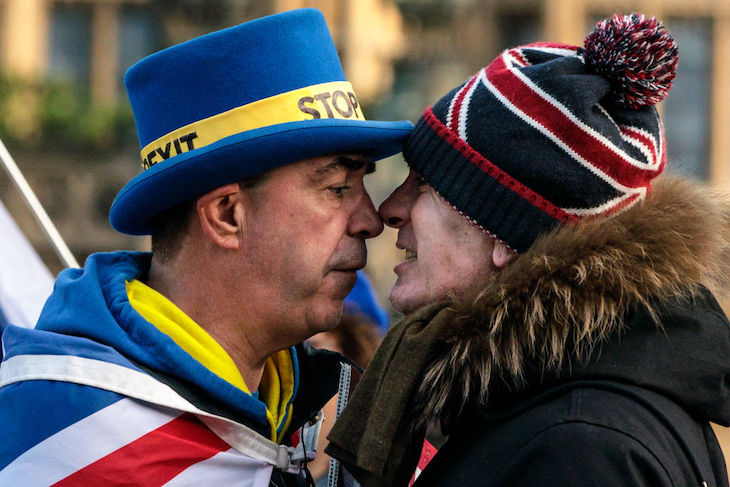
I was confronted with this during the Brexit referendum. At Warwick, I found myself sitting beside an English academic who told me, with no apparent embarrassment, that he “hated everyone who had voted for Brexit”. I told him that I had voted for Brexit. He looked at me with absolute contempt, as though he had stepped into dog poo. I asked him how he felt about regarding so many of his own countrymen with such disdain. He replied, “I am proud of it”.
During Brexit, political disagreement became moral excommunication. A native-born citizen can be every bit as estranged from his national community as an immigrant whose loyalties remain elsewhere. Birth provides inheritance; it does not guarantee affection. One may be born among a people and nevertheless come to despise them. We see this posture reflected in institutions like the Guardian and among prominent elements of the cultural elite. It is a sensibility that treats ordinary English attachments to nation, borders, inherited culture, or patriotism with a reflexive suspicion that it rarely applies to national identities elsewhere. There exists a distinct class of educated British people who appear to exhibit a deep self-loathing, persistently denying that there is any inherent value in Britain, its history, or the British way of life.
This is not a matter of healthy self-criticism. it is a profound cultural alienation. Prominent figures such as Michael Rosen have questioned the very idea of “British values”. In a High Profiles interview at London’s Royal Festival Hall in February 2016, Rosen recalled seeing “British values” displays in primary schools and responded that tolerance, justice and rule of law: “they’re values but they ain’t British”.
This is flawed reasoning. A value does not cease to be British simply because other societies share it: to describe something as a British value is not to claim that Britain invented it or has a monopoly over it. These principles occupy a prominence in Britain’s civic culture and institutions that is easy to overlook. Travel to societies where criticising the government can lead to imprisonment, changing or abandoning one’s religion carries serious consequences, women or minorities lack equal rights, or courts cannot reliably protect the individual against the state, and the practical significance of liberty, tolerance, democracy and the rule of law become much clearer. Other public figures routinely disparage British history as little more than a catalogue of imperial crimes, dismissing the very idea of a distinct British identity as outdated or inherently exclusionary.
A passport can confer legal status in an afternoon; it cannot manufacture ancestral memory
George Orwell recognised this phenomenon long before our modern debates. In Notes on Nationalism he described, within parts of the English intelligentsia, a ‘derisive and mildly hostile attitude towards Britain’. Orwell was not arguing for uncritical patriotism; nobody who reads him seriously could think that. He was identifying a peculiar form of negative nationalism in which moral seriousness is demonstrated by directing one’s harshest contempt towards one’s own country.
That matters to my argument because citizenship cannot be demanded only of the newcomer. The immigrant has a duty to enter the national ‘we’; the native-born citizen has a corresponding duty not to define that ‘we’ so narrowly, or diminish it so thoroughly, that millions of compatriots become objects of disgust. A national community cannot survive if membership depends upon voting the same way, possessing the same education, reading the same newspapers or sharing the same cultural tastes. Citizenship requires the discipline of recognising that the person whose politics I detest remains my compatriot.
There is a paradox here. The immigrant may arrive loving an imagined Britain and slowly learn its faults. The native-born intellectual may know those faults intimately and allow criticism to curdle into self-loathing contempt. Neither position is adequate. Mature belonging is neither worship nor self-contempt. It is the capacity to criticise one’s country without withdrawing one’s affection from its people, and to recognise obligations to fellow citizens one may profoundly dislike.
The answer is that naturalisation and citizenship by birth are different routes into the same status, not different grades of citizen. Birth places a person within an existing political inheritance before he is capable of consent. Naturalisation is an adult act of choice. It is therefore reasonable to ask the person making that choice to state what the choice means. But once admitted, the naturalised citizen should be no lesser a citizen. The duties I am describing are moral and civic duties of all citizens, native-born and naturalised alike.
This also protects the argument from an ugly conclusion. I am not proposing a permanently probationary class of immigrant citizens whose passports can be withdrawn because their patriotism is considered insufficient. That would replace citizenship with conditional membership and would undermine the very belonging I am trying to defend. The threshold should be serious before admission; after admission, equality of citizenship should be the rule, subject to the ordinary law and exceptional statutory powers.
There are societies in which centuries of migration and intermarriage have made national identity increasingly difficult to associate with a single racial appearance. Brazil is an imperfect but instructive example. Its racial inequalities remain substantial, and the old description of Brazil as a “racial democracy” cannot be sustained. Yet Brazilian identity is not readily confined to one phenotype: people of European, African, Indigenous and mixed ancestry can all be unremarkably Brazilian. The lesson is not that time abolishes prejudice. It is that, given sufficient time and a sufficiently strong common national identity, ancestry need not determine belonging. The objective of integration is not that citizens cease to notice difference; it is that difference ceases to answer the question, “Is this person one of us?”
Dual Nationality and Divided Allegiance
Dual nationality makes the argument more difficult, and therefore more interesting. Human beings can love two countries, just as they can love two languages or two families. Most of the time those loyalties coexist without difficulty. The problem appears only when obligations conflict.
I do not think dual nationality automatically defeats citizenship. But it does expose the question that polite discussion often avoids. If two states to which I belong make incompatible demands upon me, which claim is prior? There may be no painless answer. Yet a person asking to be naturalised should at least have answered the question for himself before asking the new country to answer it for him.
The demand is not emotional monogamy. I need not stop loving India in order to belong to Britain. I need not erase my childhood, ancestry or gratitude. The demand is civic priority: when the obligations of political membership become irreconcilable, I must know which national community I have chosen as home.
Why I Make This Argument
I make this argument not despite being an immigrant but because I am one. I know the ache of divided belonging. I also know what tribal politics can do. I came to the West in the shadow of the mass anti-Sikh violence of 1984 in India. Sikhs were the victims, and subsequent inquiries, court proceedings and historical work have examined organised violence, failures of the state and the involvement of political figures.
This is not just a British concern. The absolute number of international migrants alive today is the largest ever recorded
That history taught me two apparently opposite lessons. Tribal identity can be mobilised with terrifying speed; therefore nations must never demand ethnic uniformity. But a national community can also become dangerously weak if it is embarrassed to ask for any common loyalty at all. The answer to murderous tribalism is not a society with no shared identity. It is a civic nation strong enough to make narrower identities politically secondary.
This is the distinction on which the entire argument depends. The nation I am defending is not a racial nation. It is not a religious nation. It is not a demand that everybody eat the same food, worship the same God, possess the same ancestry or tell the same jokes. It is a civic nation: a bounded national community in which people of radically different origins agree that, whatever else divides them, they are fellow citizens before they are ancestral enemies.
Borders, Belonging and the Final Obligation
A humane immigration policy should recognise the courage and loss involved in migration. A confident nation should welcome newcomers capable of becoming fellow citizens. But welcome is not the same as indifference. A country is entitled to ask the person seeking citizenship: Do you regard this place as your political home? Will you place its civic peace above imported ancestral quarrels? Will you accept obligations as well as rights? And, if the country itself is genuinely threatened, are you prepared to serve in its defence?
A humane immigration policy should recognise the courage and loss involved in migration
My answer is that these questions are not xenophobic. They are what make naturalisation meaningful. My nephew and his Polish-Canadian wife moved to Zurich many years ago. When he applied for citizenship, the lady administering his form asked him: “Are you ready to become Swiss?”. He said yes. She then asked him a question in Swiss German, a language he had not yet mastered. She returned the form to him saying: “come back when you are ready”. In hindsight, he is grateful for this encounter. He learnt Swiss German, the family now speak four languages amongst themselves, and he feels completely part of Swiss society. He became Swiss before he could apply for a passport.
A passport should therefore not be the beginning of belonging. It should be the public recognition that belonging has become real. We should not make people citizens merely because enough years have passed, enough forms have been completed, and enough boxes have been ticked. We should make them citizens when they are prepared to say, and to mean: this is now my country; its freedoms are mine, its laws bind me, its future concerns me, and if the ultimate price of membership is ever demanded, I will not ask others to pay it on my behalf.
Citizenship has a price. The price is not blood, ethnicity or cultural conformity. It is loyalty, reciprocity and a willingness to shoulder one’s share of the common burden. A nation that is ashamed to name that price will eventually discover that the passport has become a document without a promise behind it.





Comments