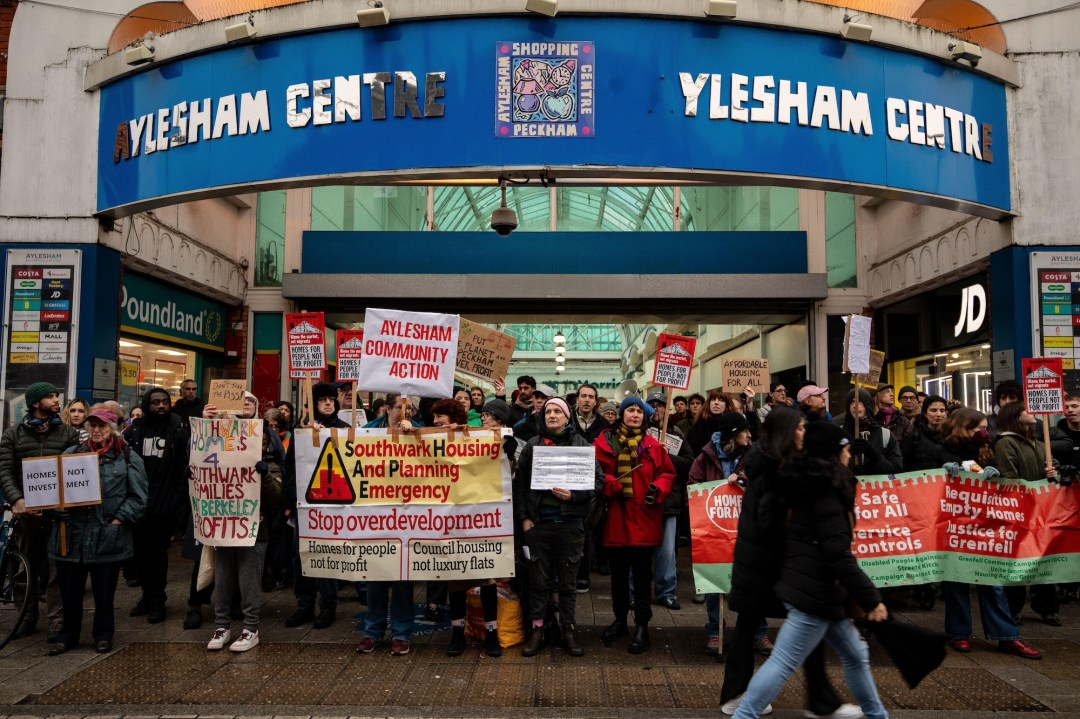
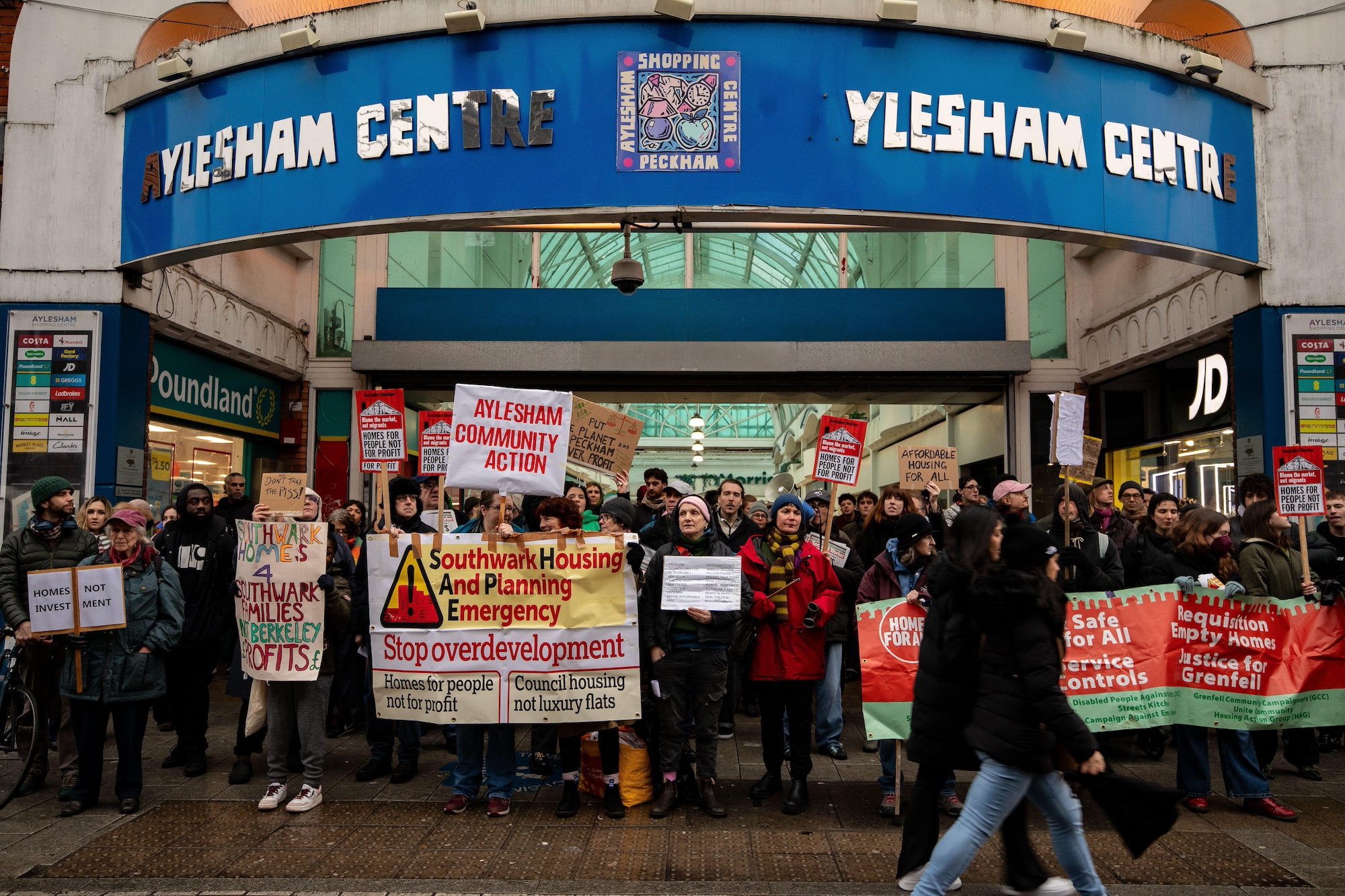
The Aylesham Centre is a rundown half-empty shopping centre built in the 1980s. It is a short walk from Peckham Rye station, which is itself only a ten-minute trip to London Bridge, one of the busiest stations in the capital. It is hard to think of a better site for new homes in a city that needs them desperately.
Those in favour of ‘affordable homes’ often say that normal or ‘luxury flats’ do not meet local needs. But this misunderstands how markets work
Yet to the surprise of no one, this week its planning application was rejected by Southwark council. The reasons the council gave are key to understanding why housing does not seem to get built in the capital, despite this government being elected on a pledge to build 1.5 million homes over the course of this parliament.
Southwark council, in theory, is in favour of building. It has an annual target of 2,300 new homes and since 2014 has said the Aylesham Centre is an appropriate place for a 20-story tower. But in practice, only 80 homes were started in the borough in the last year and it recently celebrated its rejection of an 870-home project on the site.
Why isn’t Southwark building? First of all, because it insists that all 35 per cent of new homes are ‘affordable’ – in other words sold (or rented out) for less than they are worth. This is a problem at a time when flats have become more expensive to build and sell for less. If the profit from market-rate sales isn’t enough to cover the cost of building the ‘affordable’ homes, then homes aren’t built.
To work out what they can demand from developers, councils use what are called ‘viability assessments’. For the Aylesham Centre, Southwark’s own assessment found the maximum number of affordable homes the developer could feasibly construct was in effect zero. Berkeley Homes, the developer, still offered to create 77 affordable homes, presumably to placate the council.

Despite this, councillors were not convinced. They made clear that they would reject the project for not having enough affordable housing, for not retaining enough space for shops, and for being too big.
The basic problem is that Southwark wants the benefits of development without any development. It wants affordable homes, but not enough market homes to subsidise them. It wants more retail space, but not taller buildings. It wants to preserve its heritage, but interprets heritage so expansively that it even includes a mediocre shopping centre. It wants lower rents, but blocks more homes from being built that would actually lower prices.
In the case of Aylesham, the developer Berkeley appealed the decision. Perhaps, the Planning Inspectors would be more reasonable, they thought. They weren’t. They concluded the council’s objections based on affordable housing and retail space shouldn’t have blocked the development. However, the Planning Inspector found instead that the project was just too big to be approved.
According to the inspector’s assessment, the proposed buildings were ‘monolithic’, ‘cliff-like’ and ‘unrelenting’. Given that it would replace a 1980s shopping centre, this seems like strangely harsh language. The assessment in effect concluded that the project would ruin the character of the Rye Lane high street – itself a mix of beautiful old buildings (often covered in garish signage), useful ordinary buildings and more recent eyesores. None of the beautiful buildings were due to be knocked down by the project.
It is hard not to feel some sympathy for the housing developer Berkeley here. To even get to this stage of the process they had to produce a planning application that stretched to close to 11,000 pages – about nine times the length of War and Peace.
Berkeley were also required to produce reports on the ‘circular economy’, biodiversity net gain, daylight, townscape, heritage, retail, servicing, and much else besides. And all of it was for nothing.
The highlight of their application was a 894-page transport assessment, which concluded that a development that got rid of a large car park and replaced it with lots of flats near a train station would result in fewer people driving and more people taking the train, plus a bit more cycling. Who would have guessed?
Few appreciate the extraordinary number of hoops that developers must jump through to get a project approved. They must simultaneously comply with national policy, London-wide policy and local council policy. Regulation is piled on top of more regulation – and many of the rules are completely contradictory.
The affordable housing debate around Aylesham also misses something more fundamental. Those in favour of ‘affordable homes’ often say that normal or ‘luxury flats’ do not meet local needs. But this misunderstands how markets work.
When someone moves into a new flat at the top end of the market, they normally leave another home vacant. Someone slightly less wealthy moves into that home, freeing up another property one rung down the ladder and so on. These are known as moving chains.
It is like opposing the sale of new cars because it only benefits the rich without acknowledging the used-car market.
Studies from across the world have shown this is how housing markets work and how building more reduces prices. The Greater London Authority has estimated that every single percentage point increase in housing supply reduces prices and rents by around 2 per cent. The laws of supply and demand apply to housing; the more of it you have, the cheaper it gets.
This is particularly important now because building is extremely expensive. Inflation, high interest rates, land costs, planning delay and regulatory demands have made it much harder for schemes to stack up. If councils insist that large developments must provide lots of affordable housing, lots of retail space, lots of public benefits and also not be very big, the result is not a better scheme. It is no building at all.
Southwark council’s defenders point to its council housebuilding programme. Southwark’s target is to build 11,000 council homes between 2015 and 2043. That will not even clear the current council house waiting list, never mind provide cheaper housing for the majority of its residents who will never qualify for social housing.
Many of those council homes are also dependent on private development to fund them. Southwark has not discovered a clever route out of the housing crisis that avoids private building.
Unsurprisingly, very few firms now want to build in London. Berkeley itself has said it is not going to be acquiring more land in the capital, in large part because of the regulation and uncertainty it faces. If a FTSE 100 company worth billions no longer thinks it can navigate the London planning system, what chance does anyone else have?






Comments