
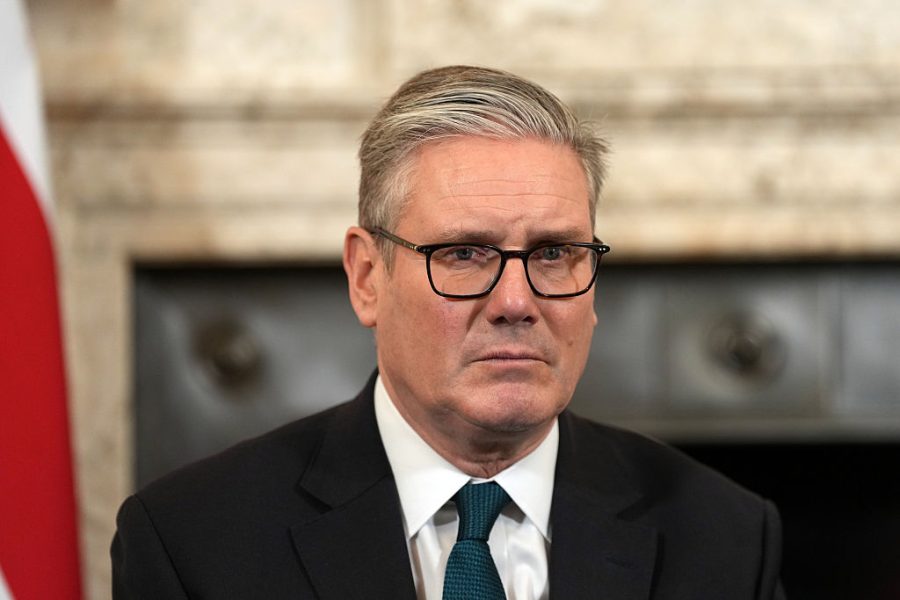
The government’s treaty with Mauritius to hand over sovereignty of the British Indian Ocean Territory (BIOT), including the joint UK/US military facility on Diego Garcia, has caused anger and fierce debate since it was signed in May last year. In the latest setback, it appears to prevent the United States from handling or storing nuclear weapons at Naval Support Facility (NSF) Diego Garcia, unacceptably limiting its strategic use and autonomy.
Earlier this month, Sir Keir Starmer said, ‘I’ve been a lifelong advocate of international law and the importance of compliance with international law.’ It was, if anything, an understatement: last year his close friend, ally and choice for Attorney General, Lord Hermer, told the BBC that ‘actually by ensuring that we are complying with all forms of law – domestic law and international law – we serve the national interest’.
Have ministers and officials been incompetent or duplicitous?
It is this attitude that has driven the government’s negotiations with Mauritius over the future of the BIOT – also known as the Chagos islands – and its approach to the terms of the eventual treaty. The advisory, non-binding opinion of the International Court of Justice given in 2019 that ‘the United Kingdom is under an obligation to bring to an end its administration of the Chagos archipelago as rapidly as possible’ has been, in the Prime Minister’s mind, the overriding imperative. This has led to the United Kingdom reaching a deal on almost ludicrously disadvantageous terms.
The treaty cedes full sovereignty of the BIOT – principally comprising the seven atolls of the Chagos archipelago – to Mauritius, which has never independently exercised jurisdiction and is nearly 1,400 miles away. In return for the right to ‘administer’ Mauritian sovereignty over the island of Diego Garcia for an initial period of 99 years, Britain will pay Mauritius at least £3.4 billion. Calculations of the total cost are difficult, however, and it may be as much as £35 billion.
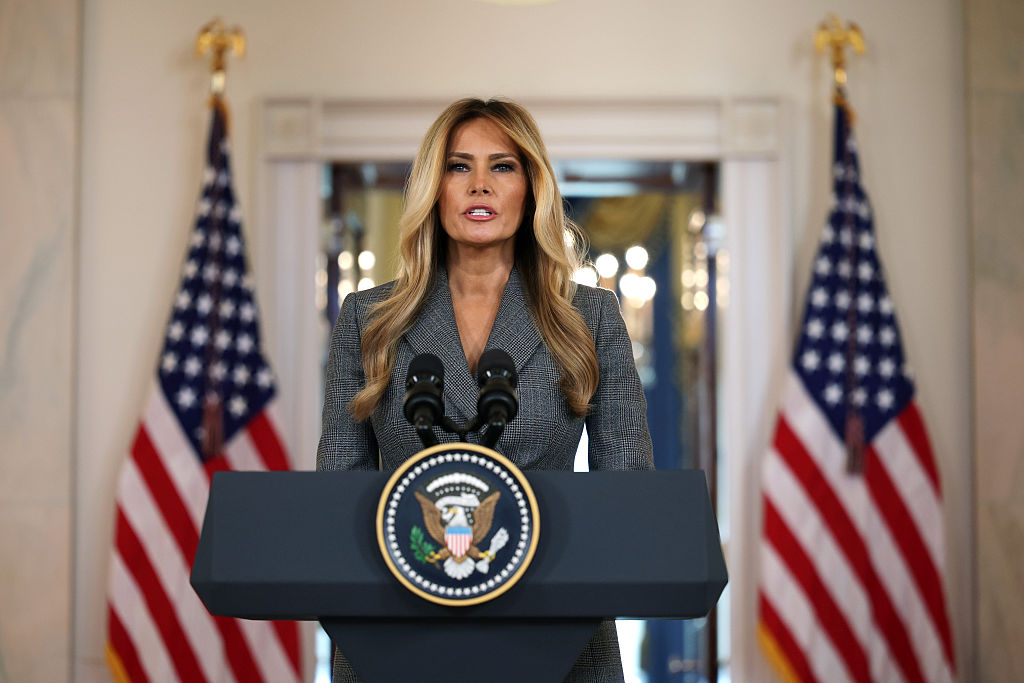
Starmer and his ministers have repeatedly stressed the danger of falling foul of the International Court of Justice (ICJ). But when the UK accepted the jurisdiction of the ICJ in 2004, it specifically excluded ‘any dispute with the government of any other country which is or has been a member of the Commonwealth’. Mauritius has been in the Commonwealth since it became self-governing under the Mauritius Independence Act of 1968.
The Conservatives and Reform UK have attacked the government fiercely for its negotiation of such a self-punitive agreement, but criticism is not limited to right-wing opposition parties. A former legal colleague of Sir Keir Starmer’s summed up the provisions of the treaty with Mauritius as ‘nuts’. The latest twist in this sorry saga seems to support that view.
Mauritius is a signatory to the African nuclear weapon-free zone treaty, or the Treaty of Pelindaba. Entering into force in 2009 under the auspices of the Organisation of African Unity (OAU), it has 53 signatories and applies to the whole continent of Africa, as well as to island states which are members of the OAU. It prohibits the ‘implantation, emplacement, transport on land or inland waters, stockpiling, storage, installation and deployment’ of any ‘nuclear explosive device’ within the territory of signatories.
Since Diego Garcia will be subject to its sovereignty, it is clear that the government of Mauritius would be entitled to ban American forces transporting or deploying nuclear weapons to its military base. The treaty leaves each signatory ‘free to decide for itself’ whether to allow ‘visits by foreign ships and aircraft to its ports and airfields, transit of its airspace by foreign aircraft, and navigation by foreign ships’. But, even if this were to apply, it would be discretionary and insupportable in strategic terms.
This is not primarily about the US seeking to use NSF Diego Garcia to launch a nuclear strike, though Washington would be right to insist it must remain able to do so. It would also logically prevent the US navy’s ballistic missile submarines from docking there for any reason and would invite scrutiny of the activities of the US air force’s nuclear-capable B-52 and B-2 bombers. In short, it represents restrictions on freedom of military action which the United States would find intolerable.
Donald Trump has already turned on the UK-Mauritius treaty as an ‘act of GREAT STUPIDITY’. Like a stopped clock, even the US President is sometimes correct. This may be fatal to the agreement, which some have suggested needs formal consent from the United States under a 1966 bilateral exchange of notes.
But the issue of nuclear weapons prompts an uncomfortable question for the government and for the Prime Minister’s national security adviser, Jonathan Powell, who was the UK’s chief negotiator with Mauritius before taking up his current role. The question is this: did the government sign the agreement without realising that the Treaty of Pelindaba would apply to Diego Garcia? Or did it understand that potentially explosive complication, but press ahead and hope no one noticed? In short, have ministers and officials been incompetent or duplicitous? There is no good answer, but we will have to know sooner or later.
Comments