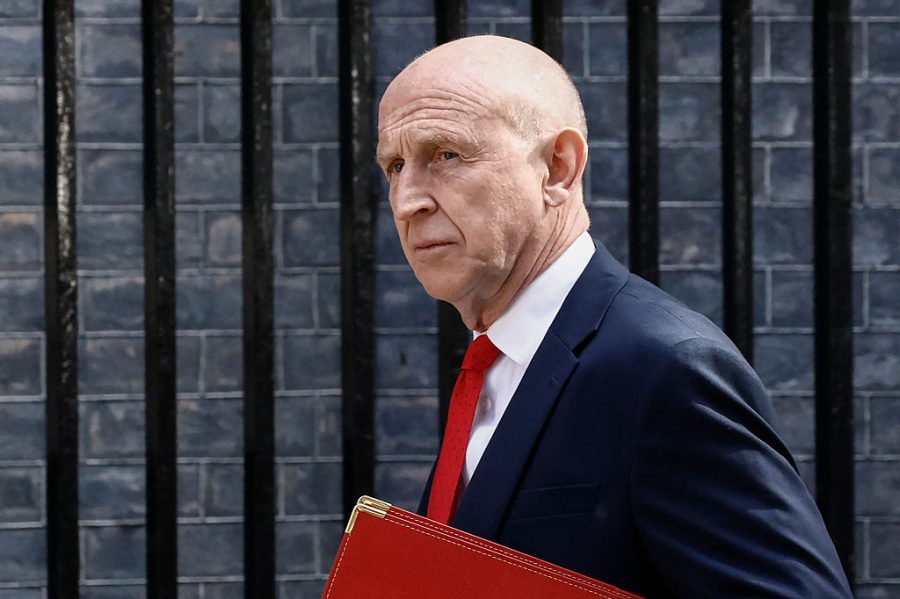
John Healey, the former defence secretary, resigned on Thursday because the government wouldn’t give defence more money. Experts, military chiefs, and even Keir Starmer have stated that defence is the priority, so what went wrong?
Good defence spending prevents war, because it makes an adversary think twice about attacking you. In a perfect scenario, the guns and missiles are never fired, because the cost of war is greater than the cost of deterrence: Ukraine is spending half of its GDP and losing thousands of lives because Putin thought he could win.
But that money needs to come from somewhere, which is a difficult argument to win: we never see the wars we don’t fight, but we do see the potholes that aren’t filled or the taxes on our payslips. That’s why the former chancellor Phillip Hammond once said ‘there’s no votes in defence’.
The UK has already lost a year of preparation since the SDR was released
The Strategic Defence Review (SDR) was supposed to tell us what the military needs and the Defence Investment Plan (DIP) was supposed to fund it. Twelve months later, the DIP still hasn’t been published, leaving the defence industry (particularly innovative start-ups) in limbo and costing the military another lost year of preparation.
The SDR feels like a wish list of everything the military wants (fighter jets, submarines, a corps-size strategic reserve, drones, munitions), with few trade-offs or options, like global power projection versus homeland defence, or sea power versus land power. Healey backed that position, but it seems that the draft DIP contained half the money that the SDR required. In his resignation letter, Healey blamed Starmer for failing to get more money from the Treasury or other departments, forcing the former defence secretary ‘to make decisions that would reduce the readiness of our Forces… and could make the country less safe’. Now the DIP has been delayed again.
British defence has a well-deserved reputation for inefficiency: we already spend 30 per cent more on defence than France for a smaller, less ready, less-capable military. The Ministry of Defence (MoD), meanwhile, keeps ‘discovering’ budgetary blackholes of several billion pounds. To justify more money, political and military leaders will have to explain what’s gone wrong and what will change, which starts with acknowledging past mistakes.
The Royal Navy built its strategy around two aircraft carriers, believing that the government would give them more money for other ships. But contracting failures and fundamental redesigns doubled their cost, leaving the navy without the money for the escort ships and sailors to go with them.
Army procurement is just as bad. The Ajax vehicle is over-budget and ten years late, as is Boxer (a vehicle programme that the UK joined, quit, then re-joined at an increased cost). The army’s lead war-fighting formation was transitioning from Warrior to Boxer until a delivery delay forced a switch to Ares, which wasn’t designed for that role. Nobody knows how this will work, forcing the army into a bodged solution that upends planning, training, doctrine and logistics.
Planners can’t anticipate every risk or redundancy, but the long delay between starting a programme and getting it operational (20 years for Boxer, 23 for the aircraft carriers, and over 30 for Ajax) shortens every capability’s lifespan. The cause is military chiefs fiddling with designs mid-programme, and a perverse Treasury accounting system that structurally encourages delays. Both inflate costs.
Revelations of abuse, harassment, bullying and incompetence have further damaged faith in the military, whilst Iraq and Afghanistan were strategic failures that cost hundreds of lives and consumed 20 years of energy and money that could have been spent on modernising. People are also justifiably wary of politicians talking up threats to national security, given the falsehoods and failures used to justify the invasion of Iraq.
These failures are the fault of successive governments and service chiefs, the MoD and the Treasury, but they have made it harder to argue for the tax rises or cuts that are needed now. To win that argument, political and military leaders need to change the story.
First, remind the public that deterrence works: the Cold War stayed cold because Nato deterred Russia until the Soviet Union collapsed. We won the peace through spending on defence. When deterrence fails (as in 1939), the costs in lives and living standards are enormous.
Then the government needs to talk about what’s going well. Special Forces conduct remarkable operations every day and RAF aircraft are integral to Nato air and naval missions. The Challenger 3 tank upgrade was on time and on budget. Ukraine has shown that mass can be generated by machines as well as humans, and the UK start-up defence industry is a leader in this field.
Finally, leaders can improve the standing and credibility of the military by making it a more appealing employer. They could grow both recruitment and retention by improving housing and scheduling and creating unique benefits, like lower interest-rate mortgages in return for long operational tours.
The UK has already lost a year of preparation since the SDR was released. Security of the realm is the first duty of government, so winning the arguments is a matter of leadership and integrity. There might be a political cost but, with good storytelling, there may be some votes in defence yet.





Comments