
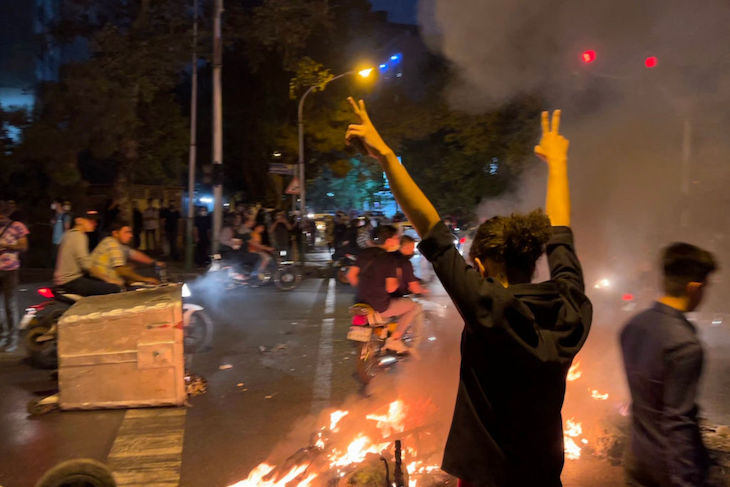
The Middle East has long been organised around two competing logics: pragmatic alignment and ideological alignment. Before the 7 October war, these logics produced two regional blocs that structured most political, diplomatic and security behaviour. The Palestinian attack and invasion that triggered the war ruptured both systems. Incentives shifted, alliances frayed, and assumptions collapsed. What followed has not been the emergence of a calmer order, but a reconfiguration in which ideology has returned in new forms and pragmatism has narrowed, and hardened, requiring deliberate encouragement and support to survive.
For more than a decade, regional politics moved along these two tracks. Pragmatic alliances rested on interests that could be negotiated, measured and enforced. Security cooperation, intelligence sharing, economic integration, technological exchange and opposition to common threats mattered more than symbolic solidarity. Stability carried value. Growth carried legitimacy. Ideological discomfort could be managed or deferred.
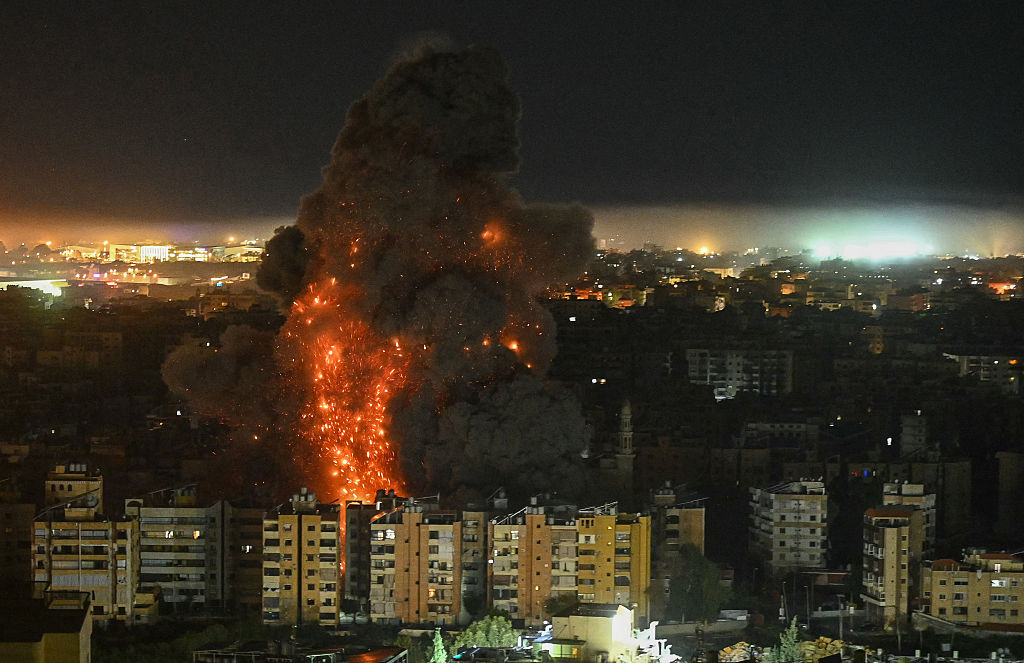
At the same time, ideological alliances operated on an entirely different plane, with the opposite allowances made in pursuit of their goals. They were anchored in political and religious worldviews, primarily Islamist, revolutionary and explicitly hostile to western influence. These groupings treated resistance as identity, struggle as virtue and confrontation as proof of moral standing. Economic damage, civilian suffering and regional destabilisation were accepted costs. Brutality was neither incidental nor regretted; it was constitutive.
For some time, the pragmatic alignment coalesced gradually and quietly. Mostly under the leadership and strategic discipline of Benjamin Netanyahu, Israel, the United Arab Emirates, Egypt, Morocco and Saudi Arabia informally found themselves cooperating on intelligence, counterterrorism, air defence, trade and technology. This convergence eventually surfaced publicly through the Abraham Accords. In August 2020, Israel and the UAE announced normalisation. By September, Israel, the UAE, and Bahrain signed in Washington. Sudan followed in October. Morocco restored official relations in December.
The process was driven decisively by Donald Trump, who treated normalisation as proof that the region could be reordered through interests rather than ideological fixation. His administration framed the accords as a model, pressed others to join, and attempted to draw the Palestinians into the same logic through the ‘Peace to Prosperity’ plan. That proposal offered investment, institutional reform and economic development as the basis for political progress. It functioned as both pathway and test. Actors willing to prioritise stability could engage. But the Palestinians totally rejected the premise outright, refusing even to engage despite the potential upside and path to a better life for their own people. The refusal clarified intentions with unusual precision. They chose maximalism, ideology, and ultimately religious war which brought about their own impoverishment and misery, over the possibility of growth, prosperity and modernity.
Opposite this stood an ideological bloc centred around Iran, encompassing Hezbollah, Hamas, Syria and the Houthis. This network was sustained through funding, weapons, training and a shared narrative of resistance against Israel and the United States. Its coherence did not depend on prosperity or governance. It depended on hostility, mobilisation and endurance.
These blocs coexisted and structured behaviour. Policy choices, diplomatic initiatives and conflicts reflected alignment with one logic or the other. The pragmatic system enjoyed external accommodation. China and Russia expanded economic and diplomatic ties across Israel and the Gulf, exploiting the stability created by normalisation to increase leverage without challenging the framework.
That momentum weakened under Joe Biden. The Abraham Accords ceased to function as a central organising principle of American Middle East policy. Expansion stalled. Consolidation faltered. Saudi Arabia did not formalise normalisation. Without Saudi participation, the pragmatic bloc never achieved structural dominance, its incompleteness leaving it exposed. Hostile actors understood this vulnerability. The 7 October attack was designed to exploit it, demonstrating that violence could still veto integration and block Saudi-Israeli convergence.
The war started by the Palestinians with their invasion of southern Israel damaged both systems. The pragmatic alignment lost stability, political backing and forward momentum. The ideological bloc absorbed military and political shocks. Assad fell. Israeli operations degraded Hezbollah. Hamas suffered massive but only partial defeat in Gaza. Yet the ideological network remains operational. Its future hinges on Iran, which provides organisational coherence and material lifelines. A collapse of the Iranian regime would dissolve the original bloc as a system. Local militias might persist, but strategic coordination would not.
Something else, however, is forming in its place. A new ideological alignment is emerging around Turkey and the Muslim Brotherhood, grounded in political Islam and nationalist Islamist governance. It partially draws in Ahmed al-Sharaa’s Syria and finds resonance in Egypt and Saudi Arabia, with indirect reach into Pakistan. This alignment privileges ideological affinity over transactional cooperation. Syria sits uneasily between worlds, open to Turkish influence yet also exploring pragmatic arrangements, including economic coordination and even talks with Israel, under American auspices.
Pragmatism, meanwhile, has contracted. Saudi Arabia no longer treats entry into the Abraham Accords as urgent. Public opinion, religious legitimacy and political identity impose costs on overt normalisation. As Iran weakens, Saudi dependence on Israel for security diminishes, reducing strategic pressure to formalise ties. Saudi policy blends interest with ideology and ambition. It does not mirror the Emirati model.
Israel must operate with increasing autonomy
The result leaves the pragmatic alignment largely concentrated between Israel and the UAE, with others peripheral or inactive. Israel now faces two ideological fronts: the older Iranian-centred network, weakened but alive, and the newer Turkish-centred alignment gaining confidence and space. Washington positions itself between pragmatists and ideologues, cooperating selectively with Turkey and Saudi Arabia while hesitating to force the collapse of Iran’s system.
In this environment, Israel must operate with increasing autonomy. Benjamin Netanyahu has spoken openly of ending American military aid within a decade, arguing that Israel has ‘come of age’ and developed independent capacity. The statement reflects strategic reality. American leadership is less reliable. Withdrawal, not arbitration, defines its trajectory.
If Iran’s regime falls, the Turkish ideological bloc will expand. Pressure on Israel will intensify. Yet great opportunity will also appear. A post-regime Iran will require reconstruction, technology, water management, and institutional expertise. Israel could become a partner of consequence. Parallel to this, Israel is deepening ties with the UAE and even Somaliland, adding a non-Arab pragmatic partner and exploring new economic corridors.
The Middle East now contains both logics at once. No alliance yet dominates. Stability remains elusive. Power relationships shift without moral resolution. Conflict persists, mutating rather than vanishing. For Israel, adaptation replaces expectation. Threat and opportunity arrive together. There is no final settlement on the horizon, only a system in motion, shaped by interests where possible and ideology where restraint fails.




Comments