There is, says Colin Hughes, who is the head of the exam board AQA, no downside to switching pupils from written exams into a gleaming modern utopia of computerised tests. Students, he says, are baffled by the fact that exams don’t take place on screens. He also seems to think the poor dears won’t be able to type if they don’t take exams on computers, as if they weren’t competent enough to learn how to use a keyboard without them. What’s more, boring old exam papers, it seems, have been causing delays in providing results for schools: doing them on a screen would solve that problem instantly, and, shazaam, Johnny and Jemima can get their C minuses in Raffia Work almost instantly.

Sometimes I do wonder why certain people are so bedazzled by technology. We spend so much of our time trying to keep children away from computers: why force it on them in other situations? Well, I know the reason why in this particular case: it would obviously be oodles cheaper to feed pupils’ examinations into a computer, which can then be marked by AI, rather than hiring a lot of depressed teachers to wearily wade through one million essays on ‘The role of women in Of Mice and Men.’
But do these people not understand? Have they not, in recent years, been near a computer? Are they unable to contemplate the horrors that will unfold? There is something almost sanctified about an exam hall. Though I would imagine that few people look back with any kind of positive emotion at those long summers interrupted by frantic revision, I must admit that I did rather enjoy the challenges (and the stationery that accompanied it). Two uninterrupted hours in which to write an essay, or translate something, or solve a problem, in a situation which is entirely geared to keep you in monastic silence. There has been nothing like it since.
The gentle rustle of papers as students turned over pages, mentally squaring up for the battle ahead; the occasional yawn or stretch; the careful tread of the examiners pacing up and down the ranks of desks in the sports hall; the ticking of the giant clock. Not a sound else; although I do remember my Greek A-level being punctuated by the excited bleats of the school farm’s flock of sheep.
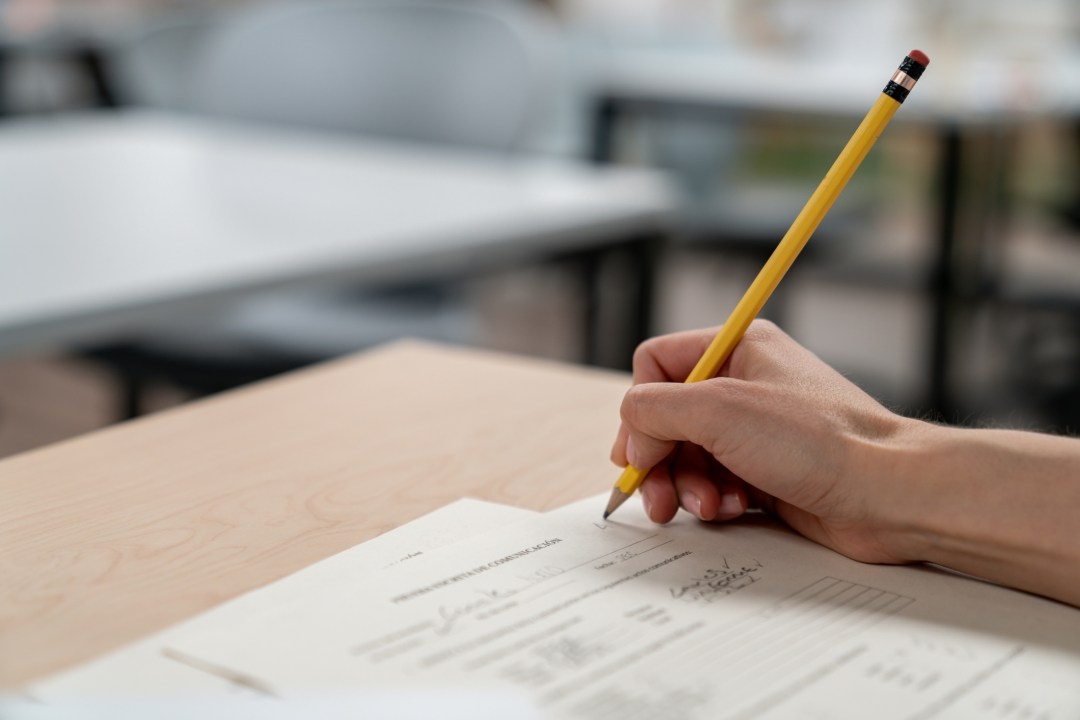
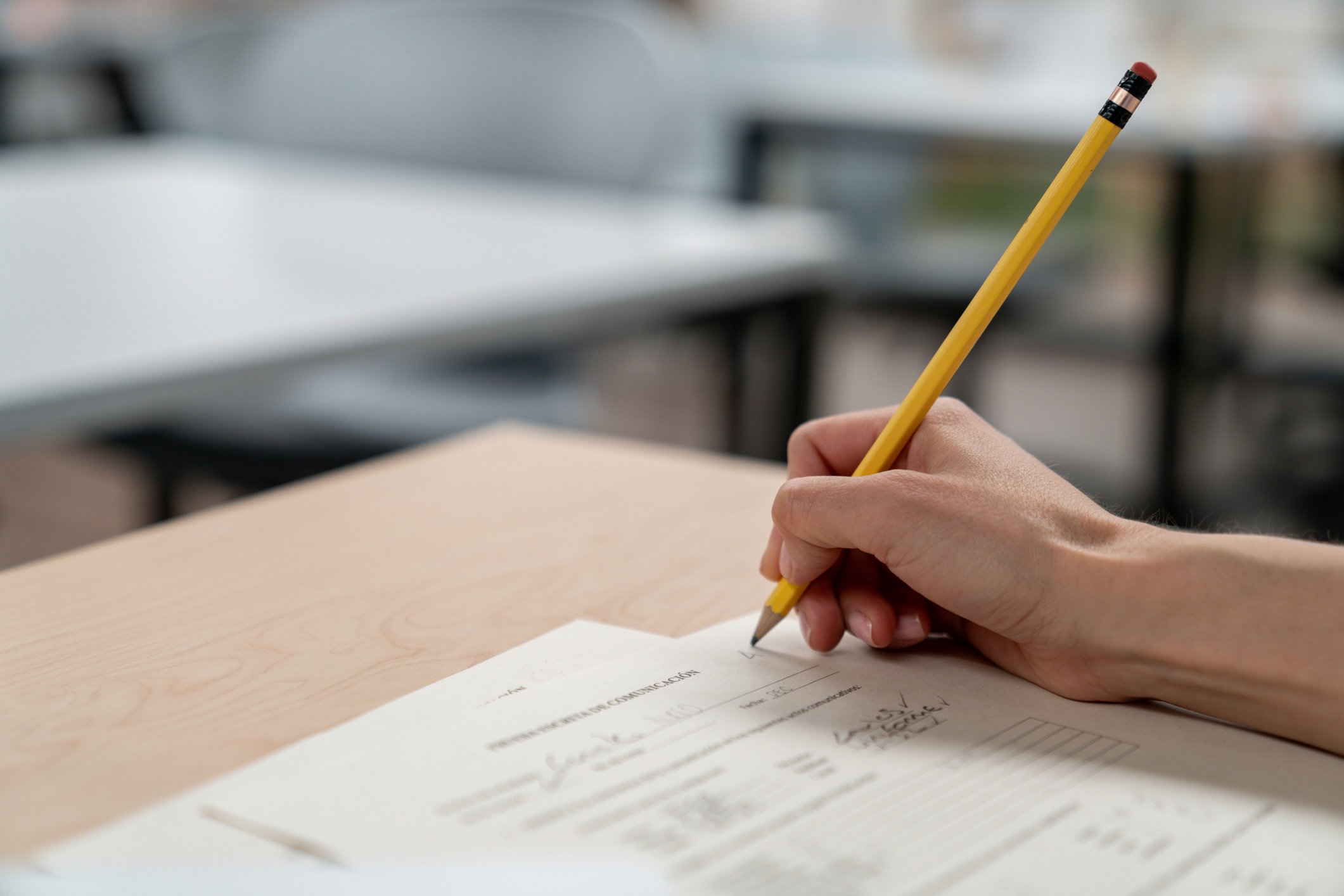
A pen and paper exam is entirely straightforward. It requires nothing other than said paper and pen; little can go wrong in the time between paper being delivered to the school and handed in to the examiners. With only a pen in your hand and a piece of paper in front of you, the mind connects to the hand in a way which is uninterrupted and free flowing. This, surely, is what everyone is looking for when they talk about achieving a ‘flow state’. You can even settle into a state of inspiration as the ideas and sentences pour out. What’s more, it’s good for you. Countless scientific papers have shown that writing with a pen is quite simply the best way of retaining and processing information, partly because it’s one of the most complex tasks our brains can perform.
Now picture the delightful scene which AQA wants to foist on students: a large, hot sports hall, packed with endless terminals (paid for by whom, I wonder, and no doubt already filled up with expensive AQA-approved software); wires trailing everywhere, ready to trip up the unwary; students trying to log on. ‘Sir, I’ve forgotten my password!’ goes up the cry. Once log on has been achieved, the flash of screens and the incessant clickety clack of the keyboards will dominate. And how far away from somebody would you have to sit in order not to spy on their answers? Would some kind of cubicle system have to be set up? Perhaps the PE teachers will have to be roped in to act as human shields.
There is something almost sanctified about an exam hall
And that’s only if things are working. All it takes is one fuse, one computer crashing or not loading correctly, or one mischievous teen to switch off the plugs, and there are immediate problems. It also has an effect on the way that pupils process answering. Computer creep has already infected the 11+, with its horrible multiple-choice answers. How long before it is decreed that students will no longer have to do anything so difficult as write an actual essay, instead simply answering an endless, mindless series of questions with 4 possible answers: ‘What is the role of women in Of Mice and Men?’ A) Passive B) Active C) Essential D) Marginal.
Exams set by machines, requiring machine-like answers, and marked by a machine: what a wonderful prospect. Any school with any sense should release itself from the bonds of the exam boards at once and return to the soothing scratching of pens.






Comments