It’s true that collapses come slowly and then fast. Ours started before we got into power with the belief that by running the most effective vote-per-seat political campaign in British history we would be capable of governing.
We thought that winning power meant we would be capable of wielding it. While we methodically destroyed the Tory government, we did not need to worry about the extremely late contact with the civil service, and we knew we would be able to draw on the hallowed ‘97-’05 old guard who could teach us how to run the country in private and protect us in public while we were learning on the job. We were wrong on all counts.
Some of the people most responsible for the mess you’re in, pop up on the opposing side heralded as heavyweights
Almost instantly our broad but shallow rookie Parliamentary Labour Party, composed of the best anti-government campaigners in the country, was spooked by our falling polling numbers. Where the centre saw an expected depreciation, the PLP saw mortal threats to their ability to win back their seats. Needed arms around shoulders did not come down from the cabinet, itself already grappling with a powerful, rested civil service that had a momentum left untamed by feeble preparation talks. The pressure began to build, louder with each major political mistake, and despite the disasters often originating from outside No. 10, Keir Starmer was understandably blamed.
Then Elon Musk declared war on the Prime Minister, and Labour voices in the media quickly found out that they could get more coverage online, and then on traditional media, by criticising their own government. Odder people followed suit, said terrible things about decent people and treated tame retaliation as rancid foul play. The algorithms rewarded them handsomely.
When Keir and Morgan McSweeney fought the White House to a standstill and stopped Musk’s AI-boosted deepfake machine neither got any credit. It wasn’t in anyone’s interest to notice. The whiff of collapse was in the air.
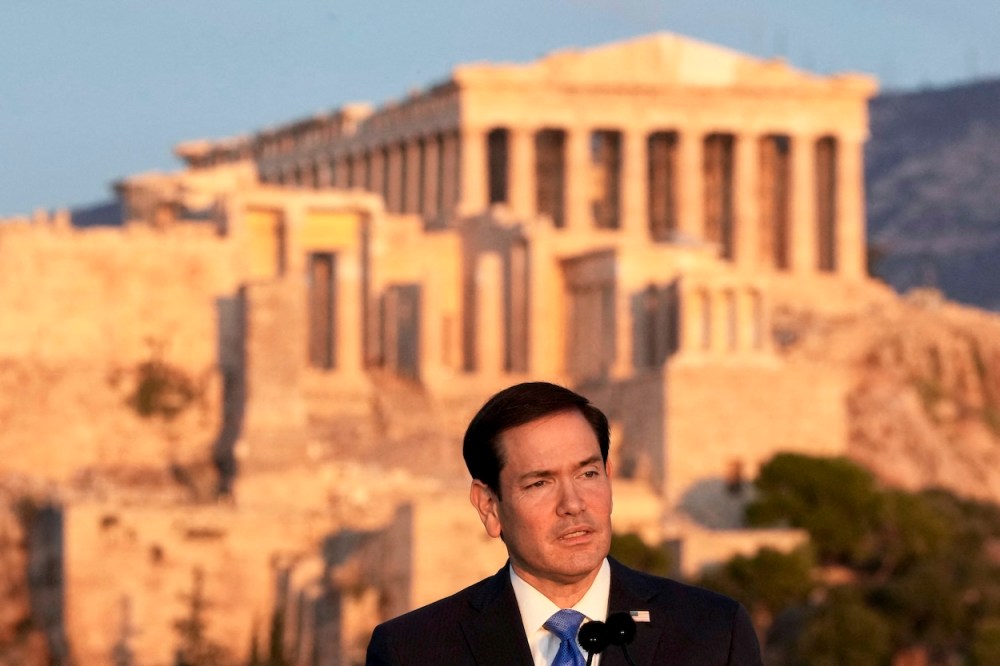
When Keir kept us out of Iran, he was lambasted by the media and by every opposition party. I watched his performance in parliament with a new member of the team. They were aghast that at a moment of genuine international peril the Commons used their interventions to snipe, criticise and ridicule the British Prime Minister.
At historic moments Parliament had a proud history of reacting with sincerity and seriousness, but not today. Was there any circumstance where Keir could rely on Westminster giving him a fair hearing they asked me? I didn’t know how to answer.
It wasn’t always like that. I remembered Keir taking over the party after its worst result in 85 years, while it was being investigated for institutional racism by the Equality and Human Rights Commission, when the money had dried up, he couldn’t hire anyone, and when the lobby mantra was of Labour’s permanent extinction. It was a no-hope job that only a non-politician wanted and the experienced, ambitious politicians left him to it, and lay in wait. When he won the general election, it didn’t take long for the interventions, briefing and leaks to begin. They were never punished. By and large, Keir stuck by his cabinet and hoped that his loyalty would be repaid in kind. Plainly, it was not – the collapse was looming into view.
And what’s it like in the bunker as it collapses? Well, it’s difficult to look beyond the empty chairs. Many of your close friends and colleagues have decided that supporting the first Labour Prime Minister in 14 years is no longer something they should do. Some of the people most responsible for the mess you’re in, pop up on the opposing side heralded as heavyweights.
On one hand you are disappointed, on the other you don’t blame them. You are being relentlessly accused of being ‘evil’, ‘insane’, ‘incompetent’, ‘cruel’ and ‘weak’ over and over again, and you are told that the country hates you and you are ‘mad’ or ‘embittered’ to think otherwise. It doesn’t and you aren’t, but it’s not long until you begin to believe it.
Keir Starmer has been overtaken by fresh legs and old enemies
The good announcements that you work so hard on are ignored or misattributed to your opponents, and the mistakes are endlessly ridiculed. Why stick around? It’s much easier to tell everyone what they want to hear and disappear at the crunch. I would feel lonely as I got to work, but think ‘fair enough, this is governing the country we are talking about – it isn’t supposed to be easy’.
Apart from suddenly, it is. The powerful forces dedicated to destroying the PM start treating alternative candidates like their promises have depth, their record is unblemished and that their contradictions don’t exist. It didn’t matter because so many media figures had pitched their credibility on Keir collapsing. It had become so ingrained that after a locals campaign that was repeatedly undermined by senior Labour figures, the soft-left panicked and launched a leadership campaign that forgot to include a candidate.
Cabinet members who had been loyally supported and promoted by the PM for years turned on him. Keir had asked for tough migration reform and net zero investment, let others take the credit and taken all the blame himself – but they walked in to tell Keir he had to go, and walked out to gloat to the press.
And because Keir’s voice was now so ridiculed, and his defenders were so few when he beat Wes Streeting, nobody believed him. Wes’s endless campaign to replace him had finally been seen off but it was too late. Andy Burnham and Josh Simons had panicked, hurrying to Westminster to take over and save the party from Wes without realising that Wes was bluffing. If Burnham had seen out his term in Manchester, he could have let Keir take the flak and then swept in for the General Election. Now he is dangerously ahead of schedule, and has already asked for a long delay before taking over to sort his plan out. If we weren’t talking about the profound privilege of running this great country, it would be comical.
It’s been a long race, but a race run short. Keir has been overtaken by fresh legs and old enemies
But let’s not pretend that Keir is perfect in this. Nobody sees him clearer than his own team. He is profoundly decent, hard-working and has always been driven by a sense that if he keeps doing the right thing, eventually the country will thank him. It will – but only after he’s gone.
He treated his cabinet ministers with a deference that ended up encouraging disobedience, and with a loyalty which was never shared with his own team. Across government, it’s a widely held view that the sudden departures of hugely popular, experienced and talented spads, who had worked for Labour in opposition, was the beginning of the end. They began leaving less than a year in, and since then you’ve seen most of the best of Keir’s original team leave, more often than not in unhappy circumstances. A leader doesn’t hear hard truths from new recruits, and if he wasn’t loyal to the people who got him there, then who would be loyal to him when things went wrong? The answer is clear.
It’s been a long race, but a race run short. Keir has been overtaken by fresh legs and old enemies. He knew the rules when he came in and there can be no complaint. He will expect to see the criticisms he faced – of minimal preparation for power, fuzzy promises, elitist cliques and a failure to operate Whitehall levelled at the new man.
Perhaps the logic that high-politics needs life-long politicians is correct. I hope so, and remember the advice that Nadhim Zahawi offered at the Spectator Summer Party two years ago: ‘I hope for the sake of the country that the Prime Minister, whoever they may be, succeeds.’ I do too.




Comments