The war is not unfolding as the US and Israel expected — and Iran possesses more leverage than many observers assume.
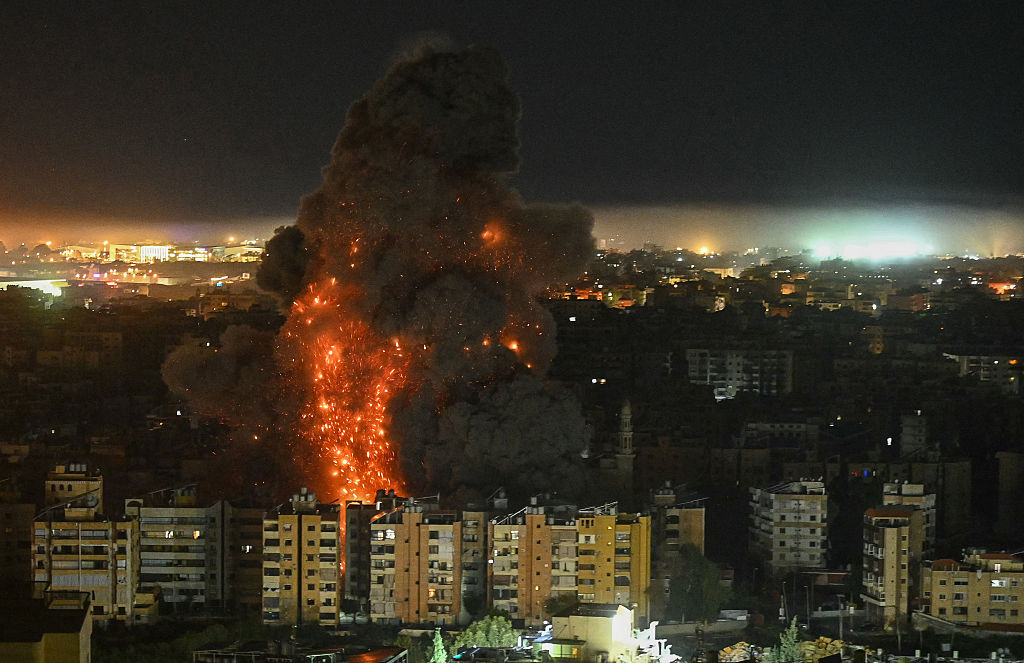
Among many conservative commentators in the U.S., the prevailing view of the war with Iran is one of confidence. The assumption is that the U.S. and Israel hold the decisive advantage and that Tehran will ultimately be forced to accept Western terms. After all, Iran has been subjected to one of the most intense air attacks in history and there is no letup in sight. But the war is not unfolding as Washington and Jerusalem expected.
Before the U.S.–Israeli strikes on Iran a fortnight ago, Donald Trump appeared to assume that Tehran would ultimately conform to their maximalist demands: an end to uranium enrichment, the dismantling of Iran’s ballistic missile program, and the termination of its support for militia proxies across the Middle East. But the Iranian leadership was never going to bow to those dictates.
When Washington moved a massive concentration of military power into the Persian Gulf in an effort to intimidate Tehran, the Iranians did not buckle. And when the U.S. and Israel eventually launched their strikes, the apparent assumption was that the killing of the Ayatollah and dozens of senior military commanders would leave the regime so weakened that it would have little choice but to capitulate to American demands. Or it would lead to regime change and Iran’s new leasers would accept Washington’s terms.
However, the regime remains firmly in place and appears to possess more leverage than either Washington or Jerusalem initially imagined.
With its back against the wall and convinced that it faces an existential threat, Tehran has responded with the full range of its capabilities. It has retaliated directly against Israel, struck at American interests and allied facilities in the Persian Gulf, and moved to stop the flow of oil and disrupt shipping through the Strait of Hormuz — a step that is already generating serious tremors in global energy markets.
Washington is so worried about rising gasoline prices at the pump that it has granted Russia sanctions relief in order to allow more oil onto global markets — a development that represents a windfall for Vladimir Putin as he continues to prosecute his war in Ukraine.
What, precisely, the U.S. — or Israel, for that matter — has gained from this conflict is far from clear.
And if President Trump wants to bring the war to a successful conclusion, the obvious question is whether he has any credible off-ramp. At this stage there is none in sight. The Iranian regime has not been decisively defeated, and it has both the incentive and the capability to prolong the conflict and further threaten the international economy.
The key question, therefore, is how Washington expects to persuade Tehran to settle. Inside the administration, officials sometimes speak as if the U.S. and Israel alone determine the course of events — that they decide when the war begins, when it ends, and the terms Iran must accept. But international politics rarely works that way. The Iranians have a say, and any settlement must take their demands into account.
Punishment alone is unlikely to force Tehran to capitulate. As Professor John Mearsheimer warned days before the war, https://www.youtube.com/watch?v=1HfPP3lWQ_c&t=3s Iran has long prepared for the possibility of major military confrontation and appears ready to absorb substantial damage while escalating in response. Strikes on critical infrastructure inside Iran would almost certainly provoke retaliation against strategic and economic targets across the Gulf and in Israel. Iran’s arsenal of ballistic missiles and drones gives it a significant capacity to inflict great damage across the region.
Nor does Tehran have any incentive to settle on America’s terms. To make matters worse, Iranian leaders will expect tangible gains — sanctions relief, financial compensation, and guarantees that the attacks will not start again anytime soon. Indeed, as time passes and the economic and geopolitical costs of the war mount, Iran’s bargaining position is likely to strengthen rather than weaken. A long war plays to its advantage.
If the conflict begins to inflict serious damage on the global economy, Trump may have no choice but to bring the war to an end. Should that happen, Iran would have won an ugly victory.
Tom Switzer
The Iran War and the Limits of American Power


Comments