

Annalisa Quinn is an editor at the Boston Globe magazine, and through a mixture of good fortune, good journalism and good writing, she published the perfect story for our times last week.
On 31 August, a lesbian bar in western Massachusetts called Last Ditch posted on Instagram that ‘it is with love we inform our immuno-compromised disabled divas we will be opening Saturday nights as mask optional’. Previously, KN-95 face masks were the minimum level of protection required to attend the bar at all times.
The owners were swiftly accused of being eugenicists. One commentator said: ‘People like you kill disabled people in the name of your own leisure and convenience.’ Another wished the venue to be firebombed. Last Ditch attempted an apology. It wasn’t good enough, since they posted an Instagram card without alt-text for the visually impaired. Two of the three founders had left the business, one to enrol in clown school. The remaining founder, Jackie Matellian, began to cry under her mask in a meeting. Soe Noire, a black lesbian who goes by ‘he/him’ pronouns, said Matellian’s crying was ‘racist’, and demanded payment to keep going to ‘community meetings’.
What does a bar have to do with your identity? The answer, of course, is everything
Everyone found it funny, even on Bluesky. The Boston Globe got an extra thousand subscribers in the 24 hours after it posted the story. This was wokeness at its most defeated, its most exhausted. You don’t need to combat it with defunding, anger or debate. You just need to tip off a Boston Globe reporter.
But there was one sentiment going around that was plainly wrong. It was expressed in the Atlantic: ‘Reminder: this is a bar. You know, the place where you go to drink beer.’ But nowhere is just a bar. That argument says: what does a bar have to do with your identity? The answer, of course, is everything.
All pubs and all bars are left- or right-wing, woke or unwoke. That much is obvious. But where is this country’s Last Ditch?
There are two types of woke bars: evidence-based woke and vibes-based woke. At the Attic in Leeds, you’ll find a good example of the former. Clean Air Socials have run events there throughout the year, and have another one coming up this month. The entry criteria are thus: you need to wear a ‘high quality respirator (FFP2 or FFP3) at all times whilst indoors’, and show proof of a negative lateral flow test at the door. It’s also recommended you use a valve to drink through your mask. On these nights, there will be several HEPA purifiers in the venue, and a far-UVC lamp, which is meant to reduce how many viruses can be airborne in a room. There is clearly little wrong with running a dance night where the immunocompromised can party. But why is Covid the main virus mentioned?

Another example from Leeds: in June this year, a Queer Cinema for Palestine event at Wharf Chambers was ‘masks mandatory’. No FFP2 mask, no admission. A ‘Sickening Cabaret’ night at Watershed in Bristol in January had the same edict. Masks were encouraged at an Andro and Eve event at Crookes Social Club in Sheffield, but the club itself said it was ‘apolitical’ after it was slammed for letting Restore Britain host a meeting in August.
Intersectionality (remember that?) explains why pro-Palestine = mask up. The original argument about intersectional discrimination, made by Kimberlé Crenshaw in 1989, used an analogy of a motorway intersection to argue that different forms of prejudice can hit someone at the same time (to be hit by two cars at once would be unlucky, but it’s within the laws of physics, I guess).
But intersectional solidarity has often been elusive, and we saw that in the capital this summer, when Breathe Easy London, a ‘Covid–safe’ events group, accused the London Dyke March of harming the participants by not insisting on ‘dykes’ and their allies wearing masks outside. Trans people, Breathe Easy argued, have a 48 per cent long-Covid rate, and said that one marcher had been ‘permanently injured’. It concluded that London Dyke March was ‘personally responsible for disabling their attendees’.
You don’t really see the Breathe Easy folks in the pub. Wokeness isn’t generally found there, but it does survive in other venues. The Common Press in Shoreditch, a ‘queer bookshop’ I visited (they were out of decaf coffee, which I genuinely wanted), is probably the most famous. Nothing wrong with a gay bookshop, needless to say, but Priyamvada Gopal’s Insurgent Empire and Tariq Ali’s Winston Churchill: His Times, His Crimes are given as much promotion as anything to do with sexuality.
So the woke bookshop survives, but pubs are more impregnable. There are plenty of unwoke pubs across the country. Your favourite pub, I assume, isn’t particularly woke. Though there is such a thing as too unwoke. In March, ten people at the Chequers in Hornchurch got involved in a mass fight, where chairs were thrown and heads kicked. Staff, funnily enough, refused to give statements.
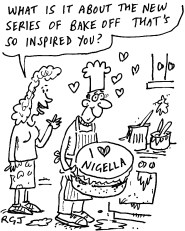
The Dog and Partridge in the suburbs of Birmingham was pretty unwoke too. It’s being considered for demolition after it closed in 2020, following a meat cleaver attack at a ‘family-friendly’ beach party. Perhaps not terribly woke either is a rumoured East End pub which claims there’s a private event on if a non-white person walks in.
Sipping my Guinness Zero in the Auld Shillelagh in Stoke Newington (never have I been more confident that somewhere would have that in the fridge), I reflected on the upsides of the British left. Yes, the aesthetics here were woke: plenty of mullets, caps and roll-up cigarettes. But this Irish pub in the middle of Diane Abbott’s constituency is still excellent.
Our divisions are class-based, not identity-based like America’s. Our left-wing pubs descend from old working-class traditions: miners’ pubs, Irish pubs and the like. America doesn’t have that, so it’s corporate identarian insanity like Last Ditch. In London, there were until fairly recently two main lesbian bars. One, La Camionera, doesn’t have any rainbow flags. The other, Goldie Saloon, has now closed, having ended its days as a dog-grooming business run by a straight man from Essex. What would the Last Ditch crowd make of that?



Comments