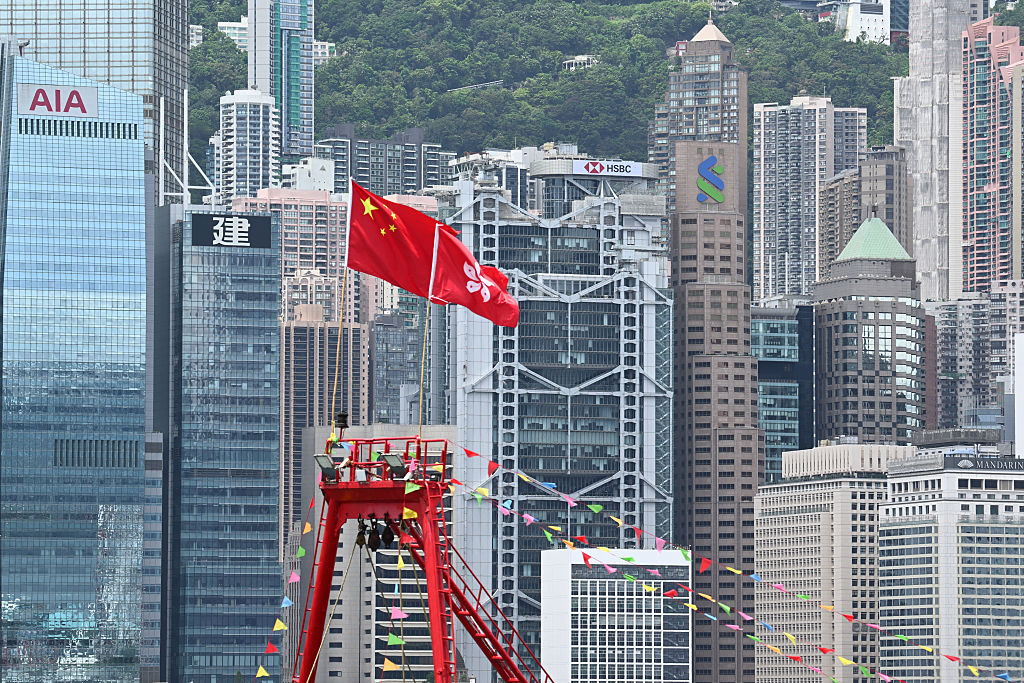
In Hong Kong the calendar has become political. Today marks 29 years since Hong Kong was returned to China after more than 100 years of British rule. Before the introduction of a wide-sweeping national security law, on July 1 there was an official flag-raising ceremony held by the government. In the afternoon crowds would gather in Victoria Park and march to government headquarters, chanting slogans against the Chinese Communist party. The anniversary marked the return of Hong Kong to China but also represented mass public participation.
Activists say that even a small gathering is seen as an act of public defiance
Now politics has become a more private affair. Anniversaries that once drew crowds to the streets bring police surveillance. On sensitive days, pro-democracy campaigners like Mrs Wong (not her real name) are tailed by plain-clothes police. She is followed through malls, the underground and public areas. Last year on the anniversary of the handover, she saw police waiting for her outside her building.
‘Before 2019 there were no sensitive days in Hong Kong,’ says Mrs Wong, referencing the back-to-back pro-democracy protests that rocked the city in 2019. Beijing then imposed the national security law which critics say has silenced dissent.
Ms Wong is part of a small group of Hong Kongers who gather quietly on what’s known as sensitive political dates. The majority of Hong Kong’s political opposition are either detained or are in exile. Activists who are left face arrest, police surveillance and warnings framed as polite reminders. Plain clothes police often guard public spaces on key dates.
‘Their role there is to deter any public displays of remembrance, and to make sure anyone who does any overt acts is quickly stopped by questioning and body searches,’ said one activist. ‘People choose to remember these events often out of a sense of civic duty, a personal act of remembrance in defiance of the authorities’ attempt to whitewash and downplay the incidents that portrayed them in a bad light,’ they said.
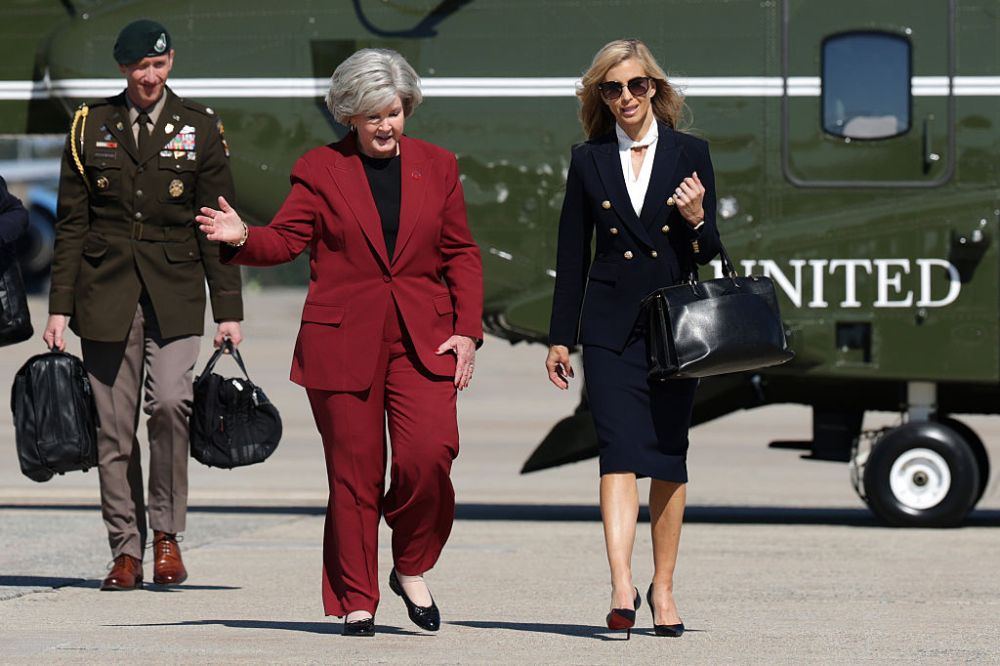
Activists say that even a small gathering is seen as an act of public defiance. They are worried that ‘as time passes the memories of 2019 will begin to fade from the public consciousness.’
On June 4, Hong Kong was once the only place on Chinese soil to publicly remember those who died when the People’s Liberation Army opened fire on pro-democracy protesters in Beijing in 1989. Tens of thousands would gather in Victoria Park to light a candle to remember the dead. The vigil has been banned since 2020. Since 2022 Victoria Park has become a venue for a pro-Beijing carnival.
‘On June 4, people still gather in Victoria Park, but not in a very explicit way,’ says Ms Wong. Supporters walk around the park, taking photos and posting images online.
This year a crowd gathered as a lone protester, surrounded by police, attempted to complete a piece of performance art. On his T-shirt were the words: ‘The Sound of Silence.’
There are also lesser-known dates that draw police attention. On the 15th of every month, mourners gather outside a mall in central Hong Kong to remember a young protester who fell to his death in 2019. They are stopped and checked, and threatened with littering offences if they leave flowers in public spaces. Yet they still come.
‘On June 15, many people keep coming with flowers, although they are stopped by the police, searched and warned. But people still come. There are things the authorities cannot stop,’ says Mrs Wong.
June 24 is the anniversary of the last edition of Apple Daily, the now shuttered pro-democracy newspaper. Online posts called for supporters to visit the abandoned offices in an industrial estate. Its founder, a British national, Jimmy Lai, was sentenced this year to 20 years in prison for violating the national security law. For its supporters, Apple Daily was the last opposition paper in Hong Kong. ‘The Apple Daily wasn’t perfect but it gave us a voice,’ Mrs Wong said.
Jimmy Lai’s memory is also sensitive. In March, the owner of staff from an independent bookstore was arrested allegedly for selling copies of a biography of Jimmy Lai. Many in Hong Kong are unclear where the red lines are.
‘They know they have no legitimacy and are scared they’ll be called out,’ said Mark Clifford, the author of the biography of Jimmy Lai, Troublemaker, and president of the Committee for Freedom in Hong Kong Foundation.
‘My father spent much of his life defending these freedoms. Twenty-nine years in, these freedoms have all been destroyed. Newspapers closed, journalists arrested,’ says Jimmy Lai’s son Sebastien Lai, in exile in London. Lai has spent more than 2,000 days in solitary confinement. ‘This is a story of liberties robbed. A promise broken and the men and women who campaigned for those liberties are now in jail.’
Activists continue to find ways to mark events. On the Kowloon side of Hong Kong, two young people nervously visit a shuttered bookstore at night. They are mourning one of the last independent bookstores, now closed. Last week the co-owners were arrested on suspicion of displaying seditious materials.
Hong Kong is part of China but was promised certain political freedoms when it was returned from British rule in 1997. They include freedom of speech, freedom of assembly, an independent judicial system and a free press. Critics say those freedoms have been eroded.
‘It shows the inability of Chinese communism to reform itself,’ said Chris Patten, the last governor of Hong Kong. Lord Patten argues the UK should stand up for its values and stand up more for the people of Hong Kong. Including putting more pressure on the Hong Kong authorities for the release of Jimmy Lai.
The UK’s latest six-monthly report on Hong Kong says the national security law continues to expand in scope and practice. Police can now demand passwords of phones of people suspected of national security offences.
The authorities say that the national security law was needed to restore order. Six years on, critics say it affects many aspects of ordinary life.


Comments