A helicopter took off from Sandown on the Isle of Wight during August bank holiday last summer in what should have been a routine flying lesson, taking in views of the beautiful coastline. But onlookers soon spotted it spiralling out of control and emergency services rushed to the scene. The emergency service first to respond was not the ambulance, police or fire. It was the coastguard. Tragically, all three passengers died.

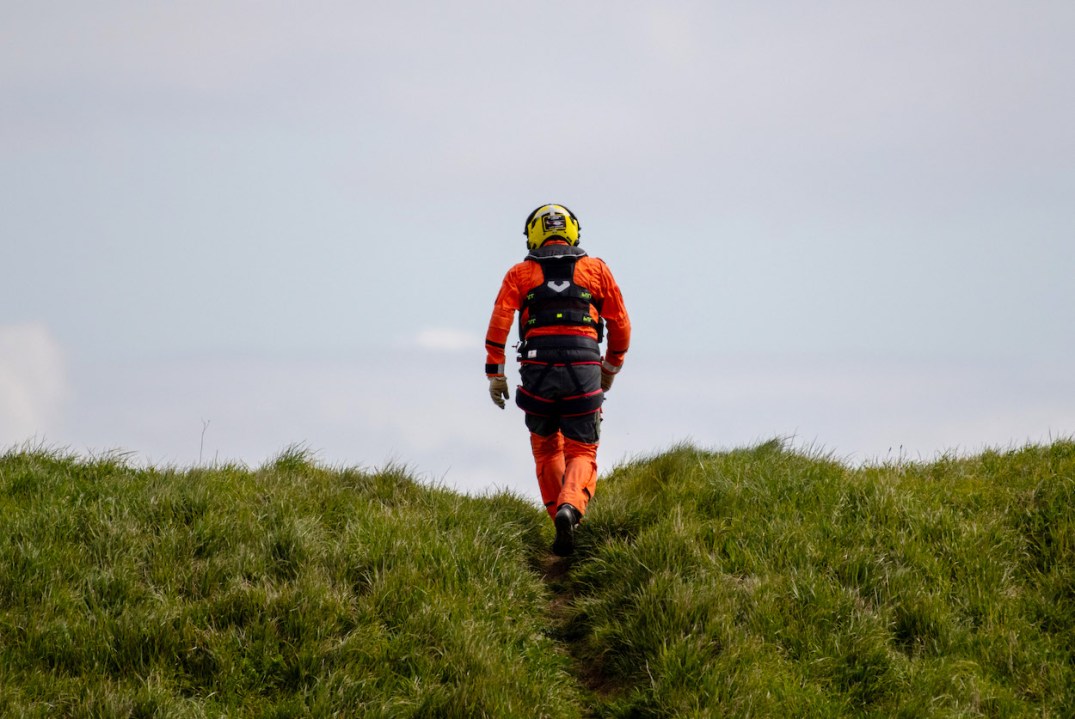
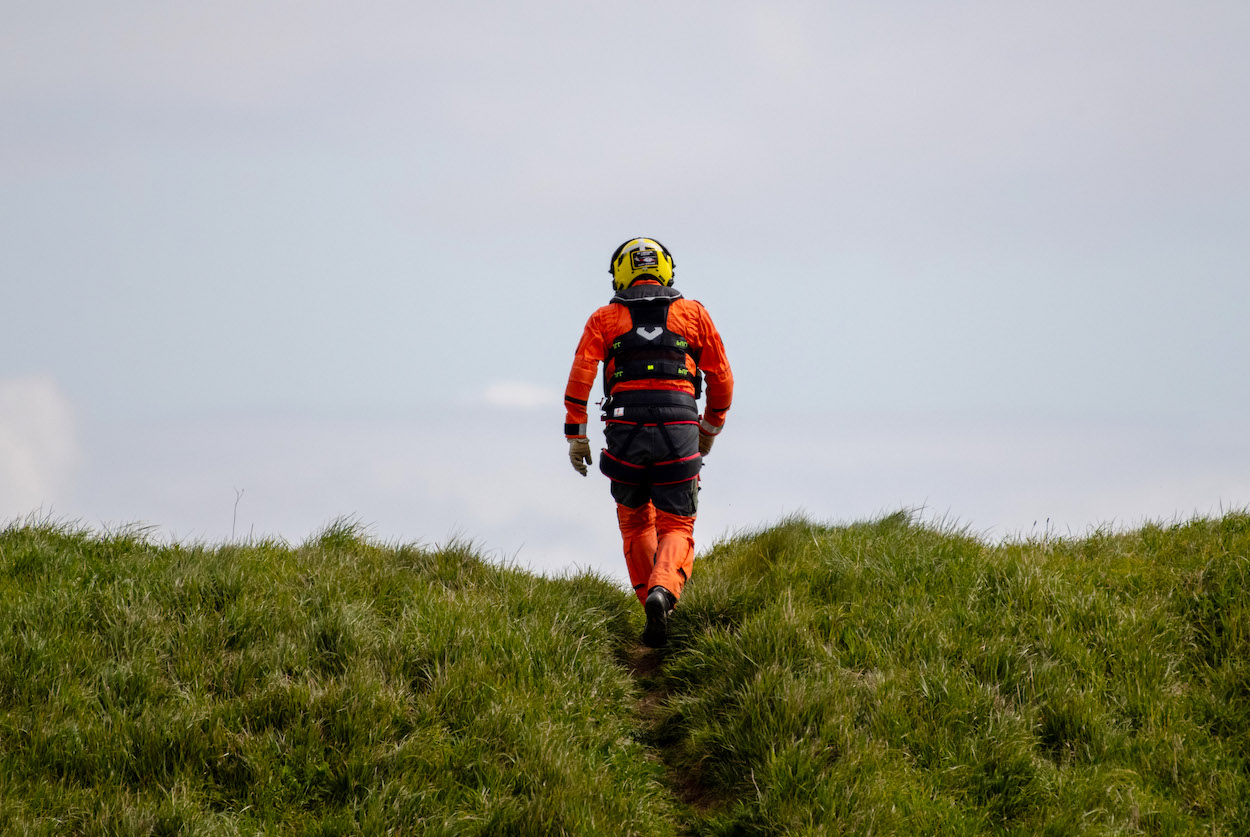
Most people have never come across coastguard rescue officers (CROs), but when lives are on the line around Britain’s 19,000 miles of coastline, they are often first to answer. They leave their families and day jobs to answer ‘the shout’ – responding to cliff rescues, flood incidents, searches for missing and vulnerable people, suicide attempts and other life-threatening emergencies. They even, on occasion, deal with small boat arrivals. Not every emergency is on the coast. The tragic and fatal helicopter crash on the Isle of Wight was three miles inland.
When Jane and Alan Kelvey found a Russian frigate firing shots within 500 metres of their Bright Future yacht in the Channel off the Isle of Wight, who did the retired British couple call? The coastguard.
Coastguard rescue officers embody public service at its best. Putting in far more than they take out, they serve their community often alongside another job. They’re retired police officers, teachers, medics, engineers, trades people or in the military. For a modest payment in return for dropping everything at a moment’s notice – around £11 an hour for each callout or training exercise – these brave men and women form an essential component of our blue-light emergency services. They are highly trained 999 emergency responders, on call 24/7, 365 days a year.
Earlier this year, following a case brought by my constituent Martin Groom, the Court of Appeal confirmed that CROs are workers, not ‘mere volunteers’. Groom had taken the Maritime and Coastguard Agency (MCA) to court because he said, as a worker, he was entitled to trade union representation at a coastguard disciplinary meeting. It should have been obvious that a group of people with the formal title ‘officers’, who are mandated to do work in return for payment calculated at an hourly rate (via PAYE with tax deducted at source), were not volunteers in the eyes of the law. Still, the Maritime and Coastguard Agency (MCA) wasted hundreds of thousands of taxpayers money litigating through three tiers of the court system. In the end, the court agreed with Groom.
It should have been a moment of recognition for the people who put themselves in harm’s way with ‘coastguard’ written across their backs. Instead, the MCA did something remarkable, and in my view, immoral and dangerous: it decided to remove their pay entirely, knowing 44 per cent had responded to a survey saying they would have to do fewer hours or be forced to give up altogether. In my area, which covers the stretch of coast on the front-line of small boat crossings, the figure was more than half.
The MCA could have taken the opportunity to examine the whole future model of the Coastguard Rescue Service. It could have assessed the cost of paying minimum wage, sick and holiday entitlement to ensure a service fit for the 2020s and beyond. It didn’t. I asked the Department for Transport, which has ultimate responsibility, what formal impact assessment was undertaken before firing this essential workforce. There was none. No assessment of cost. No assessment of impact on the likely levels of staffing or recruitment or the service’s readiness to respond. No assessment of the threat to public safety in our coastal communities all over the country.
Treating a safety-critical emergency service as dad’s army is not only deeply disrespectful but inappropriate for the world we live in. The police and ambulance service rely on the coastguard to assist and coordinate multi agency responses in the unfamiliar environments they are often required to operate in. The idea of paramedics and police officers operating under the instructions of an unpaid volunteer on whom they are ultimately reliant is not credible.
The government still has time to change course
The payment CROs receive is what makes the commitment possible for many who have to down tools when the shout goes out. Take it away and the calculus of coastguard rescue officers begins to change. If they delay or defer training (up to 100 hours initially) they will no longer be able to respond to calls. Others will not be ready to respond to incidents as frequently because they’ll put their paid work first. We know many could leave the service altogether. The result will be fewer experienced officers and a worse emergency service.
The hastily cobbled together justification has been brazen. At a recent parliamentary meeting, MCA chief executive Virginia McVea told MPs that the Court of Appeal had mandated this decision. When she realised half the MPs in the room were former lawyers she changed tack and claimed that the decision was in line with ‘what CROs are telling us they want’. She quoted 93 per cent of respondents to an undisclosed internal survey who said they wished to remain ‘volunteers’. We now know that figure to be wrong and by a wide margin. In a separate GMB Union survey, 89 per cent apparently said they would reduce hours or stop.
We know the Department for Transport, which has ultimate responsibility for the coastguard, has done no formal assessment or consultation about the change to officers’ positions. It is therefore no wonder that 400 CROs have joined a campaign group and dozens descended on Westminster this week from all over the country to make their case.
The government still has time to change course. It should pause these plans, consult properly with CROs and find a more considered and honest way through the implications of the Court of Appeal’s judgment which, above all, safeguards the future of this essential 999 service. When disaster strikes on our coastline, ministers expect CROs to answer the call. The least they can do is answer theirs.





Comments