Birds do not sing. They bleep and rattle and buzz like a dial-up modem. That we consider what comes out of those pointy mouths as synonymous with natural beauty and the highest achievements of melody is all down to a musical sleight of hand – centuries of gaslighting and free PR from classical music. The first composer to level with us, to faithfully transcribe the monstrous noises that these creatures actually make, was Olivier Messiaen.
His music is stuffed with this fabulous fax-machine weirdness. It reaches an apotheosis in his massive opera Saint François d’Assise (1983) – six hours with intervals.
That we consider birdsong as synonymous with natural beauty is down to a musical sleight of hand
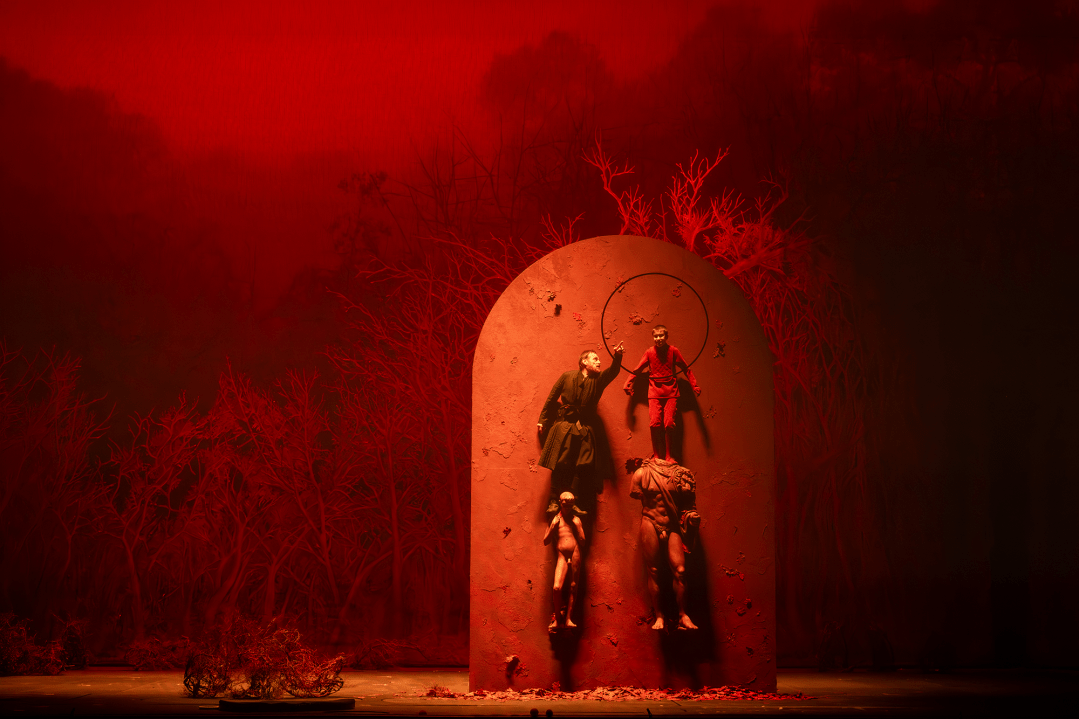
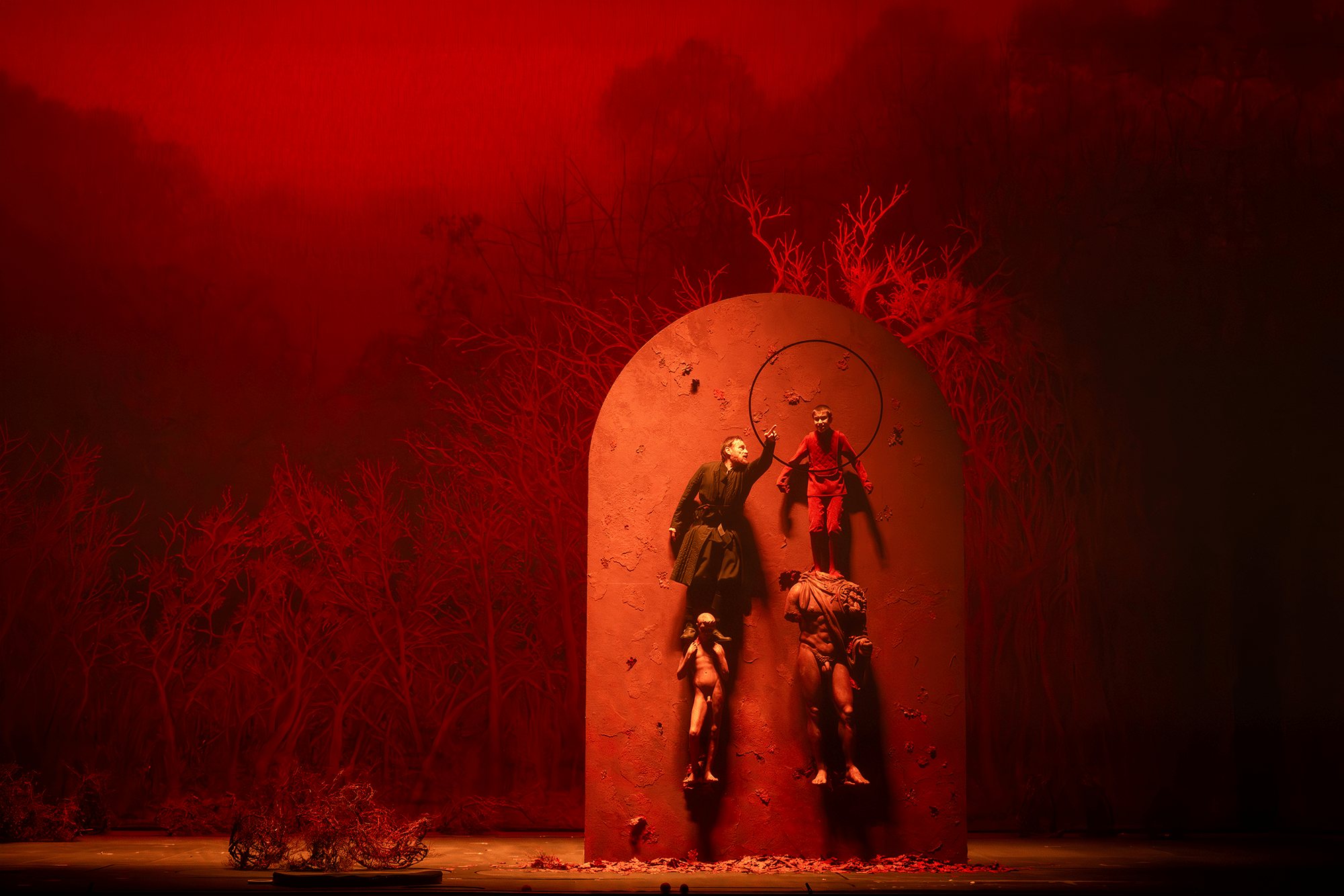
A smattering of brown cassocks could be spotted amid the usual outlandish outfits at Salzburg’s new production at the Felsenreitschule, commemorating the 800th anniversary of St Francis’s death. A dream team had been assembled, including the director Romeo Castellucci, conductor Maxime Pascal (tamer of Stockhausen’s seven-day opera Licht), a massively enlarged Vienna Phil, and the formidable 150-strong chorus of the Vienna State Opera.
As in so much of the best art, nothing happens. A leper is healed, a shady traveller is met, birds are addressed. Philippe Sly’s Francis, meanwhile, is convincingly troubled and transfigured even when baking bread. All the drama, complexity, mystery, subtlety works itself out in the score – and in Sly’s voice – which is simultaneously so clear and so ravishing that, but for its length, it would make the perfect opera to recommend to any new-music neophytes or naysayers.
Unlike his modernist contemporaries, Messiaen felt no shame in repetition; in hammering home his gorgeous, complex melodies – bent and bruised and highlighted in neon harmonies, in true Messiaen style, indelibly fauvist. As a result everything has a chance to lodge itself in the brain. And listen to how rarely he goes all out with the orchestra. Instead we encounter fascinating little flocks of instruments, and occasional thuggish packs. Behind them all the wobbly gaseous halo of three ondes Martenot.

Pascal, meanwhile, made the Vienna Phil sound not only like they were enjoying themselves but like they were made to play this stuff (which they are not). Was Castellucci phoning it in a little? Dragging in second-hand ideas from old productions; dragging on another animal when his imagination faltered: peacock, wolfdog, a crucified stork. Possibly. But phoned-in Castellucci is still better than what most directors have to say when trying their hardest.
Phoned-in Castellucci is still better than what most directors have to say when trying their hardest
And there were just enough startling images to carry the day, not least when a giant black beam – the top of a cross? – slides out through the curtains and draws them back, one way, then the other, giving us a glimpse of a fat, naked, skullheaded gravedigger. The stroke of genius, however, was to completely hide the enormous chorus – who provide the word of god – behind a screen in the pit. With every kaleidoscopically-coloured pronouncement, heads would swivel, up, down, left, right, hunting for the sacred presence.
The real test came at the very end, when waves upon waves of sound form a climax of such power that it almost felt like it was replacing the air we were breathing. And here Castellucci nails it: out scamper five mucky brown sheep, hungry and eager and curiously oblivious to their role as the true divinities in this production.
It’s been a very good summer for fans of Castellucci – the smartest of the current European avant-garde (Barrie Kosky’s productions look like panto by comparison). In July Aix revived his Requiem, and April saw a new Pelléas et Mélisande at La Scala, again with Maxime Pascal.
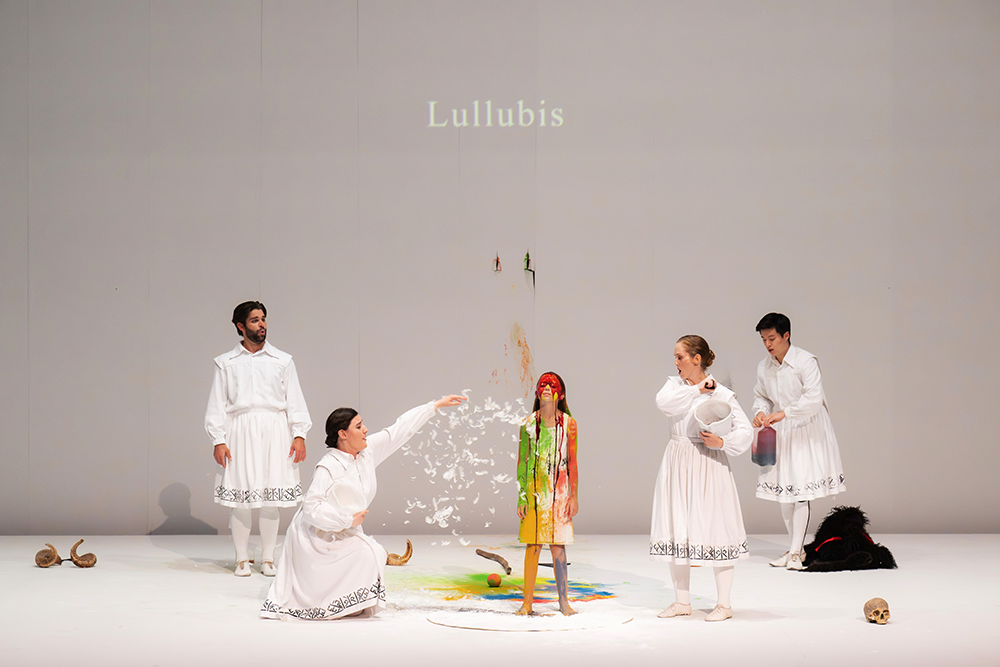
Requiem is astonishing. Especially given how unnecessary, idiotic even, it is to consider staging Mozart’s mass for the dead. Idiotic, that is, only if you’re not a match for the Mozart. Castellucci, however, gives the music a run for its money. You shake your head in disbelief when the dying old lady is swallowed up by her bed; gasp when she’s spat out again as a child. Gasp some more when the child, now a small god wreathed in laurels, is pelted with paint, blood, earth, oil, feathers, and left to hang by her hands from the wall. The terrifically game singers enact a series of tableaux vivants – marked by strict neoclassical restraint: circle dancing; white tunics; maypoles; oranges; trees; soil – that unfold like a string of the finest paintings Poussin never painted. When the chorus finally shuffle off the stage – naked and huddled – and the whole floor and all its messy activity is hoisted up vertically to become a vast abstract panorama patterned by primordial shapes, you will feel like you’ve witnessed something immeasurably beautiful and sad.
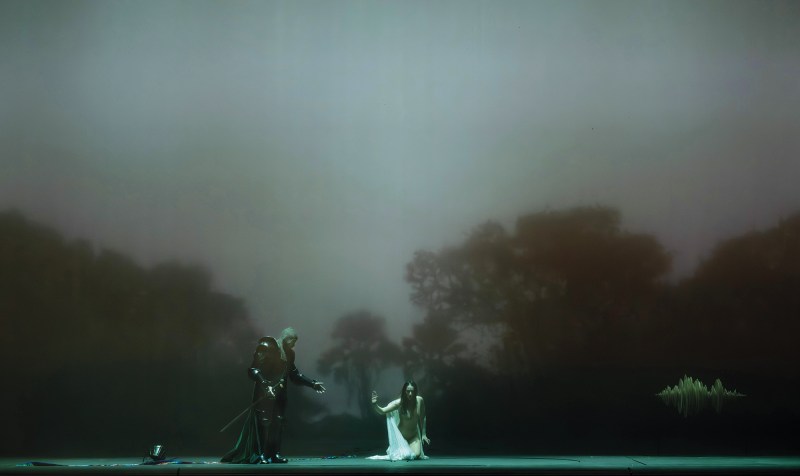
No less virtuosic was Pelléas. I’d always thought that Castellucci only really excels within the plotless. Not so. It will be hard to uproot the image of Pelléas and Mélisande transforming themselves into Pierrot and Columbine and lovebirding on a pure white stage in their final Act Four tryst. The rest of the evening, like the rest of the score, is a Whistlerian nocturne in black and red and white (Mélisande’s hair becomes a cascade of milky liquid), singers barely recognisable behind a scrim. It’s almost as if we’re at the bottom of the sea. Not a bad place to put this opera. That’s exactly where Debussy’s music lurks.
The orchestra moved like a deep-water fish under Pascal, sad and slow, occasionally heaving itself up to the surface in the interludes. In the final one, Simon Keenlyside’s jealous Golaud appears bearing two huge, heavy black flags, with which he repeatedly carves out a figure of eight in the air as the music builds and his arms buckle with exhaustion. It’s classic Castellucci. No drama, no cleverness. Quite simple, entirely devastating.




Comments