The early music movement: it’s grown up so quickly, hasn’t it? The Orchestra of the Age of Enlightenment is 40 years old in 2026 and if you can remember its debut, back in the 1980s when Beethoven on period instruments was pretty much the wildest thing going, you’re going to feel terribly, terribly old. Right from the start, the OAE was in the vanguard of the second wave. As late as 1978, the gut-strings and Bach brigade had assumed that Mozart was beyond them. The newly founded OAE was straight out of the traps with Weber, Mendelssohn and Schubert – halfway down the 19th century without drawing a breath.
They’re marking their 40th in much the same style: Berlioz with Rattle, Haydn’s Creation and a recreation of Brahms’s final concert in 1897, conducted by current hot ticket Maxim Emelyanychev. That’s the other enduring trait of the OAE: being player-run, they have no chief conductor and book only artists who excite them. The feeling appeared to be mutual last weekend, when they performed a contrasting pair of Beethoven symphonies (the Fourth and Fifth) with the veteran Hungarian conductor Adam Fischer. He was practically bouncing off the podium.
But as of 2026, we’ve had four decades of period instrument Beethoven. Leaving aside Fischer’s livewire interpretation – taut, springy, with a thrilling sense of catch-and-release and only a couple of awkward ritenutos to disrupt the flow – you have to ask whether these sounds can still astonish us. Do we still feel that electrical jolt as wooden sticks strike 18th-century timpani, or notice the rasping, slightly wonky flare-up when a pair of valveless horns enter, stage right?
In short, yes – at least when they’re delivered with the kind of full-body physicality that the OAE players displayed for Fischer. They went at the finale of the Fourth with dizzying speed and needlepoint precision: controlled anarchy, throwing flips and spins on the edge of disaster with a bravado to rival the skateboarders one floor down in the undercroft of the Queen Elizabeth Hall. No question, the overall standard of the OAE (and of period ensembles generally) is immeasurably higher than it was in 1986, when we Gen X-ers revelled in the acid violins, the insane speeds and the punky, irreverent weirdness of it all.
That was always the long-term aim, of course: to normalise these sounds so they’re music first and disruption second. But even when the playing is as refined as this, you still get a definite shift in perspective. Gut strings don’t sustain like modern ones. The intensity falls away and you hear different colours beyond, like a forest that has been thinned to open out new vistas. The flute and clarinets shone through the opening bars of the Fourth, giving the string chords a Ready Brek glow (to stick with the 1980s references).
And some 19th-century instruments will always sound unexpected, like the Toytown warbling of the piccolo in the finale of the Fifth. Yet there were new revelations, too: the Stravinsky-ish sparseness of a broken dialogue between antiphonal violins over a drum roll that rattled, rather than (like modern timpani) rumbled. The ancient-modern style wars are a fading memory, thank God (you can prize my 1963 Karajan box set from my cold, superannuated hands), and the period approach still has the potential to surprise. But the shocks today come from Beethoven’s imagination, not from freak sonorities or unexpected tempi. In a performance like this, that’s enough to make anyone feel young. Don’t they say that 40 is the new 21?
Do we still feel that electrical jolt as wooden sticks strike 18th-century timpani? In short, yes
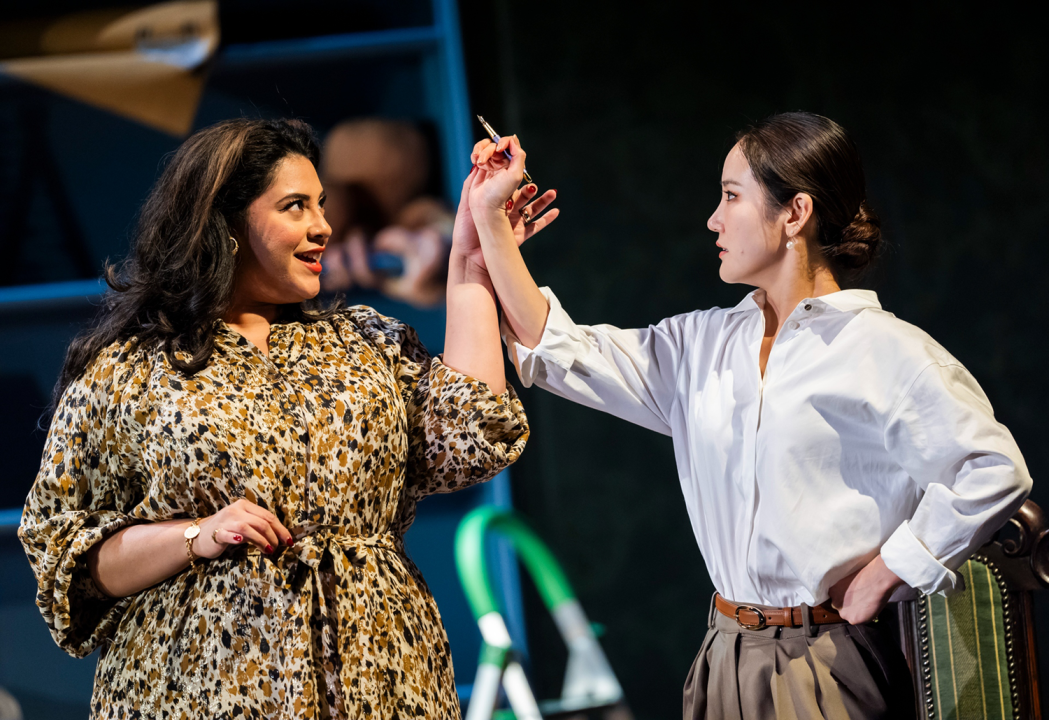
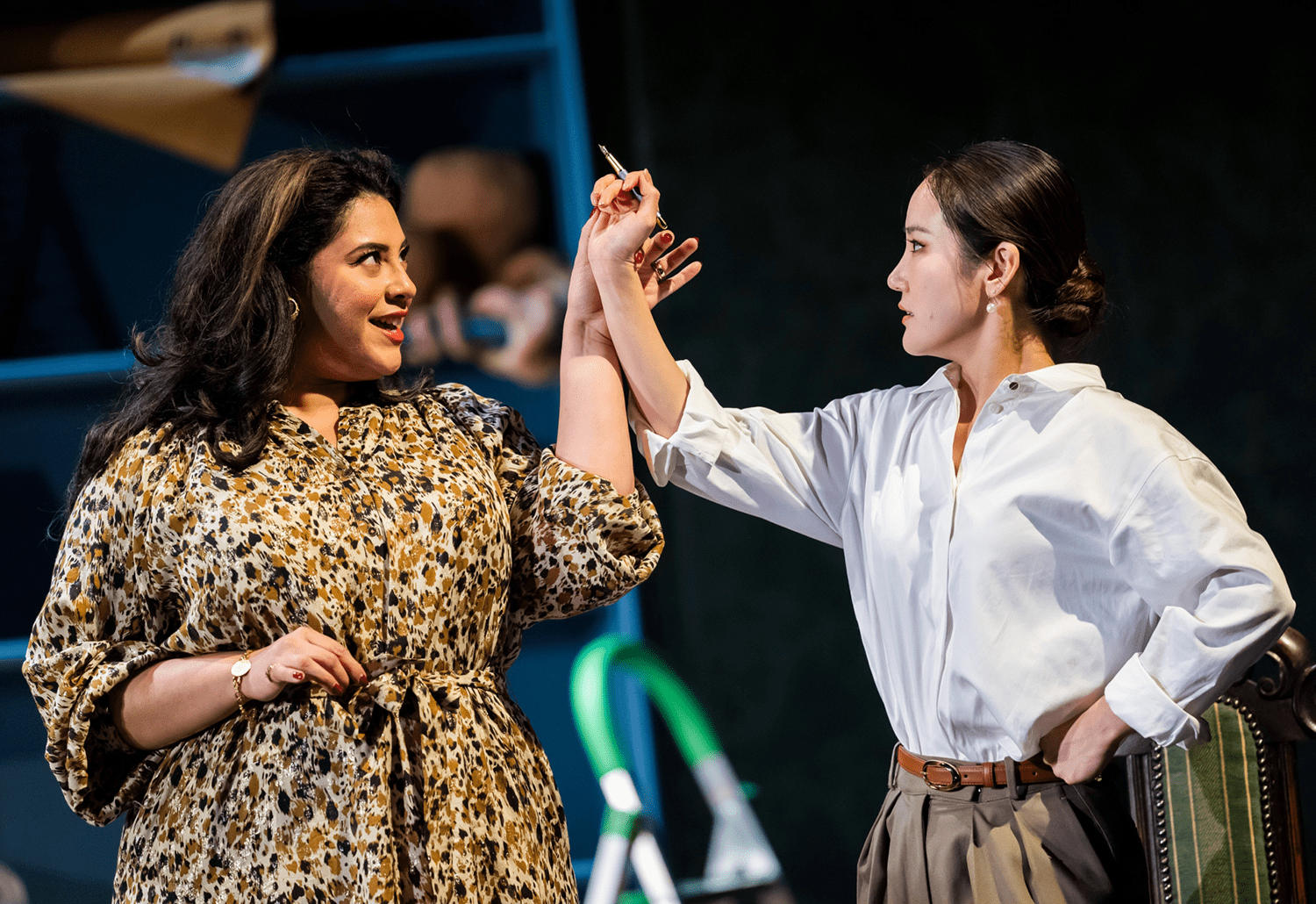
That doesn’t leave much room for Louisa Muller’s new production of The Marriage of Figaro at Opera North, but happily there isn’t much that needs saying. It’s an updated staging, but it’s basically harmless – no nudity, Marxism or three-way sex this time. The Almavivas are a Country Life family in a damp stately home, beset by tour parties and dressed from the Boden catalogue (the designs are by Madeleine Boyd). The Countess (Gabriella Reyes) is pregnant and Susanna (Hera Hyesang Park) is her sweet, whip-smart PA. There are green wellies and Barbour jackets, and the Count (James Newby) wears red cords and beige slip-ons. You’re a Spectator reader: you get the picture.
Muller chivvies it along with a cheery sit-com energy. All the characters are essentially loveable, and it was a nice touch to cast a Figaro (Liam James Karai) who is so visibly cut from the same cloth (navy, 100 per cent lambswool) as his master. Oliver Rundell conducted with verve and the singing across the cast was vivacious, clear and warm; though only Hongni Wu (Cherubino) really pricked at the heart. This isn’t really that kind of Figaro, though. It’s more of a Sunday-night TV drama: comforting, funny and destined to run and run. And good on Opera North if it does.


Comments