We are often told these days, most recently in James Marriott’s much talked about book The New Dark Ages, that the world has a problem with reading. During such an emergency, then, it could be quite invidious to claim that some manifestations of this problem may be more or less bad than others. But it is difficult not to bemoan especially one crisis that cannot be blamed entirely on bloated screen times: the decline of biblical literacy.
I have observed this first-hand when teaching history undergraduates at Oxford. These are the brightest and most hard-working young historians in the world. But it is not an uncommon occurrence to be met with blank stares when I mention the prophet Jeremiah or question them on the Exodus narrative. Direct excerpts from scripture such as the Psalms regularly pepper the primary sources students analyze, but these are likely to pass them by unheeded and unidentified. In short, even the most capable British undergraduates today struggle to recognize Christian references that would have been obvious to most students – indeed, most Britons – only a few decades ago.
Even the most capable British undergraduates today struggle to recognize Christian references
This should not be surprising given that a 2014 Bible Society survey found widespread ignorance of basic biblical stories and figures among British children; 85 percent were unfamiliar with Solomon, 61 percent with the parable of the Good Samaritan, 93 percent with Job, 72 percent with Daniel in the Lions’ Den, 87 percent with Saul on the Road to Damascus, and 43 percent with the Crucifixion. It is safe to assume that those numbers have not improved in the 12 years since the survey was taken.
Part of this illiteracy surely stems from the dilapidated state of spiritual infrastructure in Britain, especially Sunday schools. At the beginning of the 20th century, 56 percent of British children attended Sunday schools; by 2000, that figure had fallen to just 4 percent. This decline should be understood within the wider collapse of church attendance rates: today, only 5 percent of British adults go to Christian services on a weekly basis, meaning that the overwhelming majority do not regularly enter that physical space where they would imbibe biblical references from even the most soporific of sermons.

Post-Christian Britain is here to stay. But that does raise an interesting question as to whether a general knowledge of the Bible, and an appreciation of its manifest historical significance, can survive in a society now largely indifferent to the spiritual claims it makes.
There are, of course, sentimental reasons for believing that the decline of biblical literacy is a civilizational tragedy. It signifies, above all, the disappearance of a shared cultural artifact at a time when we seem to share so little. Now that Britain is a multi-cultural Babel, would that we did have a common physical patrimony like the Bible that transcended the increasingly sharp and unsustainable divisions of generation, race, language, sex, party, place and sect.
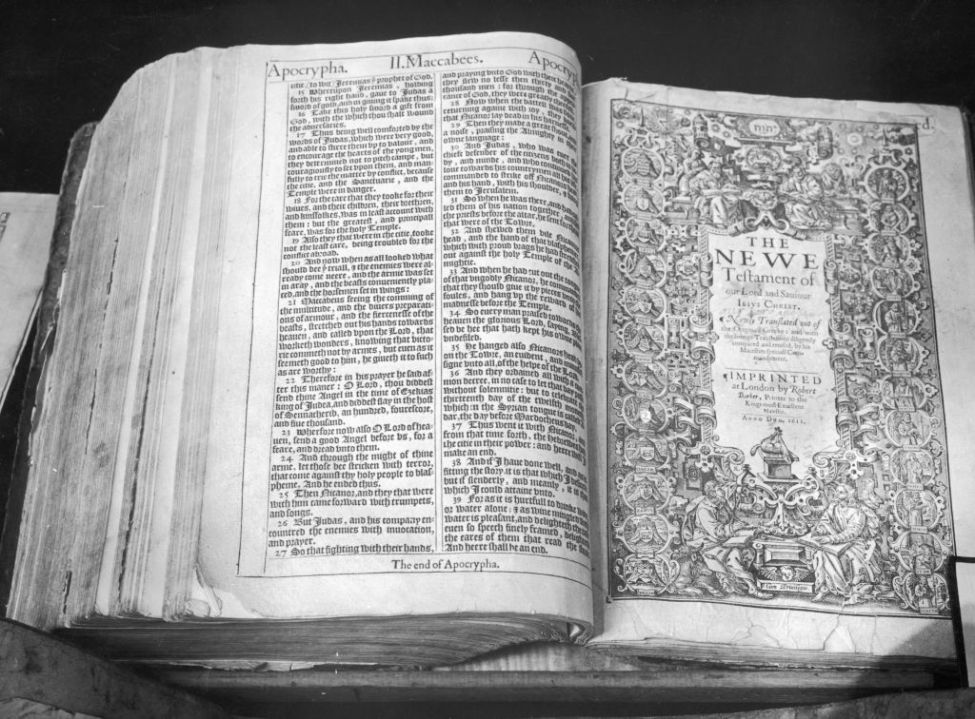
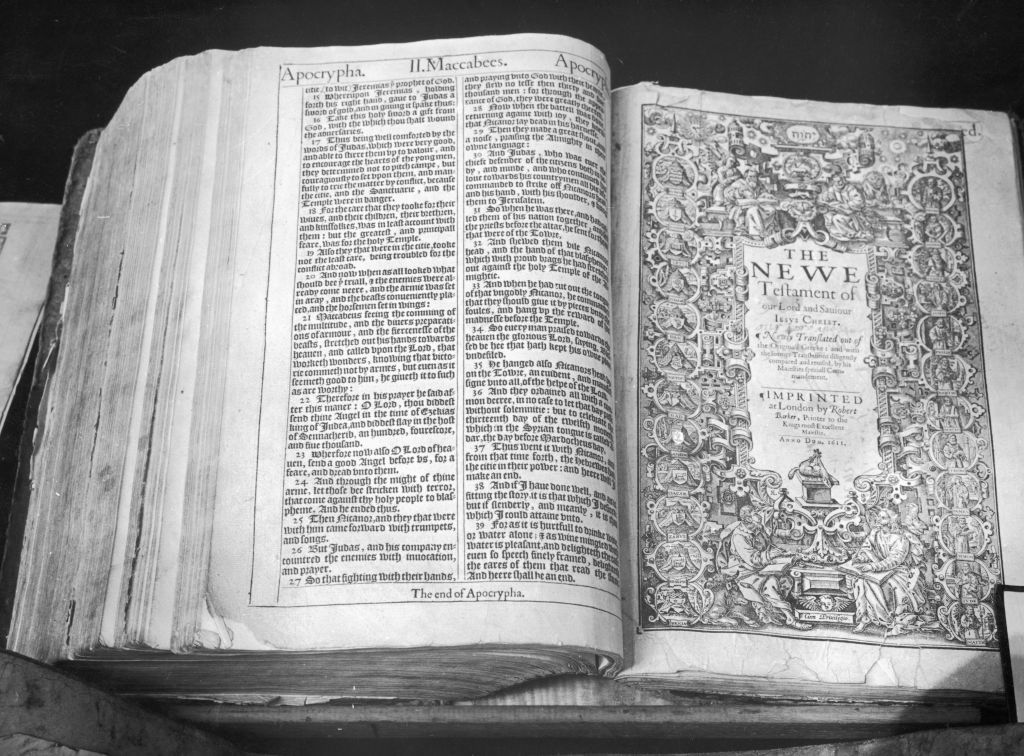
But there are more practical reasons why the decline of biblical literacy bodes ill, particularly for the study of history and for a proper understanding of ourselves as a people and as a nation. This is true even for scholars of the modern English-speaking world, whose own biblical illiteracy often renders them unable to make sense of a near past in which not only the Bible, but the King James Version especially, dominated all facets of society.
The KJV was a singularly unifying force in the Anglo-American world for more than three centuries. With notable exceptions, such as Catholics, it was read by Conservatives and Liberals; Republicans and Democrats; Anglicans and Nonconformists; Methodists and Mormons; settlers and subjects; men and women; white and black; rich and poor; young and old. It offered a limitless supply of widely intelligible metaphors, archetypes and warnings that people used in the public square to debate the events of their ages and navigate the vicissitudes of their personal lives. It formed, to put it crudely, a bank of memes that slipped seamlessly across social, ethnic and political divides. When Abraham Lincoln in his Second Inaugural Address reminded the American people “woe unto the world because of offenses for it must needs be that offenses come but woe to that man by whom the offense cometh”, he could assume that everybody understood what he meant.
In the same way that we would raise our eyebrows at an ancient historian unable to read Latin or Greek, what use is a scholar of modern Anglophone history whose ears do not prick instinctively at the KJV’s cadences and inflections, who is unable to spot at a distance an interpolated proverb or an applied parable, even when such things appear disembodied and uncited in profane contexts such as newspapers, diaries, or letters?

Without that latent, instinctive familiarity, there is a risk that an ever-thickening fog may settle upon the English-speaking past in which our ancestors gradually lose the solidity of their forms and features, becoming floating specters only half-seen and only dimly comprehended by a people intellectually incapable of understanding them as they would have understood themselves.
So what ought to be done? There are my own fantasies, such as making the KJV required reading for all incoming history freshers the summer before matriculation, so that they can tell their Abels from their Absaloms. But the crisis patently needs addressing at an earlier stage. The Bible should – unrepentantly – have pride of place in religious studies at secondary schools, with no squeamishness about parity of representation with other “world religions.” Perhaps the most effective solution would be to teach the KJV specifically as a work of literature in English classes and not solely as a theological subject, persuading students that they have some stake in knowing it well regardless of whether they are confessing Christians. Such a utilitarian policy might strike those who believe that scripture is God-breathed as a cynical capitulation to disenchantment. But it may also bind new generations to their forebears, all the while introducing them to a rollicking good story – the greatest story ever told, some say.






Comments