On 15 September 1916, at Flers-Courcelette, 49 Mark I tanks rolled into no-man’s land. Most broke down. The ones that kept going shocked the German line and took three villages by lunchtime. Douglas Haig wired London for a thousand more. Building armoured vehicles in volume shaped the next century of wars.
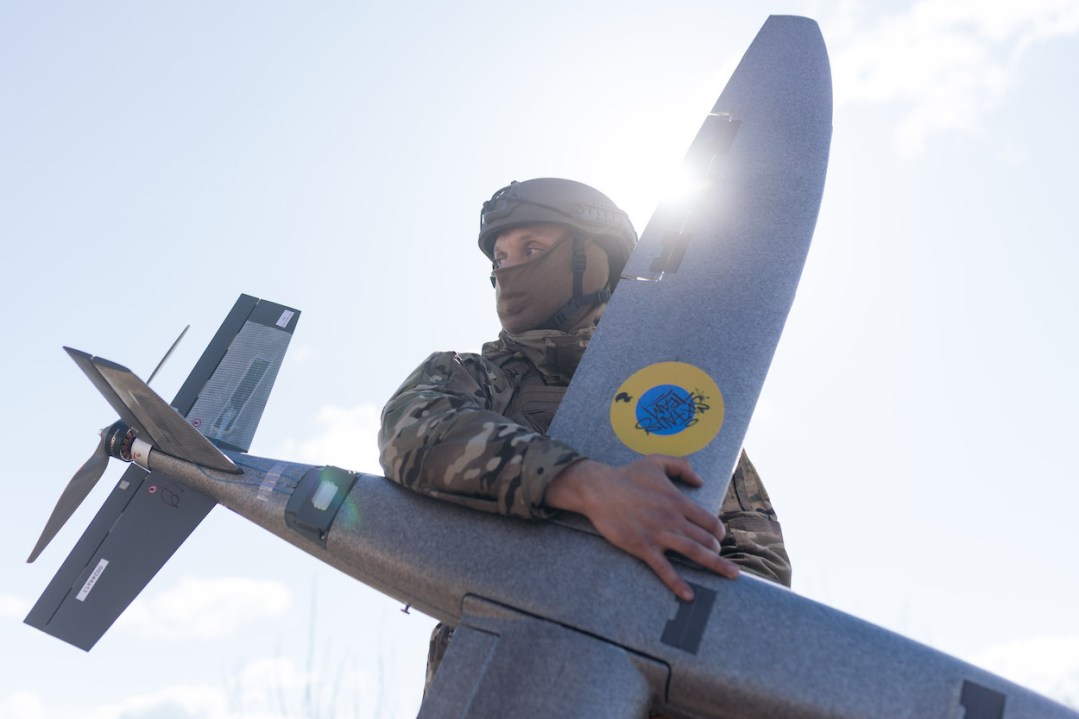
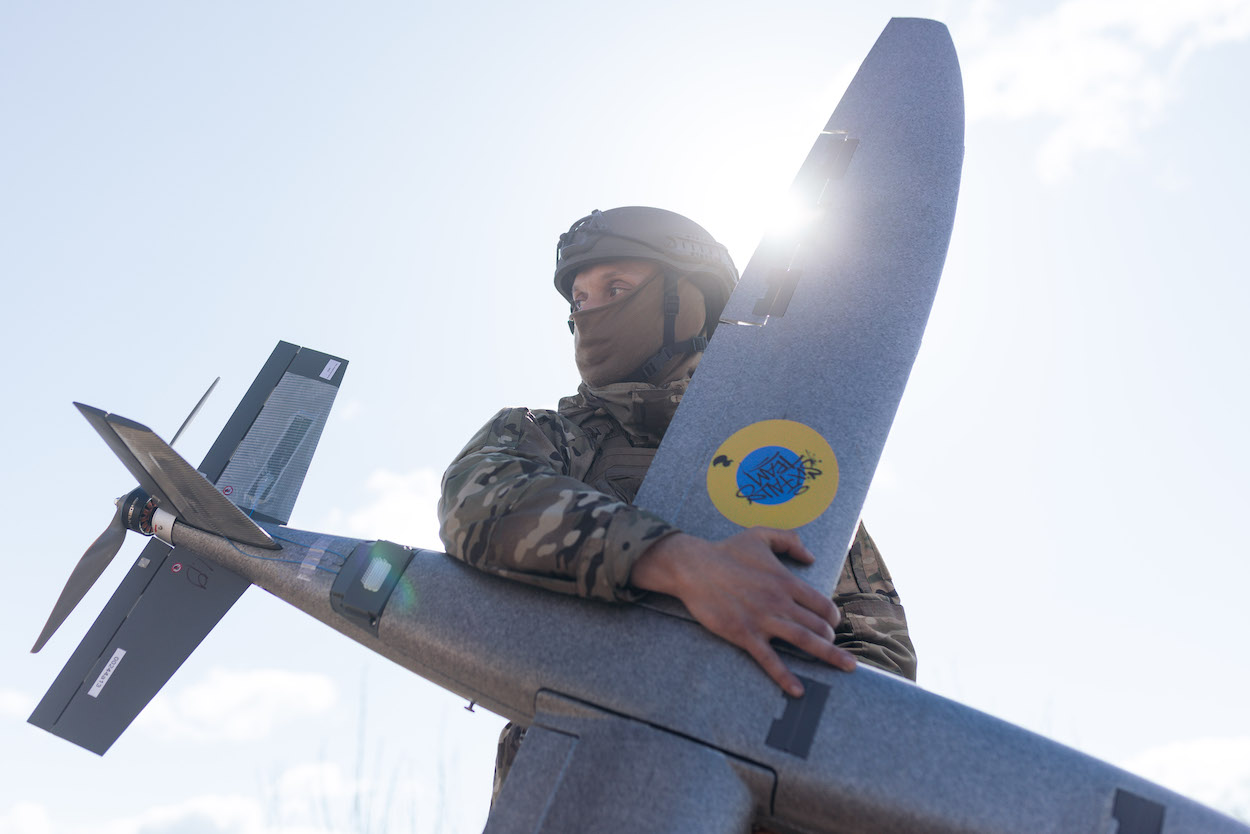
An even bigger shift is under way. The drone has done to the tank what the tank did to the trench. But not only the tank is affected. Drones are changing almost every capability and domain of warfare. Roughly 90 per cent of battlefield casualties in Ukraine now stem from drones. Colonel Al Carns, minister for the armed forces and a former special forces officer himself, notes that one drone now delivers the lethality of 22 artillery shells. Lethality, however, is not the whole story. Conflicts are won by economics, and on this one the ledger is even more stark.

Consider again the armoured vehicle. A £50,000 strike drone will destroy an Ajax, a Leopard 2 or a Challenger 3, each costing taxpayers between £8 million and £10 million, before support costs are even counted. That ratio is over two hundred to one. The tank, the twentieth-century icon of hard power, is now a very expensive target. We still need armour, but it is no longer decisive.
Air defence runs on the same logic. In March, with the US-Iran-Israel conflict at full pitch, an Iranian Shahed launched from Lebanon struck a hangar at RAF Akrotiri. Ministers praised the RAF crews flying round-the-clock intercepts from the base. Rightly so. The ledger was quieter. Shaheds cost Tehran between £25,000 and £50,000. We shoot them down with air-to-air missiles costing £200,000 to £2 million, fired from Typhoons worth over £100 million each, running at £75,000 an hour. The Americans, defending Gulf bases, burn through Patriot interceptors at £3 million each against targets a hundredth of the price. No treasury can sustain that maths indefinitely.
This is the commoditisation and scaling of precision strike. A capability that once demanded exquisite missiles, trained aircrew and a defence industrial base only great powers could afford is now available to anyone. The question is who uses it best, and at scale. Iran keeps sowing chaos, –despite America’s overwhelming military supremacy – because it has drones. A small number of well-trained soldiers with thousands of cheap precision weapons can hold off a heavy-metal army many times their size.
Software will accelerate this further. Using AI, a single operator, or a handful of soldiers, can control tens of autonomous platforms simultaneously. Over time, fewer troops will be able to man more platforms. Early adopters will gain a huge advantage in lethality. Autonomous mass is a procurement decision, not a hypothetical. Just this week, Ukrainian air and ground drones took and held a Russian position with no accompanying infantry.
Across Europe, ministers speak warmly about venture capital and private equity co-investing in defence, and about ‘defence as an engine for growth’. They are right that private capital can fund mass production. However, capital does not follow speeches. It follows contracts. European venture firms like Lakestar, early backers of Spotify, Airbnb and Revolut, could deploy billions into Britain if the contracts were there. Without them, they’ll keep investing in Munich and Kyiv instead.
In February, the Bundestag signed off more than half a billion euros of loitering-munition contracts routed to innovative companies like Helsing, with options worth several billion more. The initial batch equips the German brigade in Lithuania, a lethal deterrent against any expansion of Russia’s war. Estonia has likewise just suspended a €500-million vehicle programme and redirected the money to drones. Britain and its Nato allies hold the line across the rest of the eastern flank as part of the Forward Land Forces in Estonia, Latvia and Poland. They ought to be armed the way Berlin and Tallinn are arming their own forces: at scale, from innovative suppliers, on multi-year commitments loud enough for capital markets to hear.
Alongside the demand side, government must think about supply. You cannot manufacture at scale when planning takes years, when business rates punish capital-intensive industries, and when industrial power costs twice what it does in Germany or France. If the Treasury wants defence to be an engine for growth, it must clear the planning, environmental, regulatory and tax barriers to re-industrialisation.
Handled well, this shift in warfare is a chance to reindustrialise Britain and lift prosperity with it. The old industrial heartlands are the obvious answer: the north east, where land is cheap and engineering talent concentrated, alongside the M4 corridor and the Oxford-Cambridge arc, already dense with aerospace, software and advanced manufacturing. Bespoke defence industrial zones, with fast-track planning and full expensing, would let traditional manufacturers and venture-backed challengers iterate in weeks rather than years. Dedicated flight corridors in low-risk airspace would give them somewhere safe to test what they build. Ukraine does this in wartime. Britain ought to manage it in peace.
The expert counter is that drones iterate so fast it is pointless to buy anything today. The logic does not survive contact with reality. General Sir Richard Barrons, co-author of the Government’s defence review, has estimated British high-intensity munitions would last about a week. You cannot stockpile what you do not make, and you cannot iterate a product you do not buy. Nor can troops train on capabilities they do not possess: without AI-enabled platforms in their hands now, they will not develop the tactics to win the next war.
Russia, Iran, China and North Korea are each testing the limits of the post-1945 order
How we procure matters too. Ukraine’s Brave1 platform is an Amazon-style marketplace for drones, on which brigade commanders spend points earned from verified kills on more kit. Delivery averages ten days; a product that underperforms is patched the following week. Russia has gone the other way: pick a couple of winners, scale them in enormous Siberian factories: seven million drones a year. Britain has neither. The answer is a hybrid. Devolve some procurement to brigade level with a vetted catalogue of partners, and place anchor contracts with strategic suppliers, large enough to drive down cost and pull private capital in alongside them.
Russia, Iran, China and North Korea are each testing the limits of the post-1945 order, and American willingness to underwrite European security has visibly eroded. Producing autonomous mass cheaply at home is now essential to project power and deter our adversaries. It is also the foundation of an export industry in engineering, manufacturing and AI, and the high-quality jobs and resilience that come with it. In a country where average wages have stagnated for more than a decade, this is essential for prosperity.
Britain still has some of the world’s best universities, engineers and clusters. Somewhere between them and the outcomes the country needs, the incentives and levers in the machine are broken. Defence is not only the first duty of government, it is the condition on which our way of life rests. The economics have changed, and time is running out.



Comments