

Invade the world, invite the world. That pithy phrase was invented in the 2000s by Steve Sailer, the right-wing writer, to mock the then bipartisan consensus which supported George W. Bush’s war on terror abroad while pushing open borders at home. Or, as Sailer also put it: ‘Bomb them over there and indulge them over here.’ Back then, such analysis was generally dismissed as the preserve of white supremacist cranks. Now, it’s fair to say that Sailerite thinking animates the spirit of the second Donald Trump administration. Disrupt the world, deport the world. That’s the order of the day.
Since America’s stunning attack on Venezuela last weekend, almost everybody has had a stab at revealing Trump’s real intentions – including, naturally, Trump and his talking heads. It’s all about securing the oil, stopping the drugs, defeating China, Russia and Iran, or re-establishing ‘hemispheric dominance’. The truth, of course, is that it’s about all of the above and more.
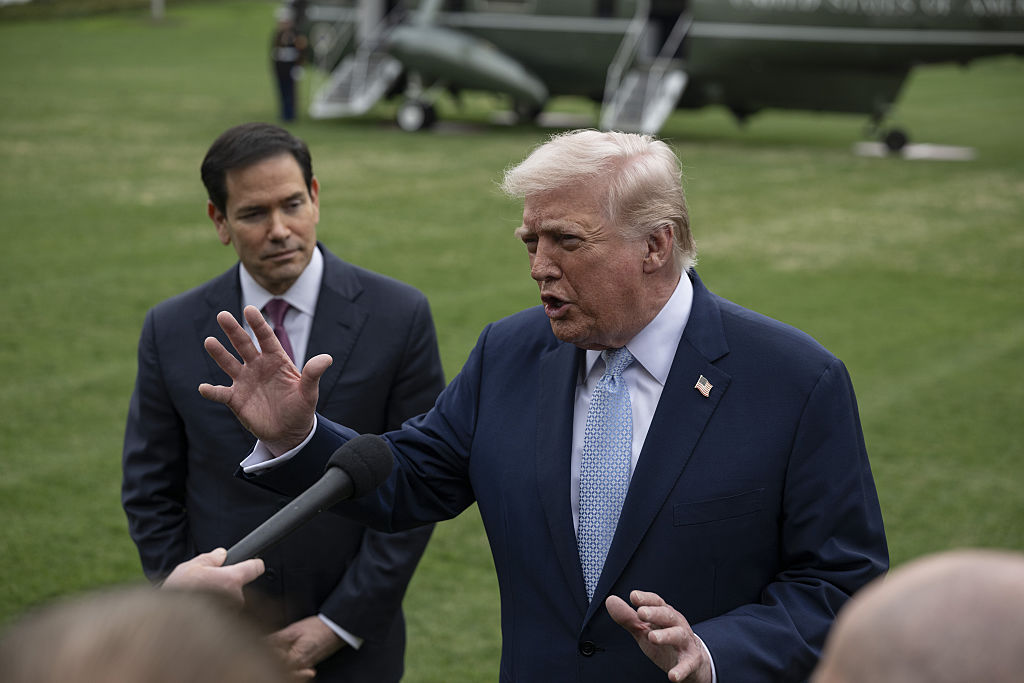
‘Narco-terrorism’ is the official casus belli. ‘We have a drug caliphate in our backyard,’ warbled Lindsey Graham, the South Carolina senator and arch-sycophant, standing next to a nodding Trump on Sunday. But it’s no secret that the US also wants to extract trillions of dollars’ worth of Venezuelan crude – the President said as much in his first press conference on the matter on Saturday.
The less-discussed factor behind Operation Absolute Resolve is immigration – and the Trump administration’s determination to put the world back in its place. The ‘Donroe Doctrine’ – known more formally as the Trump Corollary to the 19th-century Monroe Doctrine – is about asserting, through violence if necessary, US interests in Latin America. But that relates to the movement of people as much as it does to the flow of resources, weaponry or drugs.
The Trump administration is determined to put the world and its people back in their place
Since the start of Joe Biden’s presidency, and the collapse of law and order across Venezuela, some one million Venezuelans have illegally entered the US. Venezuela is also understood to be the key thoroughfare for migrants from Africa and the Middle East making their way towards America with the help of the Democratic party, the cartels and a clandestine global network of hostile foreign powers, chiefly China. As one former Trump domestic official told me this week: ‘These have been effectively covert operations. You’d have to follow the money, but you’re gonna find ultimately that foreign powers, and the Chinese in particular, have been interfering in our politics at all levels, especially on immigration.’
The Venezuela strike was not just a foreign-policy action, then. It was also a Homeland Security operation, involving the Coast Guard, which operates out of Panama, and law enforcement officers.
The obvious key figure driving Trump America’s assertiveness in Latin America is Marco Rubio, the second favourite to become the next Republican presidential nominee. Trump appointed Lil’ Marco as Secretary of State in large part because of his Cuban blood and his hawkish interest in fixing his parents’ homeland. Rubio spoke after the President at Mar-a-Lago on Saturday and also led the media rounds on Sunday. (It’s noteworthy, too, that the less interventionist Vice-President J.D. Vance has been keeping a comparatively low profile.)

Yet arguably the most disruptive – therefore influential – actor in recent days has been Stephen Miller, Trump’s deputy chief of staff for policy, homeland security adviser and the architect of his migrant deportation strategy. The Washington Post reported last weekend that he will play a role in running Venezuela following the removal of Maduro. His wife then triggered a major international drama by tweeting a map of Greenland coated in the Stars and Stripes under the word: ‘SOON.’ Shortly after on X, her man denounced the ‘reverse colonisation’ of open borders. ‘The neoliberal experiment,’ he said, ‘has been a long self-punishment of the places and peoples that built the modern world.’
Immigration is foreign policy now. Team Trump clearly spelt out that point last month with the publication of the latest National Security Strategy. The document talks of ‘human and drug trafficking’ as if they were inseparable issues, and states that its priority is ‘to ensure that the western hemisphere remains reasonably stable and well-governed enough to prevent and discourage mass migration to the United States’. That’s not democracy-building, it’s making sure the neighbours don’t become a problem.
The strategy document also decried ‘the cynical manipulation of our immigration system to build up voting blocs loyal to foreign powers’. It warned ‘non-hemispheric competitors who have made major inroads in our hemisphere’ – take note, Beijing and Russia – to expect ‘serious pushback’. And it advocated ‘enlisting regional champions that can help create tolerable stability’ and ‘help us stop illegal and destabilising immigration’. If stability in Venezuela means working with an ugly authoritarian crook, such as Maduro’s deputy Delcy Rodriguez, rather than the Nobel Prize-winning freedom fighter Maria Corina Machado, so be it.
Venezuela is just the beginning. Trump, Rubio and others speak openly about collapsing the governments of Cuba and Colombia, and have threatened Mexico with military action if it does not clamp down on drug- and people-smuggling networks. ‘We’re not asking for tribute payments from these countries,’ says Jeremy Carl, who last year was being lined up as Assistant Secretary of State for International Organisations. ‘We’re asking them to not be in bed with our enemies.’
Latin America is not the Middle East, Trump loyalists insist. Venezuela, Cuba and Mexico are geographically, politically and spiritually closer to the United States. But other America Firsters, led by the Trump acolyte-turned-sceptic Marjorie Taylor Greene, still don’t believe that the ‘Donroe Doctrine’ will succeed. On the contrary, they argue, far from bringing order, even the most surgical US military interventions could end up plunging the region into Iraq or Syria-style insurgencies and creating ever greater swells of displaced populations. Trump hasn’t invaded the world, in other words – but he may have just invited a lot more chaos.
Watch the latest Americano with Freddy Gray on Spectator TV:

Comments