When I was asked to write this article, I was told that I shouldn’t make it ‘too horny’. Some writers have strong personal brands; apparently, I have acquired one.
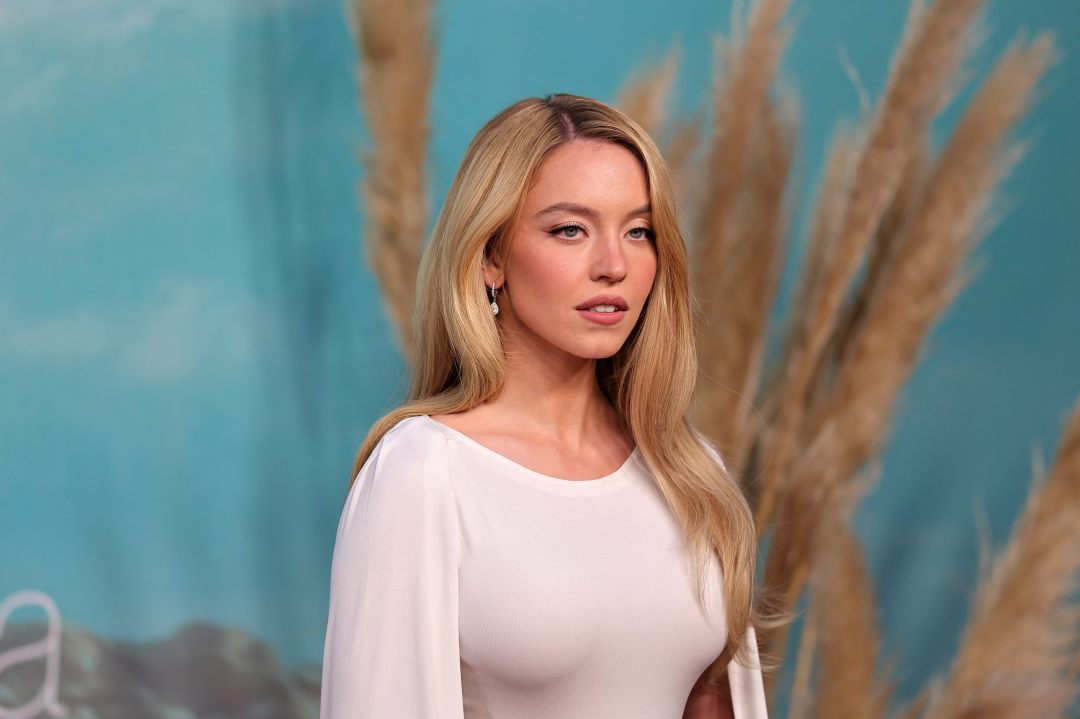
Sydney Sweeney has hit the headlines, again, for an advert, again. In what may seem like a tedious re-run of the last round of Sydney Sweeney discourse – because it is – she has appeared in an advert with no clothing. I wish there were something meatier to the story – careful now – but that’s it. Yet, as Paul Burke has written in The Spectator, ‘In so doing, she’s driven some men wild and some women even wilder – but for very different reasons.’
I do not need permission from comment writers to form my own erection
Professional sportswomen have accused her of ‘sexualising women’s sport’ in the advert (which is for a sports prediction market), and responded by posting photos of themselves with the caption, ‘This is what women in sport look like’. Clinical psychologist Vivienne Lewis claims it goes beyond sexualising women’s sport.
Poppie Platt has criticised her for not being a girls’ girl, and ‘once again cementing herself as the patriarchy’s dream woman’ because she doesn’t make enough effort to appeal to women. Michael Deacon writes that the ad ‘exposes the hypocrisy of the woke Left’. The Times asks if she has ‘gone too far?’ Marina Hyde asks if you are outraged by her – ‘more fool you’, if so.
These would be great arguments if Sydney Sweeney’s big naturals were being used to advertise women’s sports and not a sports prediction market, if the Sports Illustrated ‘Swimsuit Edition’ hadn’t been featuring sportswomen for 30 years, if appealing to men weren’t such an obviously lucrative market for her. But the arguments are the point: marketing agencies are banking on this. Sweeney is a great ‘get’ for any company, not just because she will get naked in photoshoots, but because she generates discourse.
Others have cottoned on: Sadie Sink’s latest advert for Calvin Klein generated similar, equally interminable, discourse. Kathleen Stock wrote that it proves ‘liberalism can’t tame lust’. Michael Deacon – a fellow writer with a strong personal brand that I increasingly admire – thanked God that ‘slim, beautiful women are back in fashion’. Faye Curran argued that ‘Lusting after hot women isn’t brave or noble’.
It might not be brave or noble, but who cares? I do not need permission from comment writers to form my own erection. The fact is that we do not need all this ‘cultural commentary’ on Sydney Sweeney. We do not need it on Sadie Sink, either. Grasping their appeal is not difficult: they are hot. Perhaps the most incredible thing is that they remain hot, even after I’ve read ten separate articles attempting to analyse some deeper pathology behind it all. There is none.

A lot of sex discourse is still shaped by notions of the sexual revolution, in particular that we must be open and honest about sex, that sexual liberation means we must bring our desires into the light, and that to conceal or repress any of them is inherently shameful. To simply experience sexual desire is apparently no longer enough: they must be articulated, if not by us, then for us, by somebody else.
The problem with the policy of being so open and honest about sex is that it is deeply unsexy. Desire is about suggestion. The thrill of flirting, if I recall correctly from my dim and distant past, lives in the glance, the near-touch, the thing implied.
Instead, what we are subjected to is endless rounds and rounds of analysis. If it’s not Sydney Sweeney or Sadie Sink, it’s Bonnie Blue or Lily Phillips, or the ‘summer of sex’. Foucault made the point that modernity wouldn’t silence sex but rather make us talk about it constantly. We have given it 1,200 words every Thursday.
Both sides are guilty of this. Your reaction to it all must be laundered through a political approach: for all the rumours of the death of woke, the right wing are still using finding Sweeney attractive as a way to signal resistance to the humourless short-haired commissars of body positivity. If you are on the left, then you must make the requisite political points about representation or make out that she is a secret girlboss.
Both are ultimately seeking the same thing, which is a political theory that makes desire permissible. But you can just find attractive people attractive. Not everything needs to be analysed, and once you understand something fully, it ceases to be an object of amazement. There is something in desire that ought to remain irrational, private and mysterious. Peter Hitchens once pointed out to me that you cannot dissect something until it’s dead. This applies here. Frankly, I would rather my sex drive be dragged out into the street and shot like a lame dog than dragged into the light and interrogated for its political implications.
Perhaps this sounds like an eccentric position when everyone else is taking a political stance on who is sexy. But given that the birth rate is at an all-time low – and falling – and kids are having less sex than ever before, maybe it’s a pretty mainstream view. We have liberated sex from shame, silence and repression, and maybe we should liberate it from analysis too.
To be left alone with our desires! What a thing that would be. To paraphrase Dostoevsky: ‘My God, a whole moment of horniness! Is that too little for the whole of a man’s life?’





Comments